
Restorative & Implant Care
Dental Implants in Jenkintown, PA
A replacement tooth that starts in the jaw, not on top of it.
A dental implant rebuilds a missing tooth from the root up. A titanium post takes the place of the root, and a crown, bridge or denture is fitted on top of it. MVP Family Dental has cared for Jenkintown families across two generations, and implant treatment here is planned around your bite, your bone and how you want to eat.
Exceptional care for a lifetime of healthy smiles
The short answer
Dental Implants at MVP Family Dental
Titanium posts surgically placed in the jawbone to permanently replace missing teeth with natural-looking, fully functional crowns that preserve bone health.
Losing a tooth changes more than the way a smile looks. The teeth on either side start to drift toward the gap, the opposing tooth has nothing to bite against, and the bone that used to hold the root has nothing to support. An implant is the one replacement that goes back into the bone itself.
Because the post is anchored in the jaw rather than clasped to the teeth beside it, the healthy teeth around the gap are left untouched. That is usually the deciding factor for patients weighing an implant against a conventional bridge.
What an implant is made of
Three parts, working as one tooth
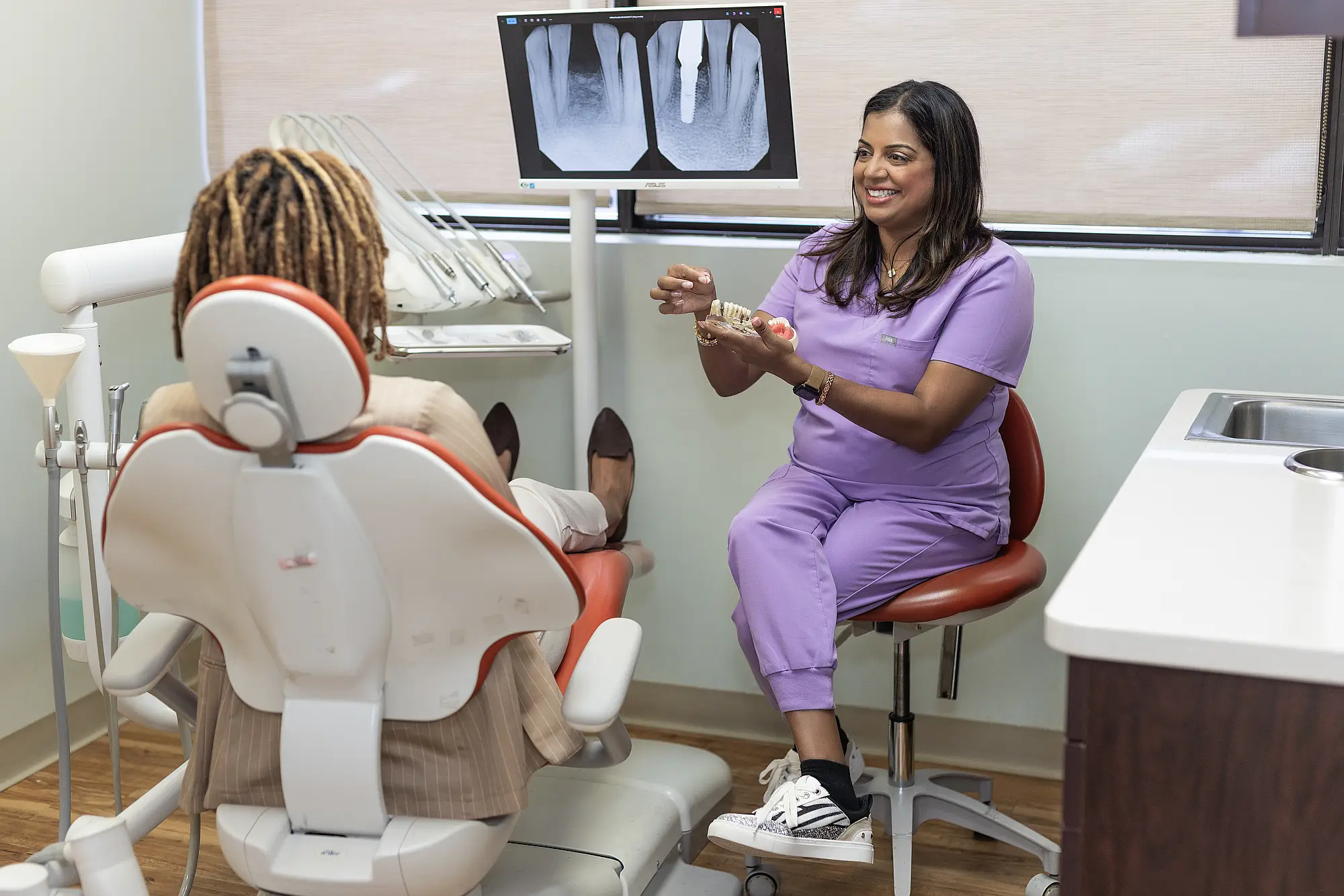
An implant is not a single object. It is three components fitted together over a course of appointments, each doing a different job.
- The implant postA titanium screw placed into the jawbone, where it takes the place of a natural tooth root.
- The abutmentA small connector that sits at the gumline and joins the post to whatever is being restored on top.
- The restorationThe visible part – a crown, a bridge or a denture – shaped and shaded to sit with the teeth around it.
- A plan made firstImaging and impressions are reviewed before treatment begins, so the position of the implant is decided in advance rather than at the chair.
How treatment works
From consultation to finished tooth
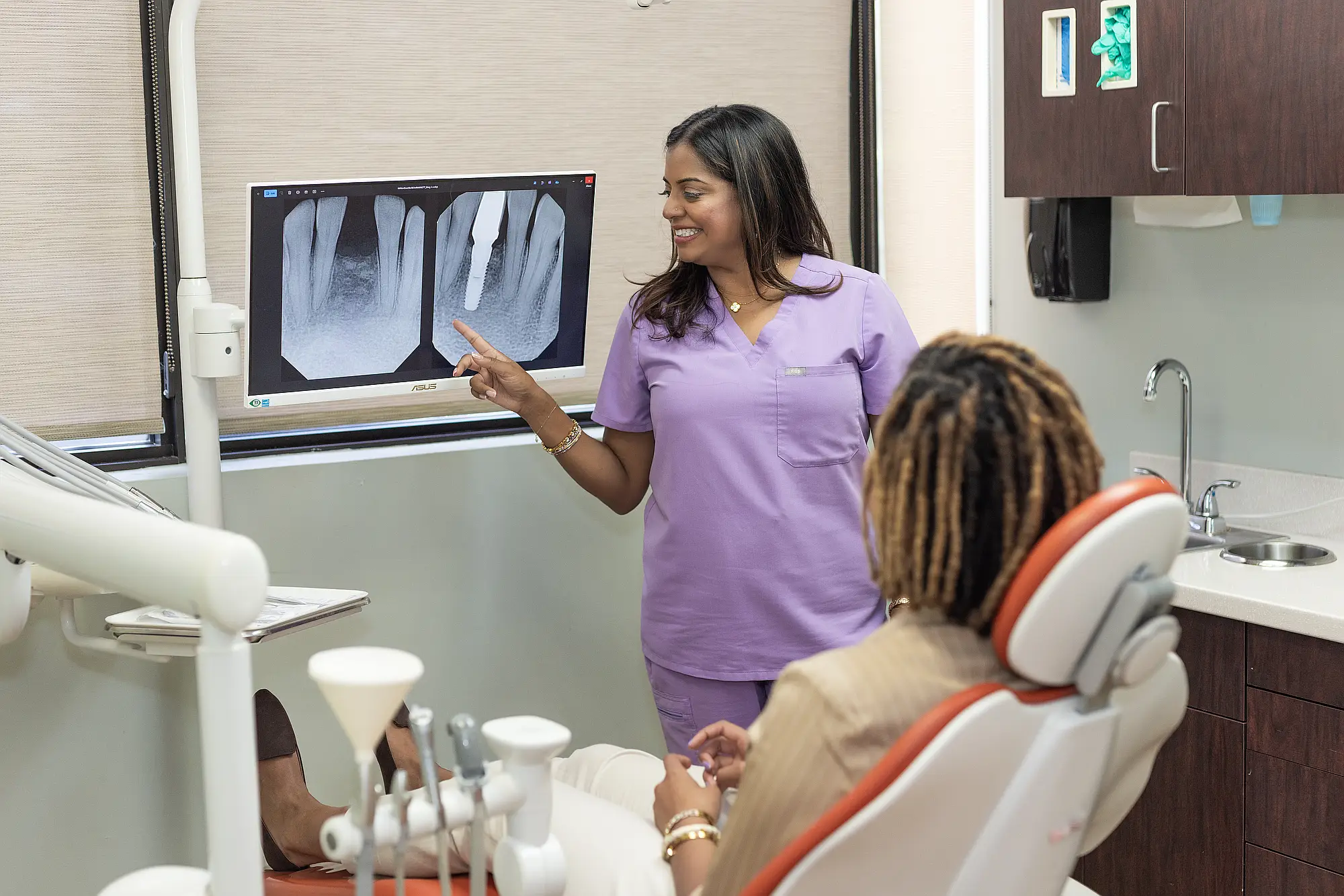
Implant treatment runs across several appointments. How many, and how far apart, depends on your bone and on what is being restored – your dentist will map the sequence out for you before anything starts.
- Consultation and imagingWe look at the space, the bone supporting it and the teeth on either side, then talk through what replacing the tooth would involve.
- Placing the implantThe titanium post is placed into the jawbone during a surgical appointment.
- Healing and integrationBone grows against the surface of the post until it is stable enough to carry a restoration.
- Fitting the restorationOnce the implant is ready, the abutment and your crown, bridge or denture are fitted on top.
On this page
Implant treatments we offer
Implants are not only for single teeth. The same foundation supports several different restorations, and which one fits depends on how many teeth are missing and how much bone is there to work with.
-
All on 4 Implants
Full-arch tooth replacement using four strategically placed dental implants to support a complete set of fixed, non-removable prosthetic teeth.
-
All on 6 Implants
Full-arch tooth replacement using six dental implants for maximum stability and support of a complete set of fixed prosthetic teeth.
-
Implant Retained Crowns
Individual porcelain crowns attached to dental implants to replace single missing teeth with results that look, feel, and function like natural teeth.
-
Implant Supported Bridge
Fixed dental bridge supported by implants rather than natural teeth, replacing multiple missing teeth without affecting adjacent healthy teeth.
-
Implant Supported Dentures
Removable or fixed dentures anchored to dental implants for dramatically improved stability, comfort, and chewing ability compared to traditional dentures.
-
Mini Dental Implants
Smaller-diameter dental implants that require less bone volume and a less invasive procedure, often used to stabilize dentures or replace small teeth.
A narrower option
Mini dental implants
A mini implant is a smaller-diameter version of the same idea — roughly 2 to 3 mm across, against 4 to 6 mm for a conventional implant. Because it needs less bone, it can suit a ridge that has thinned where a standard implant could not go.
- 2 to 3 mm acrossAgainst roughly 4 to 6 mm for a conventional implant.
- Less bone neededWhich is why they can suit a ridge that has thinned.
- Less invasive placementGenerally quicker and less involved than placing a standard implant.
- Often used for denturesA common use is anchoring a lower denture that will not stay put.
When we would suggest one
- Limited bone volumeWhere there is not enough bone width for a conventional implant.
- Denture stabilityWhere an existing denture moves and needs anchoring.
- Anxious about surgeryThe less invasive placement is often what makes the difference for nervous patients.
Placement follows the same path as any implant: consultation and imaging, planning from your scans, placement under local anesthetic, then connecting the denture, crown or bridge and checking the bite.
Is an implant right for you
What we look at first
Whether an implant is the right answer is a clinical judgment, not something that can be settled online. Bone volume, gum health, the position of the sinus or nerve, your bite and your medical history all feed into it. A consultation is where that gets decided.
- One toothA single implant and crown fills one gap without involving the teeth beside it.
- Several teethImplants can carry a bridge across a gap, so the neighboring teeth are left alone.
- A full archFour or six implants can support a fixed full-arch restoration.
Worth bringing to your consultation
- Any X-rays or records from a previous dentist.
- A current list of medications and medical conditions.
- What bothers you most about the missing tooth – eating, speaking, or how it looks.
- Questions about the order of appointments and what happens between them.

Living with an implant
Cared for like a natural tooth
An implant crown cannot decay, but the gum and bone holding the post underneath it very much can be lost. That is why implants are looked after the same way natural teeth are: brushing, cleaning between the teeth, and regular hygiene visits.
At your checkups we watch the gum around the implant, check that the restoration is still seated correctly, and make sure your bite has not shifted around it.
Two generations of dentists, one shared commitment to helping Jenkintown families eat, speak and smile with confidence.
MVP Family Dental · Jenkintown, PA

Dental Implant Questions
- What is a dental implant?
- A dental implant is a titanium post placed into the jawbone to take the place of a missing tooth root. Once it is stable, a crown, bridge or denture is attached on top of it.
- Is an implant better than a bridge?
- They solve the problem differently. A conventional bridge is carried by the teeth on either side of the gap, which means preparing those teeth. An implant stands on its own in the bone and leaves them alone. Which is appropriate depends on your particular case.
- How many appointments does implant treatment take?
- More than one. There is a consultation and imaging stage, the appointment where the post is placed, a healing period, and then the appointments to fit the restoration. Your dentist will map out the sequence for your case at the consultation.
- Does the implant show?
- No. The post sits below the gumline. What you see is the crown, bridge or denture, which is shaped and shaded to sit with the teeth around it.
- What if I have been missing the tooth for a long time?
- It is still worth having assessed. Bone changes shape after a tooth is lost, so part of the consultation is looking at how much bone is there and whether anything needs to be done before an implant can be placed.
- Can implants replace a full arch of teeth?
- Yes. Full-arch options such as All-on-4 and All-on-6 use several implants to support a complete fixed set of teeth, and implant-supported dentures anchor a denture to implants rather than resting it on the gums.
- How do I clean an implant?
- The same way you look after your own teeth – brushing twice a day, cleaning between the teeth, and keeping to your hygiene appointments. The gum and bone around the implant are what need protecting.
- How do I find out whether I am a candidate?
- Book a consultation at our Jenkintown office. We will review your teeth, your gums and your imaging together and talk through the options that fit your case.
- What is a mini dental implant?
- A smaller-diameter implant, roughly 2 to 3 mm across against 4 to 6 mm for a conventional one. It needs less bone and the placement is less invasive, so it can suit a ridge that has thinned.
- Could a mini implant hold my denture in place?
- That is one of the most common uses — anchoring a lower denture that will not stay put. Whether it suits you depends on the bone available, which is what the assessment establishes.
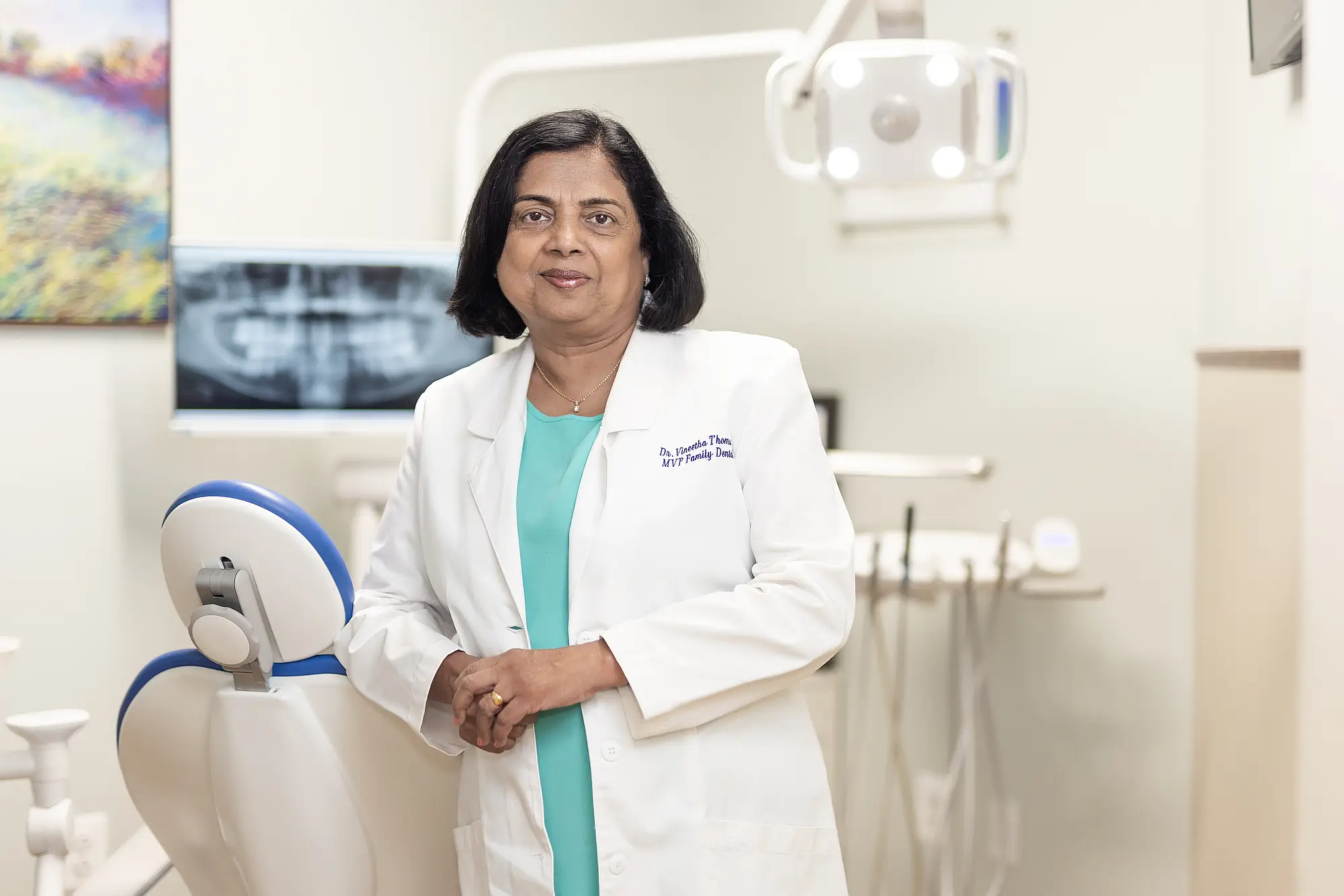
Dr. Vineetha Thomas, D.M.D.
LEARN MORE
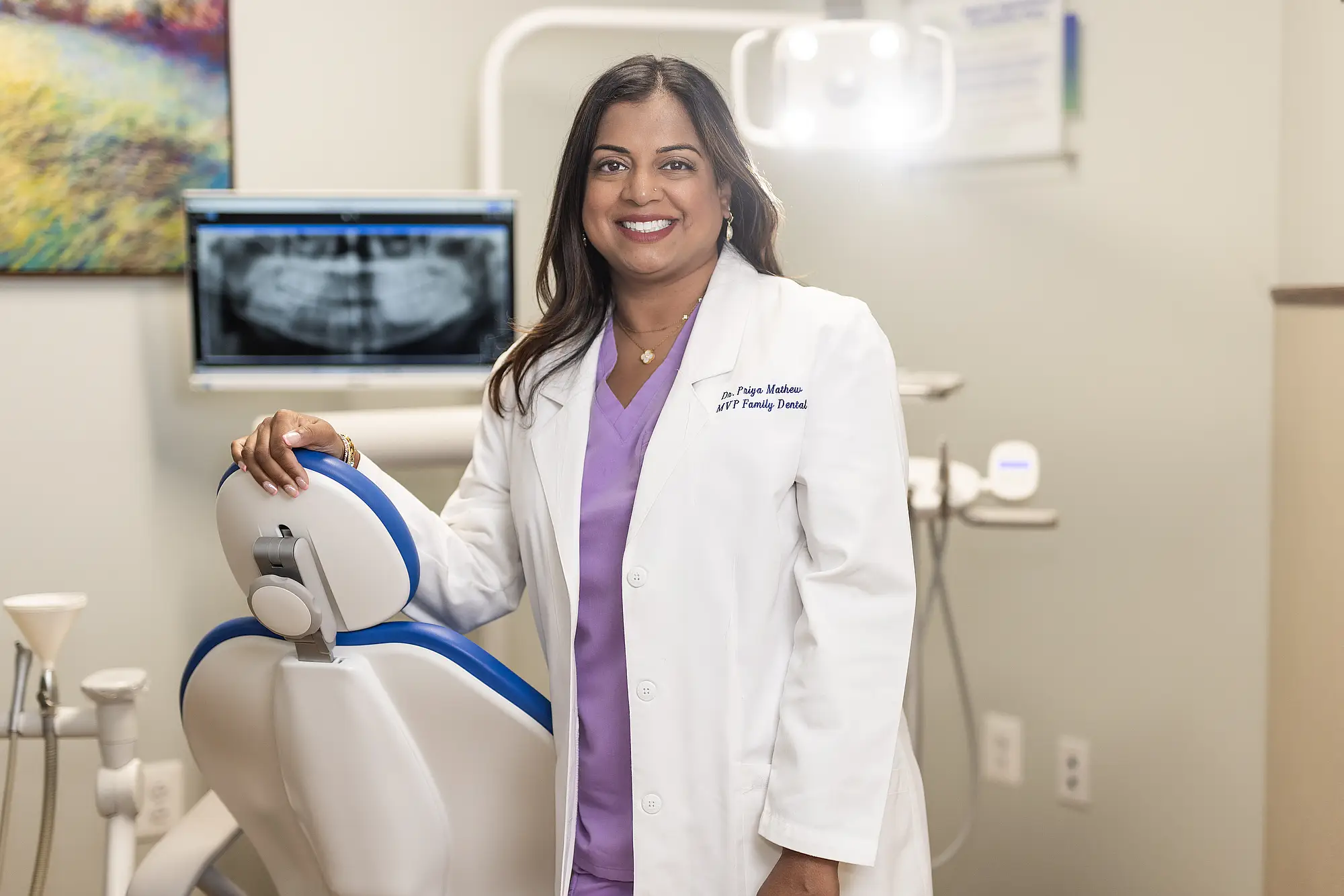
Dr. Priya Mathew, D.M.D.
LEARN MORE