

Preventive & Family Care
Pediatric Dentistry in Jenkintown, PA
Building the habit while the teeth are still arriving.
Children’s dentistry is mostly not about treatment. It is about a child who is comfortable in the chair, a brushing routine that has stuck, and adult teeth that are arriving in the right order – and about catching the exceptions early.

Exceptional care for a lifetime of healthy smiles

Children at MVP Family Dental
MVP Family Dental has looked after Jenkintown families across two generations, and a good deal of that is seeing the same children through from a first visit to a settled adult mouth.
Early visits are deliberately low-stakes. A child who has been to the dentist a dozen times without anything unpleasant happening is a very different patient at twelve than one whose first visit was because something hurt.
How visits work
Short, familiar, unhurried
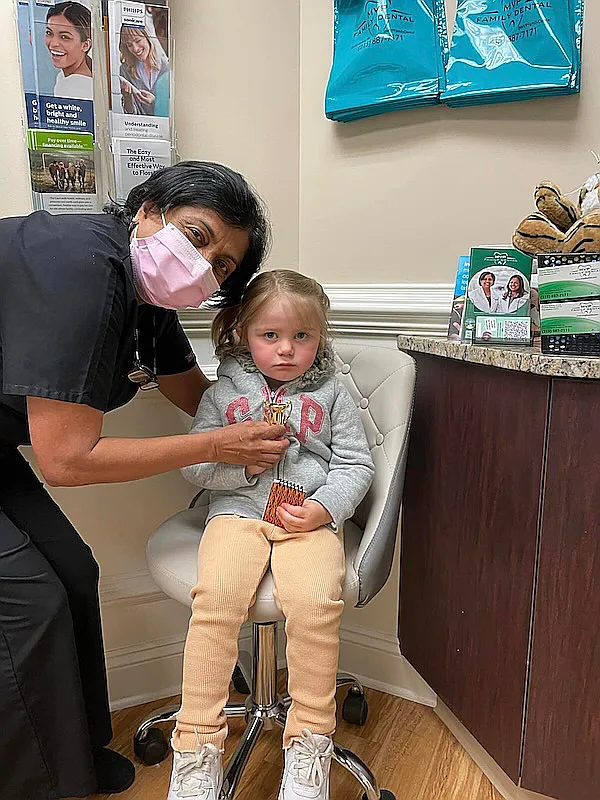
The shape of a children’s visit is deliberately repetitive. Familiarity is the point – the same room, the same order, nothing sprung on them.
- Getting comfortableEarly appointments can be mostly about sitting in the chair, counting teeth and looking at the instruments.
- The examinationTeeth are checked for decay, and we look at how the jaws are growing and which teeth are through.
- Cleaning and preventionA clean, and where appropriate sealants on newly erupted molars to close the grooves before anything gets in.
- Talking to you bothBrushing technique, what to watch for, and anything worth reviewing before the next visit.
What we watch
A mouth that keeps changing
A child’s mouth is a moving target, and several of the things worth catching are about timing rather than decay.
- Baby teethThey hold space for the adult teeth behind them, which is why one lost early still matters.
- Eruption orderAdult teeth arriving out of sequence, or not arriving, is easier to manage when it is noticed early.
- Crowding and biteEarly signs of a crossbite or crowding feed into whether interceptive orthodontics is worth discussing.
- HabitsThumb sucking and mouth breathing can affect how the jaws develop, and are easier to address young.
When to start
Earlier than most people expect
The usual advice is a first visit around the time the first teeth appear, and certainly by the first birthday. Nothing much happens at that visit, and that is rather the point – it establishes the routine before there is any reason to be anxious about it.
- First visitAround the arrival of the first teeth, and by the first birthday.
- Regular visitsFrequency is set by decay risk and by how the adult teeth are coming through.
- Whole familyWe can often see siblings and parents in the same visit, which makes the routine easier to keep.
Helpful to tell us
- Any anxiety about the dentist, and whether it came from somewhere specific.
- How brushing goes at home, honestly – it changes the advice.
- Thumb sucking, dummy use or mouth breathing.
- Any knocks to the front teeth, however long ago.
At home
The routine does the work
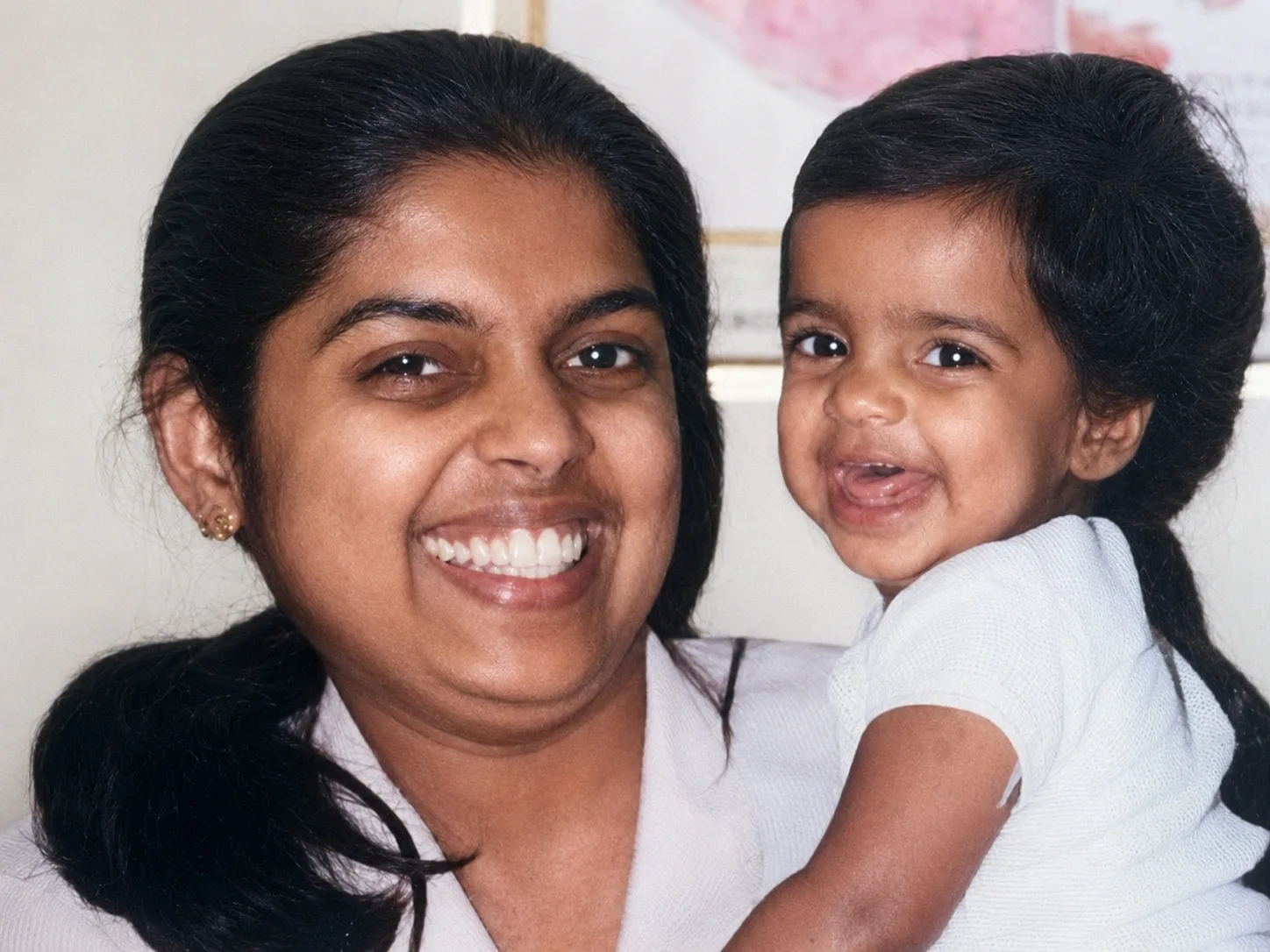
Brushing twice a day with an age-appropriate fluoride toothpaste, supervised until a child can genuinely do it properly, is most of the job. Sugar frequency matters more than sugar quantity – it is how often the teeth are under attack that counts.
If brushing has become a fight, tell us. It is a common problem with practical answers, and it is far better solved at a routine visit than left until it shows up as decay.
A child who is comfortable at the dentist at six is a straightforward patient for the next sixty years.
MVP Family Dental · Jenkintown, PA

The short answer
Pediatric dentistry is gentle, age-appropriate dental care for children, covering examinations, cleanings, fluoride treatments, sealants and early orthodontic evaluation. Most of it is not about treatment: it is about a child who is comfortable in the chair, a brushing routine that has stuck, and adult teeth arriving in the right order, with the exceptions caught early. Early visits are deliberately low-stakes, and the usual advice is a first visit around the time the first teeth appear and certainly by the first birthday.
Children’s Dentistry Questions
- When should my child first see a dentist?
- Around the time the first teeth come through, and certainly by the first birthday. The first visits are about familiarity rather than treatment, and nothing much happens at them, which is rather the point. It establishes the routine before there is any reason to be anxious about it. A child who has been a dozen times without anything unpleasant happening is a very different patient later on.
- Do baby teeth really matter if they fall out anyway?
- Yes. They hold the space for the adult teeth behind them and guide them into position, so one lost early can cause crowding later. They can also cause pain and infection in their own right. That is why a baby tooth lost early still matters and is worth telling us about.
- My child is nervous. What can you do?
- Tell us before the visit. Early appointments can be as short and as simple as sitting in the chair, counting teeth and looking at the instruments, and we build from there at the child’s pace. The shape of a children’s visit is deliberately repetitive: the same room, the same order, nothing sprung on them. It also helps to know whether the anxiety came from somewhere specific.
- How do I make brushing easier at home?
- Bring it up at the visit, because it is one of the most common things parents ask about and there are practical answers depending on the child’s age and what is going wrong. Brushing twice a day with an age-appropriate fluoride toothpaste, supervised until a child can genuinely do it properly, is most of the job. Sugar frequency matters more than sugar quantity, since it is how often the teeth are under attack that counts. If brushing has become a fight, it is far better solved at a routine visit than left until it shows up as decay.
- Should my child have sealants?
- Often, yes, once the permanent molars are fully through. Sealants close the deep grooves where most childhood decay starts, before anything gets into them. Ask at the next visit which teeth are ready.
- When should we think about braces?
- Crowding and bite problems are often visible well before all the adult teeth are in. Early signs of a crossbite or crowding feed into whether interceptive orthodontics is worth discussing. See the Interceptive Orthodontics page for what can be done during growth. Habits such as thumb sucking and mouth breathing are easier to address young, so they are worth mentioning too.
- What if my child knocks a tooth?
- Contact us as soon as you can, even if the tooth looks fine. See the Tooth Injury Treatment page for what to do in the meantime. Any knocks to the front teeth are worth telling us about at a routine visit as well, however long ago they happened.
- Can the whole family be seen together?
- Usually, yes. Contact the office and we will try to arrange appointments back to back, or see siblings and parents in the same visit. That makes the routine easier to keep, which is most of what children’s dentistry depends on.
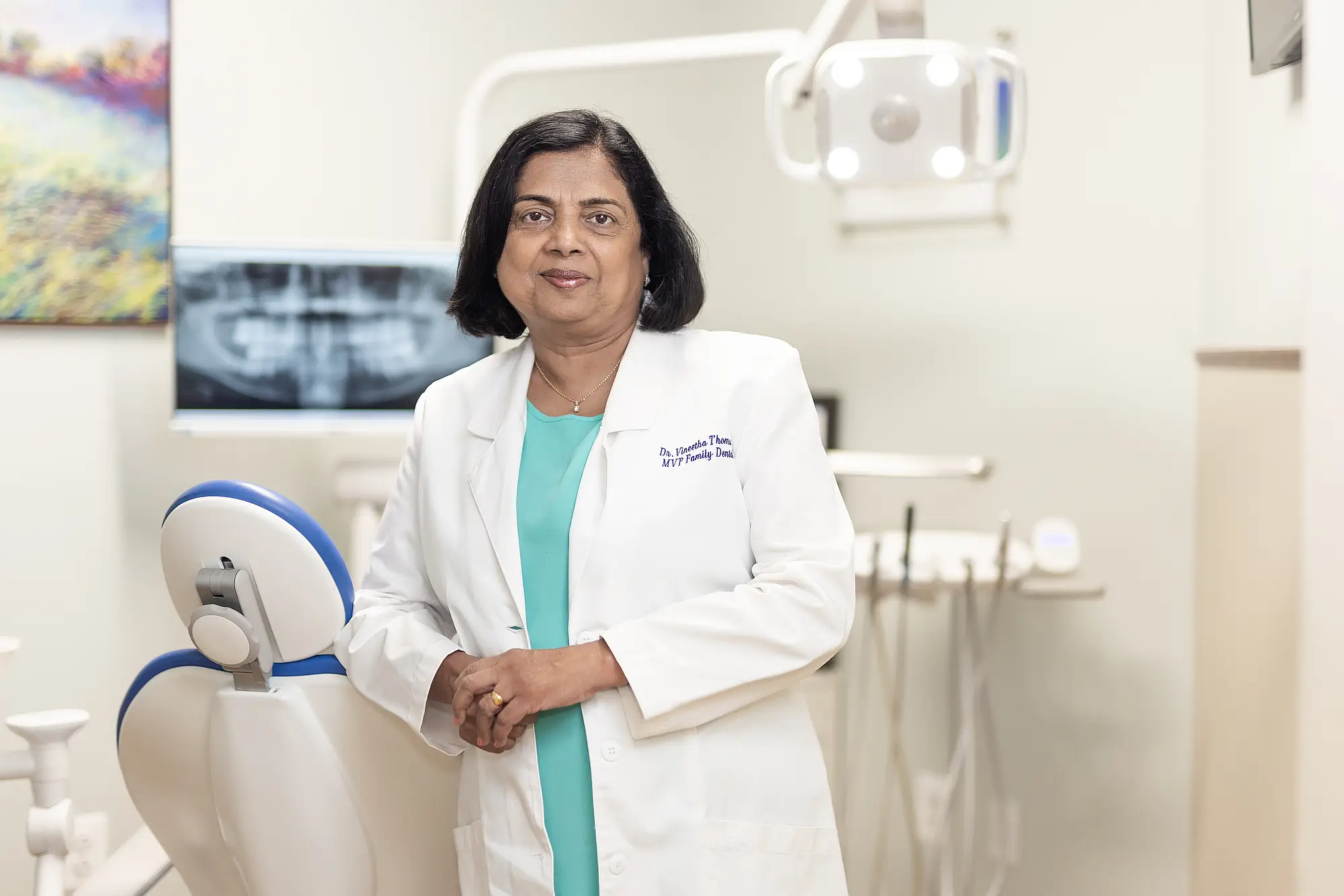
Dr. Vineetha Thomas, D.M.D.
LEARN MORE
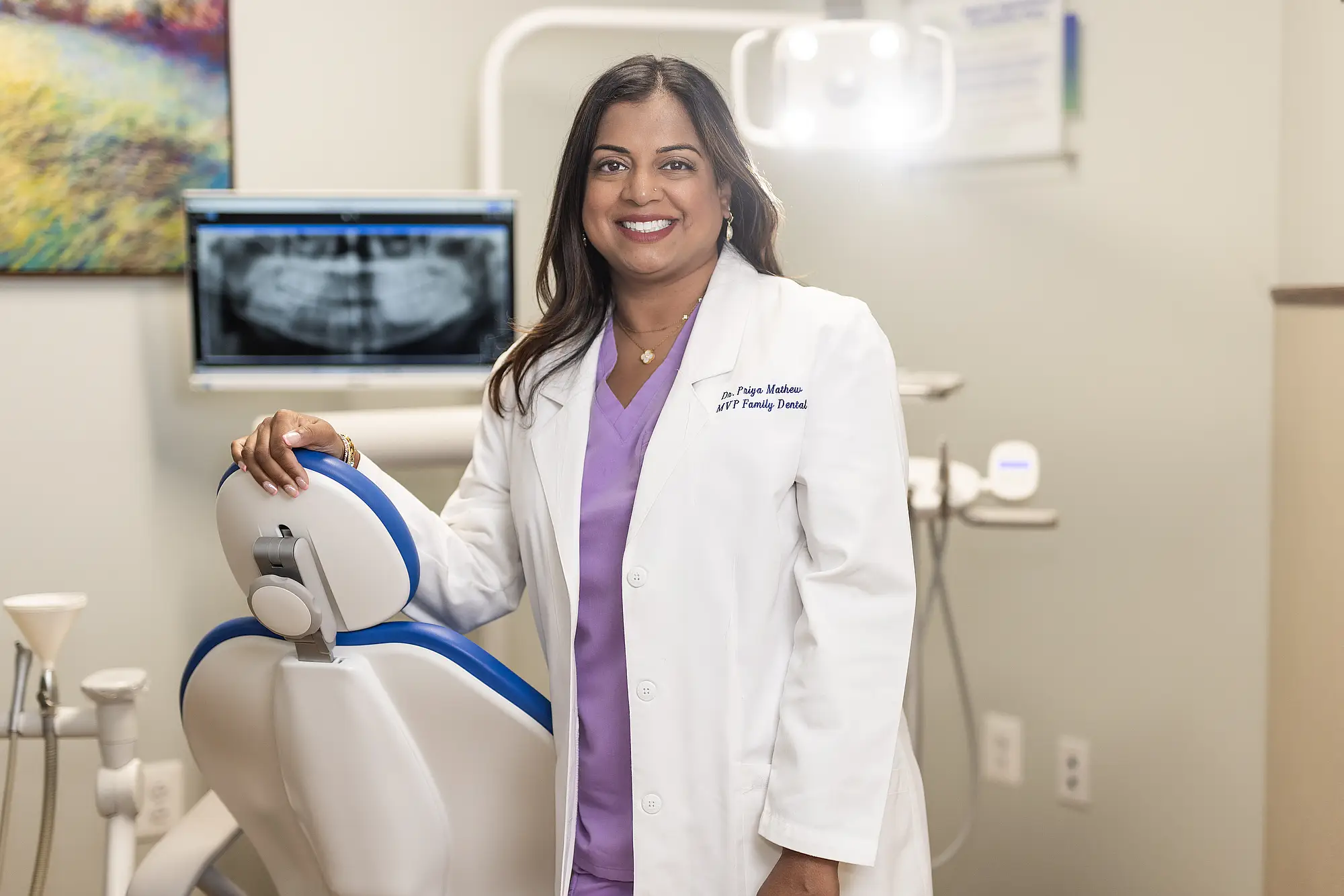
Dr. Priya Mathew, D.M.D.
LEARN MORE