
Restorative Dentistry
Full Mouth Reconstruction in Jenkintown, PA
Treating the mouth as one thing, in a planned order.
Full mouth reconstruction is not a single treatment. It is a sequence, planned as a whole, for people whose teeth need extensive work — from decay, from gum disease, from wear or from injury. The order the work happens in is as much a part of the plan as the work itself.

Exceptional care for a lifetime of healthy smiles
Full mouth reconstruction at MVP Family Dental
When several problems exist at once, fixing them one appointment at a time tends to work against itself. A tooth restored before the bite is corrected may not last; a bridge planned before the gum disease is treated stands on an uncertain foundation.
Planning the whole mouth first means the sequence makes sense — stabilize, rebuild, then refine.

Who it is for
Several problems, at the same time
Reconstruction is usually raised where the difficulty affects the whole dental structure rather than one area.
- Extensive decayWhere untreated decay has affected multiple teeth and is causing pain or tooth loss.
- Advanced gum diseaseWhich can loosen teeth and has to be treated before anything is rebuilt on them.
- InjuryWhere an accident has caused damage across several teeth at once.
- WearWhere teeth have worn down over years and the bite has changed with them.
How treatment works
Stabilize, rebuild, refine
Every reconstruction is different, but the shape of the plan is consistent. Your dentist will set out your own sequence and what each stage depends on.
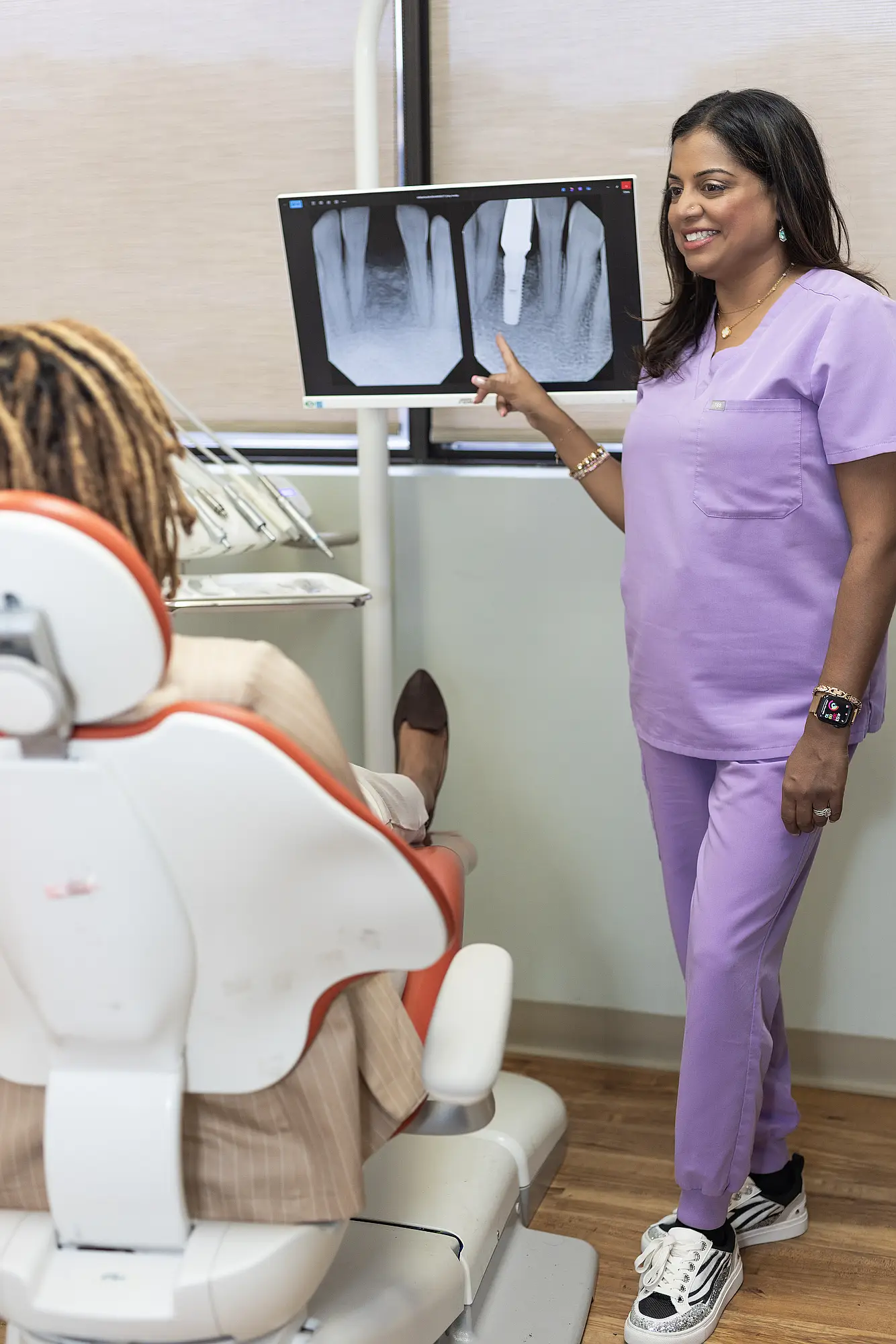
- Full assessmentExamination, imaging and a look at your bite, your gums and every tooth together rather than in isolation.
- StabilizingDecay, infection and gum disease are treated first so that later work has a sound foundation.
- RebuildingTeeth are restored or replaced — fillings, crowns, bridges, implants or dentures, as the plan requires.
- RefiningAppearance and bite are adjusted once function has been restored.
- MaintenanceA hygiene and review schedule to protect what has been rebuilt.
What it can involve
Several treatments, one plan
Which of these appear in your plan depends entirely on the assessment. None of them is decided in advance.
-
Restoring decayed teeth
Fillings, inlays, onlays or crowns depending on how much sound tooth remains.
-
Treating gum disease
Addressing the tissue and bone supporting the teeth before anything is rebuilt on them.
-
Replacing missing teeth
Bridges, implants or dentures, chosen around the gaps and the bone available.
-
Correcting the bite
So that the rebuilt teeth meet as they should and are not overloaded.
Worth bringing to your consultation
- Any X-rays or records from a previous dentist.
- A current list of medications and medical conditions.
- What troubles you most — pain, eating, or how it looks.
- Questions about how the stages are spaced out.
Afterwards
Protecting the work
A reconstruction represents a lot of treatment, and keeping it sound depends on the same things that protect natural teeth: cleaning, hygiene appointments, and catching small problems early.
We will set out a review schedule with you as part of the plan rather than after it.
Two generations of dentists, one shared commitment to helping Jenkintown families eat, speak and smile with confidence.
MVP Family Dental · Jenkintown, PA

The short answer
Full mouth reconstruction is a coordinated, staged treatment plan that rebuilds or replaces damaged and missing teeth across the whole mouth, combining restorative, surgical and cosmetic treatment in one sequence. When several problems exist at once, treating them one appointment at a time tends to work against itself, because a tooth restored before the bite is corrected may not last and a bridge planned before gum disease is treated stands on an uncertain foundation. Planning the whole mouth first is what makes the order make sense: stabilize, rebuild, then refine.
Full Mouth Reconstruction Questions
- What is full mouth reconstruction?
- Full mouth reconstruction is a staged plan that rebuilds or replaces damaged and missing teeth across the whole mouth, rather than treating one tooth at a time. It can combine restorative, surgical and cosmetic treatment in one sequence. The order the work happens in is as much a part of the plan as the work itself. It starts from a full assessment of your bite, your gums and every tooth together.
- Who is it for?
- Generally people with several problems at once: extensive decay affecting multiple teeth, advanced gum disease, injury that has damaged several teeth, or teeth worn down over years with a bite that has changed with them. It is raised where the difficulty affects the whole dental structure rather than one area. Whether it applies to you is established at the assessment.
- Is it one appointment?
- No. It runs across a series of appointments in a deliberate order, with healing between some of the stages. Your dentist will set out the sequence and what each stage depends on. Every reconstruction is different, but the shape of the plan is consistent.
- Why does the order matter?
- Because later work depends on earlier work. Restoring a tooth before the bite is corrected, or building on gums that have untreated disease, tends not to last. Decay, infection and gum disease are therefore treated first so that what follows has a sound foundation. Appearance and bite are refined once function has been restored.
- What treatments might be involved?
- It varies entirely with the assessment, and none of it is decided in advance. Fillings, inlays, onlays and crowns are used to restore decayed teeth depending on how much sound tooth remains. Bridges, implants or dentures replace missing teeth, chosen around the gaps and the bone available. Gum treatment and bite correction can both appear in a plan.
- Will it include implants?
- Sometimes. Where teeth are missing, implants are one of the options considered alongside bridges and dentures. Which is chosen depends on the gaps and on the bone available to work with. That is decided from the full assessment rather than in advance.
- How long does the whole thing take?
- That depends on how much is involved and on healing between stages. It is set out for you at the consultation rather than estimated in advance. Questions about how the stages are spaced out are worth bringing with you.
- How do I start?
- Book a consultation. The full assessment, meaning examination, imaging and a look at the bite, is what the plan is built from. It helps to bring any X-rays or records from a previous dentist and a current list of medications and medical conditions. Saying what troubles you most, whether that is pain, eating or how it looks, shapes the plan too.

Dr. Vineetha Thomas, D.M.D.
LEARN MORE

Dr. Priya Mathew, D.M.D.
LEARN MORE