
Restorative & Implant Care
Dentures in Jenkintown, PA
Replacing a full arch, or the teeth that are left around the gaps.
A denture replaces missing teeth and the gum tissue around them with a removable prosthesis made to your own mouth. Getting one right is far more about fit, bite and the shape of the ridge underneath than it is about the teeth on top.

Exceptional care for a lifetime of healthy smiles
Dentures at MVP Family Dental
A denture rests on the ridge of gum and bone left after teeth are lost, and is held by the fit of the base against that ridge – and, for a partial, by clasps onto the remaining natural teeth. Nothing about it is anchored into bone.
That is why fit is everything and why dentures need reviewing over time. The ridge underneath continues to change shape after teeth are lost, and a base made to last year’s ridge will not sit the same way on this year’s.

What makes one work
Four things that decide the fit
A denture that is uncomfortable usually fails on one of these rather than on the teeth themselves.
- The baseIt has to match the ridge closely along its whole length – that contact is most of what holds a full denture in.
- The biteHow the upper and lower teeth meet decides whether the denture stays put when you chew or tips.
- Tooth positionSet too far in or out and the denture is unstable and the lip does not sit right.
- The ridge itselfBone continues to resorb after teeth are lost, so the foundation is not static and the denture has to keep up.
How treatment works
Built up over several visits
Dentures are made in stages, each one confirming something before the next is built on it. Skipping stages is what produces a denture that has to be remade.
- Assessment and planningWe look at the remaining teeth, the ridge, the bite and what kind of denture suits your case.
- ImpressionsA first impression, then usually a more accurate second one taken in a tray made to your own mouth.
- Recording the bite and a try-inThe jaw relationship is recorded, and a wax try-in lets you see and approve the tooth position before anything is finished.
- Fitting and adjustmentThe finished denture is fitted, and adjusted over follow-up visits as the tissues settle around it.
On this page
Denture options
Which denture suits you depends on how many teeth are missing, the condition of any that remain, and the shape of the ridge underneath.
-
Denture Relining
Reshaping the inner surface of existing dentures to improve fit as the jawbone and gum tissue change shape over time.
-
Full Dentures
Complete removable prosthesis replacing all teeth in the upper or lower arch, custom-fitted for comfort, function, and natural appearance.
-
Immediate Dentures
Pre-fabricated dentures placed immediately after tooth extraction so you never have to go without teeth during the healing period.
-
Partial Dentures
Removable prosthesis that replaces several missing teeth while clasping onto remaining natural teeth for support and stability.
Keeping the fit right
Relining and repairs
Gums and jawbone keep changing shape after tooth loss, so a denture that fitted well when it was made will eventually stop fitting. That is expected rather than a sign the denture was wrong, and it is what relining is for.
- ReliningReshapes the surface of the denture that sits against the gums, leaving the rest of it as it is.
- RebasingRebuilds the base of the denture entirely, keeping the existing teeth.
- AdjustmentSmaller corrections to relieve a specific sore spot or pressure point.
- Assessment firstWhich of the three you need is decided by looking at the denture and the tissue it rests on.
Signs it is time to come in
- SorenessRubbing or ulceration where the denture no longer sits evenly.
- MovementA denture that lifts, clicks or shifts while eating or speaking.
- Visible damageA crack, a chip, or a tooth that has come away from the base.
If a denture breaks
- Bring it in with any pieces, without attempting a repair yourself.
- Household adhesives can make a denture unrepairable.
- Clean it over a towel or a basin of water — that prevents most breakages.
- A change in your speech or eating is often the first sign, before anything is visible.
Weighing the options
Denture, implant, or both
Dentures are not the only answer to missing teeth, and they combine well with others. Implants can anchor a denture so it does not move – see Implant Supported Dentures on the Dental Implants page – and a bridge may suit a smaller gap.
The trade-offs are real in both directions. A conventional denture involves no surgery and no healing period; an implant-anchored one is more stable but is a larger undertaking. Which matters more to you is part of the decision.
- Full archA complete denture where all the teeth in an arch are gone.
- Some teeth remainingA partial denture fills the spaces and clasps onto the natural teeth that are left.
- AnchoredImplants can hold a denture in place – see the Dental Implants page.
Worth raising at your consultation
- What has been difficult about any denture you have worn before.
- Which foods you most want to be able to eat again.
- Whether stability or avoiding surgery matters more to you.
- Any sore spots, and exactly where they are.
Living with dentures
Cleaned daily, reviewed regularly
Dentures come out to be cleaned, and the mouth underneath needs cleaning too – the ridge, the palate and any remaining natural teeth. Leaving them out overnight, stored as your dentist advises, gives the tissues a rest.
Keep your routine visits even if you have no natural teeth left. The ridge, the soft tissues and the fit of the denture all need checking, and oral cancer screening does not stop being relevant because the teeth have gone.
A denture is only as good as the fit underneath it. That is where the work is.
MVP Family Dental · Jenkintown, PA
The short answer
A denture is a custom-fitted removable prosthesis that replaces a full or partial arch of missing teeth along with the gum tissue around them, restoring chewing ability and facial appearance. It rests on the ridge of gum and bone left after teeth are lost and is held by the fit of its base against that ridge, and for a partial also by clasps onto the remaining natural teeth. Nothing about it is anchored into bone, which is why fit is everything and why a denture needs reviewing as the ridge underneath continues to change shape.
Denture Questions
- What is the difference between full and partial dentures?
- A full denture replaces all the teeth in an arch. A partial replaces several missing teeth while clasping onto the natural teeth that remain, which gives it extra support and stability. Which suits you depends on how many teeth are missing, the condition of any that remain, and the shape of the ridge underneath.
- How many appointments does it take?
- Several. There is an assessment and planning stage, impressions, a bite record, a wax try-in that you see and approve before anything is finished, then fitting and adjustments. Each stage confirms something before the next is built on it. Skipping stages is what produces a denture that has to be remade.
- Will they feel strange at first?
- Commonly, yes. New dentures often feel bulky, and speech and eating take some adjustment. Follow-up visits where the denture is adjusted as the tissues settle are part of the process rather than a sign something has gone wrong. Tell us about any sore spots and exactly where they sit.
- Why do dentures become loose over time?
- The bone and gum ridge underneath continues to change shape after teeth are lost, so the foundation is not static. A base made to last year’s ridge will not sit the same way on this year’s. Relining reshapes the inner surface of the denture to match the ridge as it is now. That is expected rather than a sign the denture was wrong.
- Can dentures be made more stable?
- Yes. Implants can anchor a denture so that it does not move, rather than relying on the fit of the base alone. The trade-offs are real in both directions: a conventional denture involves no surgery and no healing period, while an implant-anchored one is more stable but is a larger undertaking. Which matters more to you is part of the decision.
- How do I clean them?
- Take them out and clean them daily as your dentist directs, and clean the ridge, the palate and any remaining natural teeth as well. Never use hot water, which distorts the material and changes the fit. Leaving the denture out overnight, stored as your dentist advises, gives the tissues a rest. Clean it over a towel or a basin of water, which prevents most breakages.
- Do I still need dental check-ups with dentures?
- Yes. The fit of the denture, the ridge and the soft tissues all need checking, and the ridge keeps changing shape whether or not you have natural teeth. Oral cancer screening remains just as relevant. A change in your speech or eating is often the first sign something has shifted, before anything is visible.
- What if I get a sore spot?
- Contact us rather than persevering. Sore spots are usually a small adjustment, and continuing to wear a denture that is rubbing makes the tissue underneath worse. Tell us exactly where it is, because that is what points to what needs relieving.
- Why has my denture stopped fitting?
- Gums and jawbone keep changing shape after tooth loss, so a denture that fitted well when it was made will eventually need reworking. Relining reshapes the surface that sits against your gums to match the ridge as it is now. Rebasing rebuilds the base entirely while keeping the existing teeth, and an adjustment relieves a specific pressure point. Which of the three you need is decided by looking at the denture and the tissue it rests on.
- My denture has cracked. Can I glue it?
- Please do not, because household adhesives can make a denture unrepairable. Bring it in with any pieces and we will assess the damage along with the fit and the tissue underneath. Most breakages happen outside the mouth, so cleaning over a towel or a basin of water prevents the majority of them.

Dr. Vineetha Thomas, D.M.D.
LEARN MORE
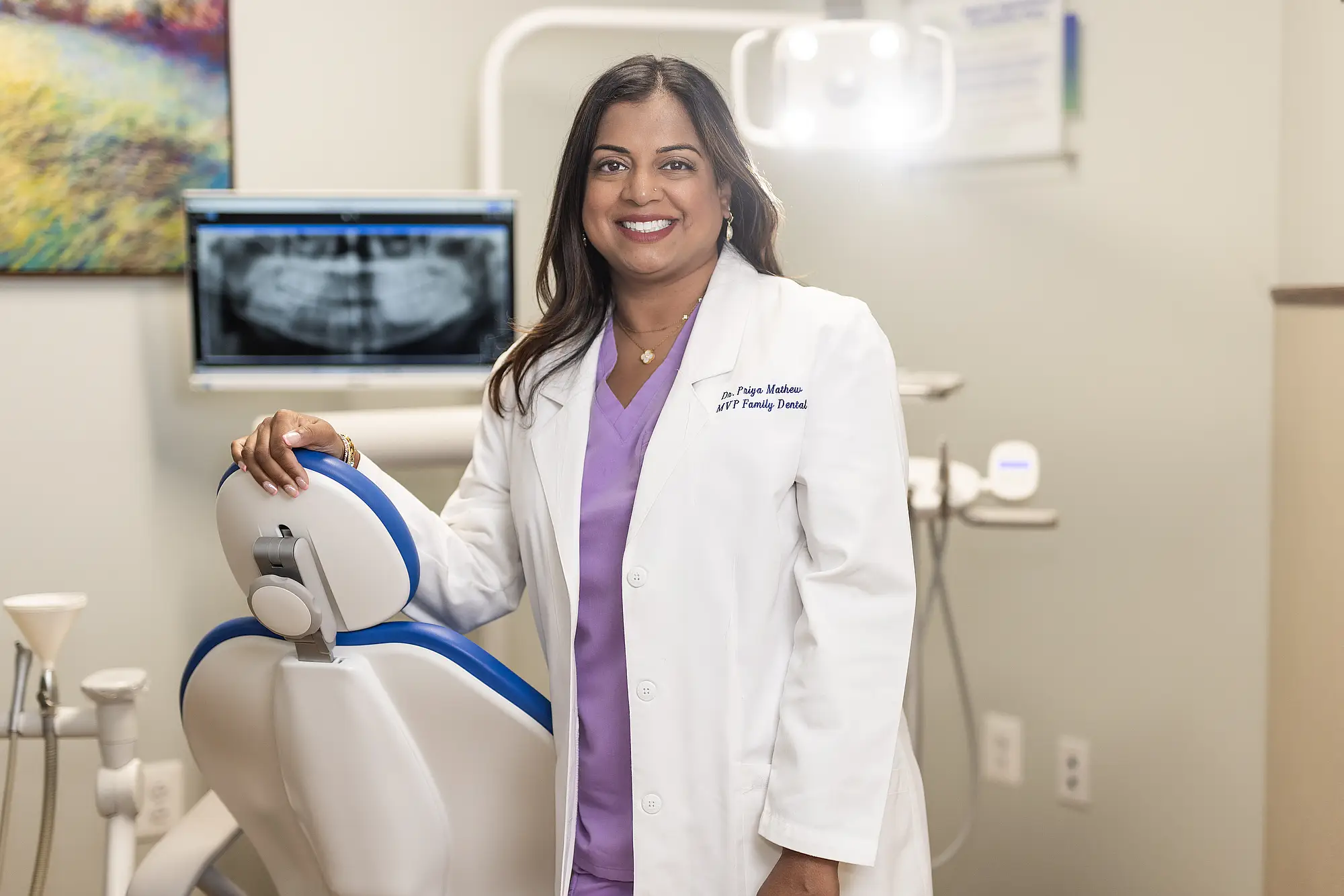
Dr. Priya Mathew, D.M.D.
LEARN MORE