
Orthodontics & Specialty Care
Clear Aligners in Jenkintown, PA
A removable, near-invisible way to move teeth — for the right case.
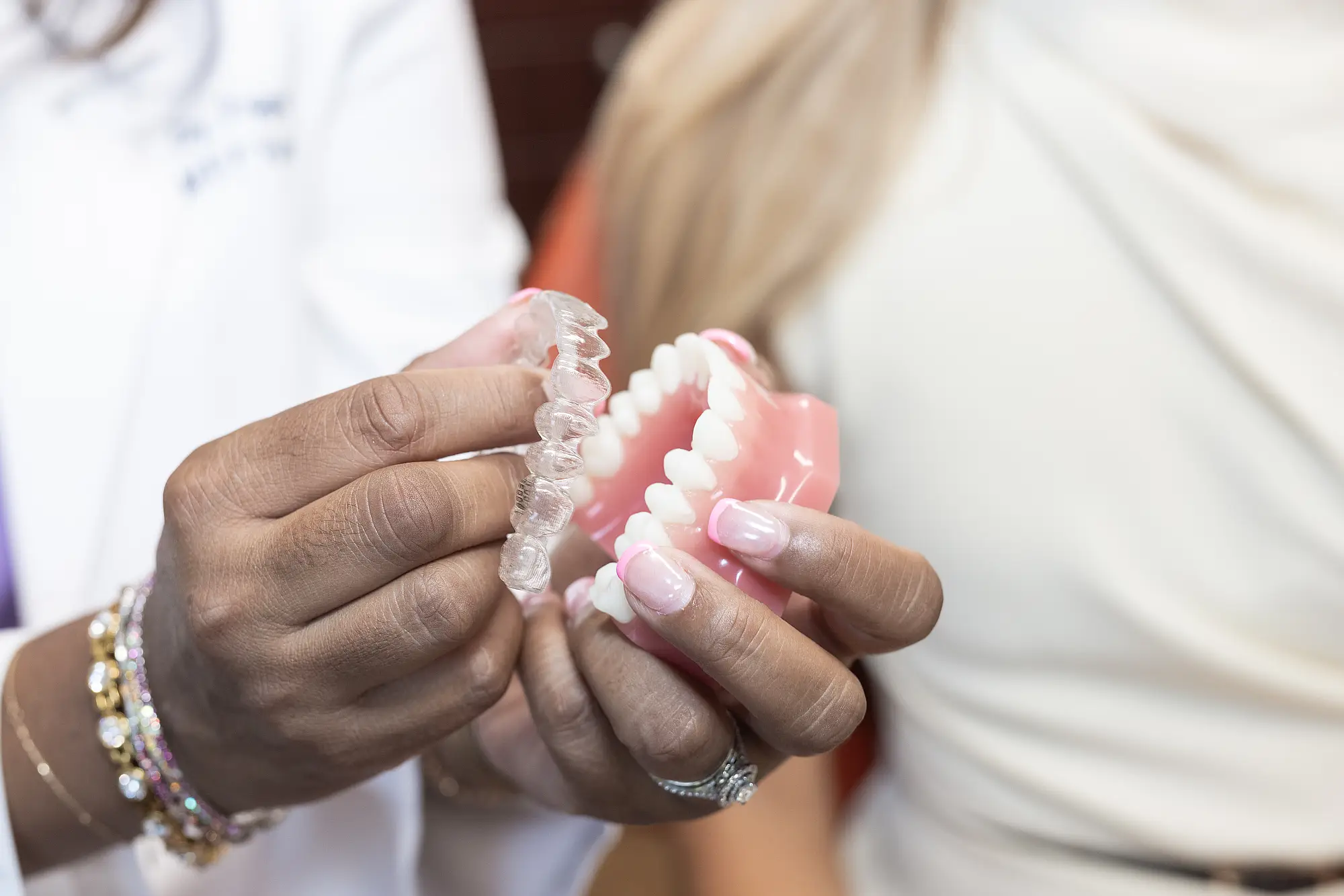
Clear aligners move teeth in a planned sequence of thin, transparent trays, each shaped slightly differently from the last. They come out to eat and to brush, which is the whole appeal – and they only work while they are in, which is the whole catch.
Exceptional care for a lifetime of healthy smiles
Clear aligners at MVP Family Dental
Every tray in the series is made to a position slightly ahead of where your teeth currently are. Wearing it applies force in that direction; moving to the next tray applies the next increment. The whole sequence is planned digitally before the first one is made.
That planning is why aligners feel predictable, and also why they are not right for every case. Some movements – particular rotations, significant root repositioning – are better handled by a fixed appliance.
How treatment works
Planned digitally, worn in sequence
The plan is built before treatment begins, which means you can see the intended movements rather than take them on trust.
- AssessmentExamination, photographs, imaging and a scan or impressions establish whether aligners suit your case.
- Digital planningThe sequence of movements is planned, and the number of trays follows from what has to move.
- Wearing the seriesEach tray is worn for the period your dentist specifies, then swapped for the next in the sequence.
- Review appointmentsProgress is checked against the plan so anything tracking differently is caught early.
How they compare
The honest trade-offs
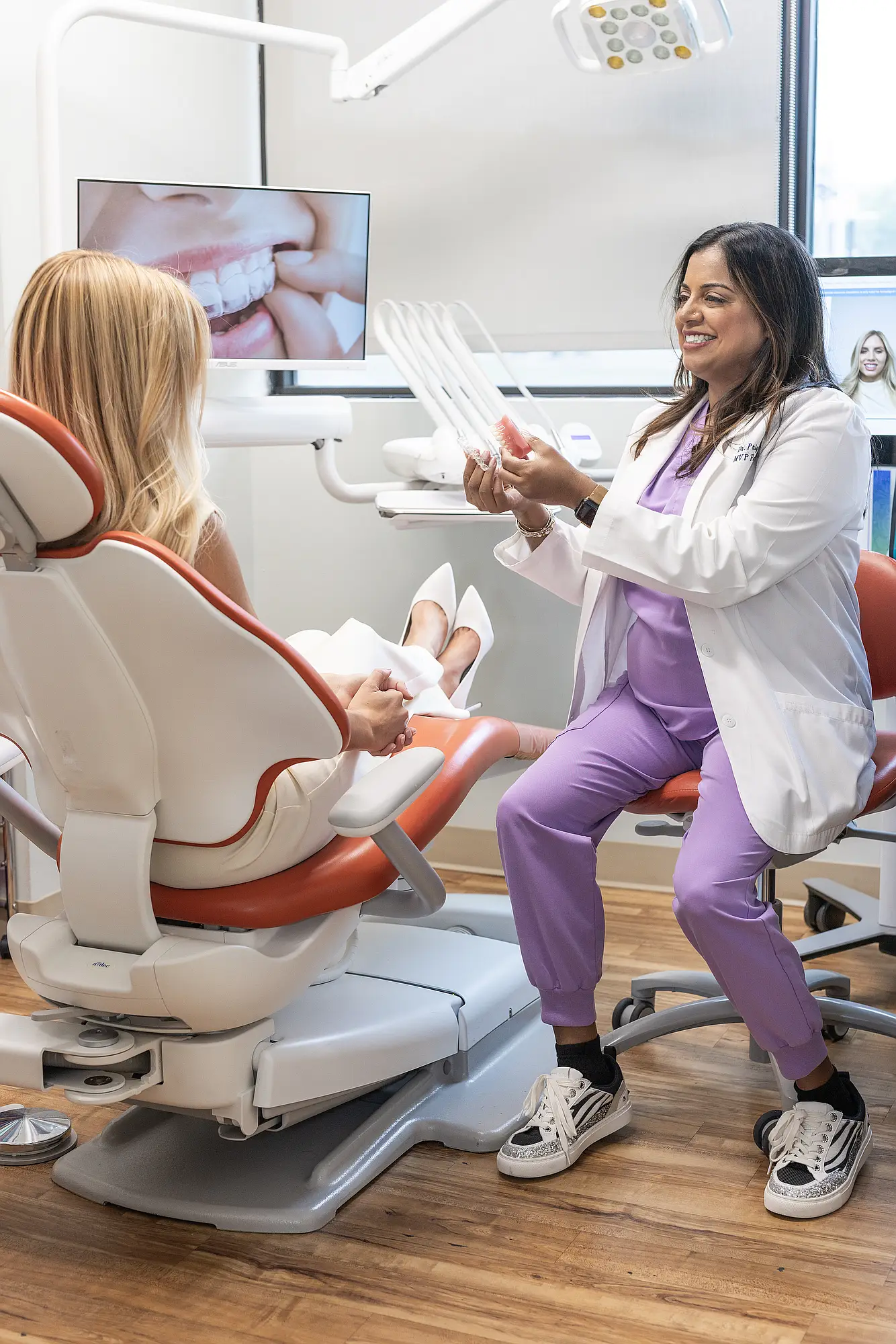
Aligners are not simply a better version of braces. They are a different set of compromises, and which set suits you is worth being clear about.
- RemovableThey come out to eat and to clean, so there are no food restrictions and brushing is normal.
- DiscreetThin and transparent, so they are far less noticeable than fixed brackets in normal conversation.
- Wear-time dependentThey only apply force while they are in. Treatment planned around a wear time that is not met will not track.
- Case dependentSome movements are handled better by fixed appliances. The assessment establishes which category yours is in.
What aligners can address
Cases they suit well
These are the situations aligners are commonly used for. Whether yours is one of them is a clinical judgment made after the assessment.
-
Mild to moderate crowding
Teeth overlapping where the movements needed are within the range aligners handle predictably.
-
Spacing
Closing gaps between teeth where the arch and the bite allow.
-
Relapse after braces
Teeth that have drifted since previous orthodontic treatment, often a shorter course of trays.
-
Adults who do not want brackets
Where the case is suitable, aligners remove the main objection adults raise to treatment.
Is it right for you
The one thing that decides it
Wear time is not a guideline. An aligner sitting in its case is applying no force at all, and a series planned around a daily wear time that is not met will simply stop tracking – which means extra trays, longer treatment, or a change of approach.
If you already know that is going to be difficult, say so at the consultation. It is far better to choose a fixed appliance from the start than to discover the problem halfway through a series.
- Worn most of the dayAligners are worn for the great majority of each day and taken out to eat and clean.
- Health firstDecay and gum disease are treated before orthodontic movement begins.
- Retention afterAs with braces, retainers follow treatment – see the Retainers page.
Worth discussing honestly
- Whether you will realistically keep to the wear time.
- What specifically you want moved.
- Any previous orthodontic treatment, and whether you still have the retainers.
- Whether a fixed appliance would suit your case better.

Looking after them
Clean trays, clean teeth
Rinse the trays when they come out and clean them as your dentist directs. Avoid hot water, which distorts the material. Anything other than water is best drunk with the trays out, since sugary drinks held against enamel by a tray is exactly the situation to avoid.
Keep them in their case rather than in a napkin. Aligners are lost far more often at restaurant tables than anywhere else.
Aligners only work while they are in. That single fact decides most cases.
MVP Family Dental · Jenkintown, PA

The short answer
Clear aligners are removable, near-invisible trays that straighten teeth without brackets or wires. You wear a planned sequence of thin transparent trays, each shaped slightly ahead of where your teeth currently are, so each tray applies force in the planned direction and the next one adds the following increment. The whole sequence is planned digitally before the first tray is made, and the trays come out to eat and to brush.
Clear Aligner Questions
- How do clear aligners work?
- You wear a sequence of thin transparent trays, each shaped slightly ahead of your current tooth positions. Wearing a tray applies force in the planned direction, and moving to the next one applies the next increment. The series is planned digitally before the first tray is made, so the intended movements can be seen rather than taken on trust. Progress is then checked against that plan at review appointments.
- How long do I have to wear them each day?
- For the great majority of the day, taking them out only to eat and to clean. Your dentist will give you the specific wear time for your plan, and meeting it is what makes the sequence track. An aligner sitting in its case is applying no force at all. A series planned around a wear time that is not met will mean extra trays, longer treatment, or a change of approach.
- Are aligners as effective as braces?
- For suitable cases, yes. Fixed braces handle a wider range of movements, including particular rotations and significant repositioning of roots. Aligners are not simply a better version of braces; they are a different set of compromises. The assessment establishes which is appropriate for what you need moved.
- Can I eat with them in?
- No, they come out to eat, which is why there are no food restrictions. Only water should be drunk with the trays in. Sugary drinks held against the enamel by a tray is exactly the situation to avoid. Keep them in their case rather than in a napkin while you eat.
- Do they hurt?
- Teeth are commonly tender for a short period after moving to a new tray. That usually settles as the teeth respond to the new position. Each tray is worn for the period your dentist specifies before the next one in the sequence is started.
- Will they affect my speech?
- Some people notice a slight difference for a short time while they adjust. It usually settles quickly as you get used to the trays. The trays are thin and transparent, so they are far less noticeable in normal conversation than fixed brackets.
- What happens if I lose a tray?
- Contact us rather than skipping ahead in the series. Your dentist will tell you whether to go back to the previous tray or to have the lost one remade. Skipping ahead breaks the planned sequence of movements. Aligners are lost far more often at restaurant tables than anywhere else, which is why keeping them in their case matters.
- Do I need retainers afterwards?
- Yes. Teeth drift back toward their old positions without retention, whichever appliance moved them. Retention follows aligner treatment exactly as it follows braces. See the Retainers page for how that works.
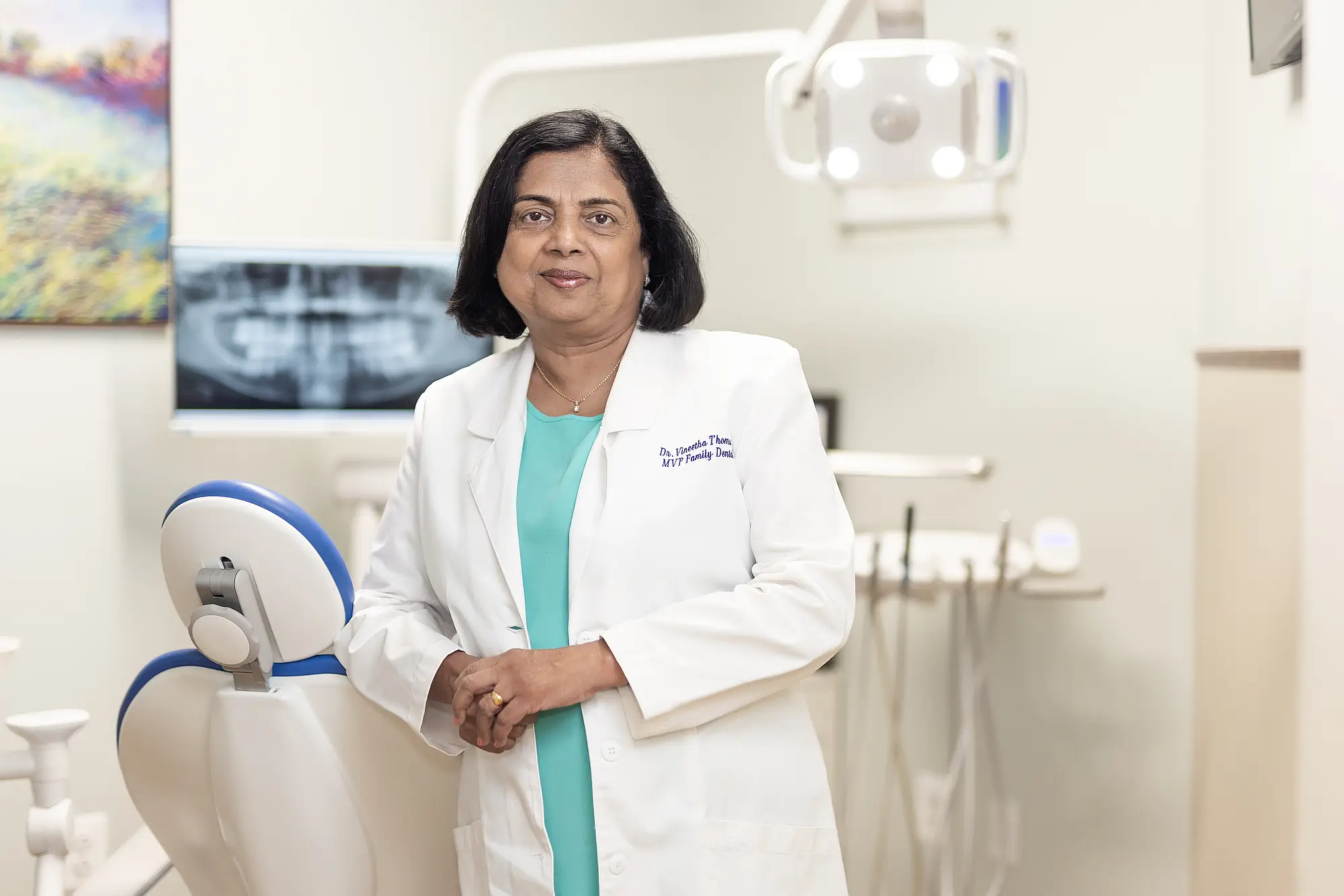
Dr. Vineetha Thomas, D.M.D.
LEARN MORE
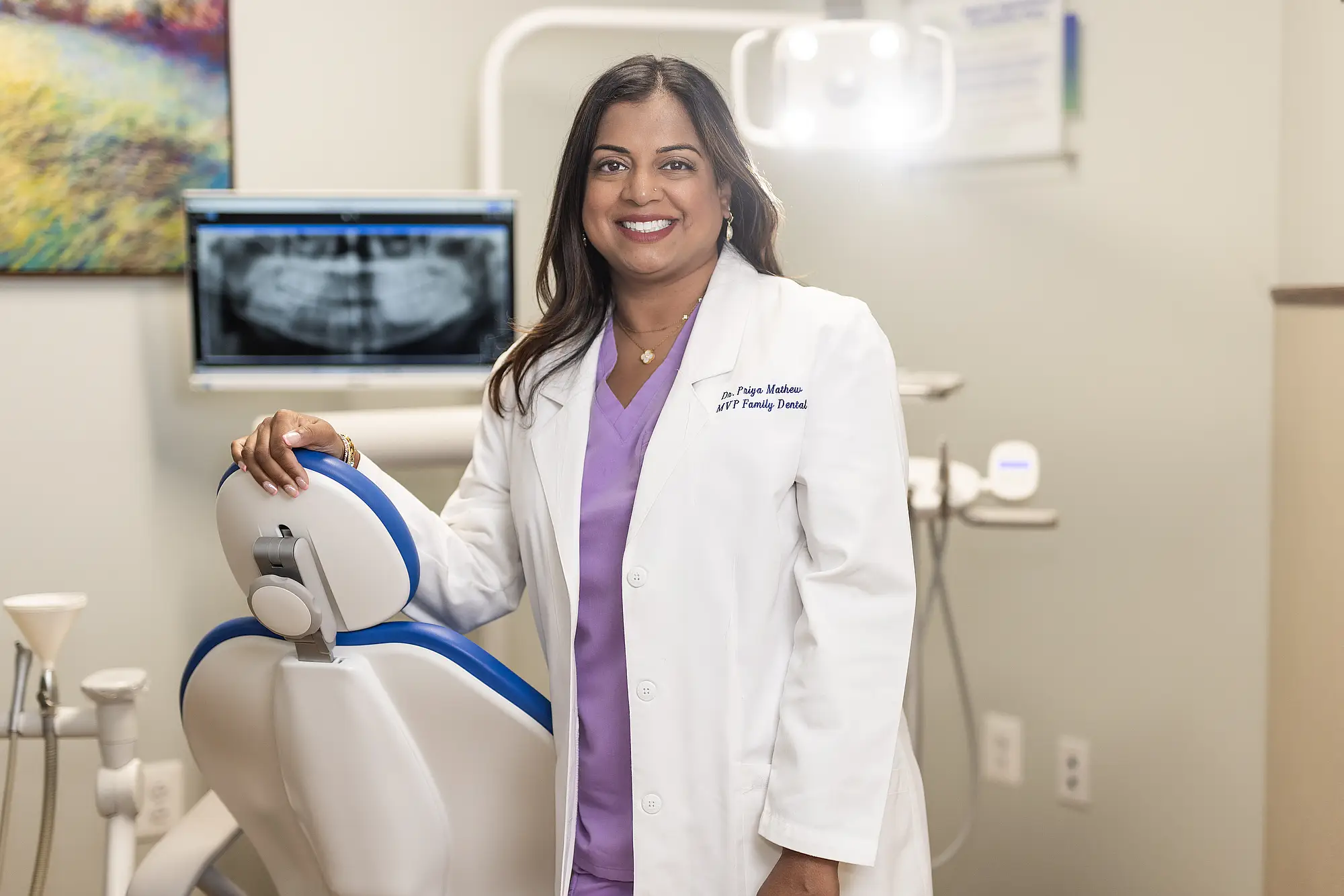
Dr. Priya Mathew, D.M.D.
LEARN MORE