
Preventive & Family Care
Dental Cleaning in Jenkintown, PA
The appointment that keeps the other appointments short.
A professional cleaning removes the hardened plaque that brushing and flossing cannot reach, and gives your hygienist a clear view of the gums underneath. It is the least complicated visit on the schedule and the one that does the most to keep the rest of your dentistry simple.

Exceptional care for a lifetime of healthy smiles
Cleanings at MVP Family Dental
Plaque is soft and comes off with a toothbrush. Left alone it mineralises into calculus, which is hard, bonded to the tooth, and no longer something you can remove at home. From that point it has to be taken off with instruments.
That is the whole reason cleanings exist. Everything else that happens at the appointment – the polish, the check of the gum margins, the conversation about which spots you are missing – is built around it.
What the appointment involves
A visit with no surprises
Cleanings are the most predictable appointment we do. Here is the shape of one, so nothing about it is unfamiliar when you sit down.
- A look at the gums firstYour hygienist checks the gum margins and notes anything that has changed since your last visit.
- Removing the depositsHardened calculus and plaque are lifted off the tooth surfaces and from just under the gumline.
- Polish and flossThe teeth are polished smooth, which makes it harder for new plaque to take hold, and flossed through.
- What to work onWe show you the areas that are being missed at home, which is usually a technique problem rather than an effort one.

Why it matters
Small problems, found early
A cleaning is also the most regular look anyone gets at your mouth. Several things tend to surface here before they surface anywhere else.
- Gums that bleedBleeding when the gums are cleaned is information, not a nuisance – it points to where inflammation is sitting.
- Early decayA soft spot found at a cleaning is a much smaller conversation than one found when it starts to hurt.
- Wear and grindingFlattened edges and small chips show a grinding habit long before you notice one.
- Restorations that are agingOld fillings and crown margins are checked while there is still time to plan rather than react.
How often
Finding your interval
Six months is the common starting point, but it is a starting point rather than a rule. Some people hold plaque more readily, some have gum histories that need closer watching, and some can comfortably go longer. Your dentist and hygienist will tell you what makes sense for your mouth.
- ChildrenCleanings double as a chance to build the brushing habit while the adult teeth are still arriving.
- AdultsThe interval is set by how quickly deposits return and how the gums are holding.
- Gum historiesAnyone treated for gum disease is usually seen more often – see Periodontal Maintenance.
Worth mentioning at your visit
- Any bleeding when you brush or floss, and where.
- Sensitivity to cold, sweet things or pressure.
- Changes in medication – several affect the mouth directly.
- Anything that has felt different since your last cleaning.

Between visits
The part that happens at home
A cleaning resets the mouth. What happens over the following months is down to the two minutes twice a day and the cleaning between the teeth, which is the part most people skip and the part that decides how the next visit goes.
If a spot keeps coming up as a problem, tell us. It is usually solved by changing the tool or the angle rather than by trying harder with the same one.
Cleanings are where dentistry stays cheap, quick and quiet. Everything else is what happens when they are skipped.
MVP Family Dental · Jenkintown, PA

The short answer
A professional dental cleaning, or prophylaxis, removes plaque, hardened tartar and surface stains that brushing and flossing cannot reach, which helps prevent cavities and gum disease. Plaque is soft and comes off with a toothbrush, but left alone it hardens into calculus, which is bonded to the tooth and has to be taken off with instruments. The appointment also gives your hygienist a clear view of the gum margins, so bleeding, early decay, wear and aging restorations are picked up while they are still small.
Dental Cleaning Questions
- What is the difference between a cleaning and a checkup?
- The cleaning is the hygiene work: removing deposits, polishing and flossing. The checkup is the examination of the teeth, gums and soft tissues. They are usually done at the same visit. The cleaning is also the most regular look anyone gets at your mouth, so several things tend to surface there first.
- Does a cleaning hurt?
- For most people it is uncomfortable at most, and mainly where the gums are already inflamed. Tell your hygienist if anything is sore, because the technique can be adjusted. It is the least complicated visit on the schedule. Discomfort commonly eases once the inflammation at those spots has settled.
- Why do my gums bleed during a cleaning?
- Healthy gums do not bleed. Bleeding means there is inflammation at that spot, usually from plaque sitting along the gumline. It commonly settles once the area is cleaned and kept clean. Bleeding is information rather than a nuisance, because it points to exactly where the problem is.
- Can I not just brush better instead?
- No. Brushing removes plaque, which is soft, but once plaque hardens into calculus it is bonded to the tooth and can only be removed with instruments. That is the whole reason cleanings exist. What brushing and cleaning between the teeth decides is how much has built up by the time you arrive.
- How often should I have a cleaning?
- Six months is the common starting point, but it is a starting point rather than a rule. Some people hold plaque more readily, some have gum histories that need closer watching, and some can comfortably go longer. Anyone treated for gum disease is usually seen more often. Your dentist and hygienist will tell you what makes sense for your mouth.
- Will my teeth look whiter afterwards?
- Often, yes. A cleaning removes surface staining, so teeth frequently look brighter afterwards. It does not change the underlying color of the tooth, which is what whitening is for. The polish also leaves the surface smoother, which makes it harder for new plaque to take hold.
- Do children need cleanings?
- Yes. Cleanings give us a regular look at how the adult teeth are coming through, and a chance to work on brushing technique while the habit is still forming. Building that habit early is part of the point of the visit.
- How do I book a cleaning?
- Contact the office and we will find a time that works, including for several members of the same family together. It is worth mentioning any bleeding when you brush or floss and where, any sensitivity to cold, sweet things or pressure, and any changes in medication, since several affect the mouth directly. Anything that has felt different since your last cleaning is worth saying too.
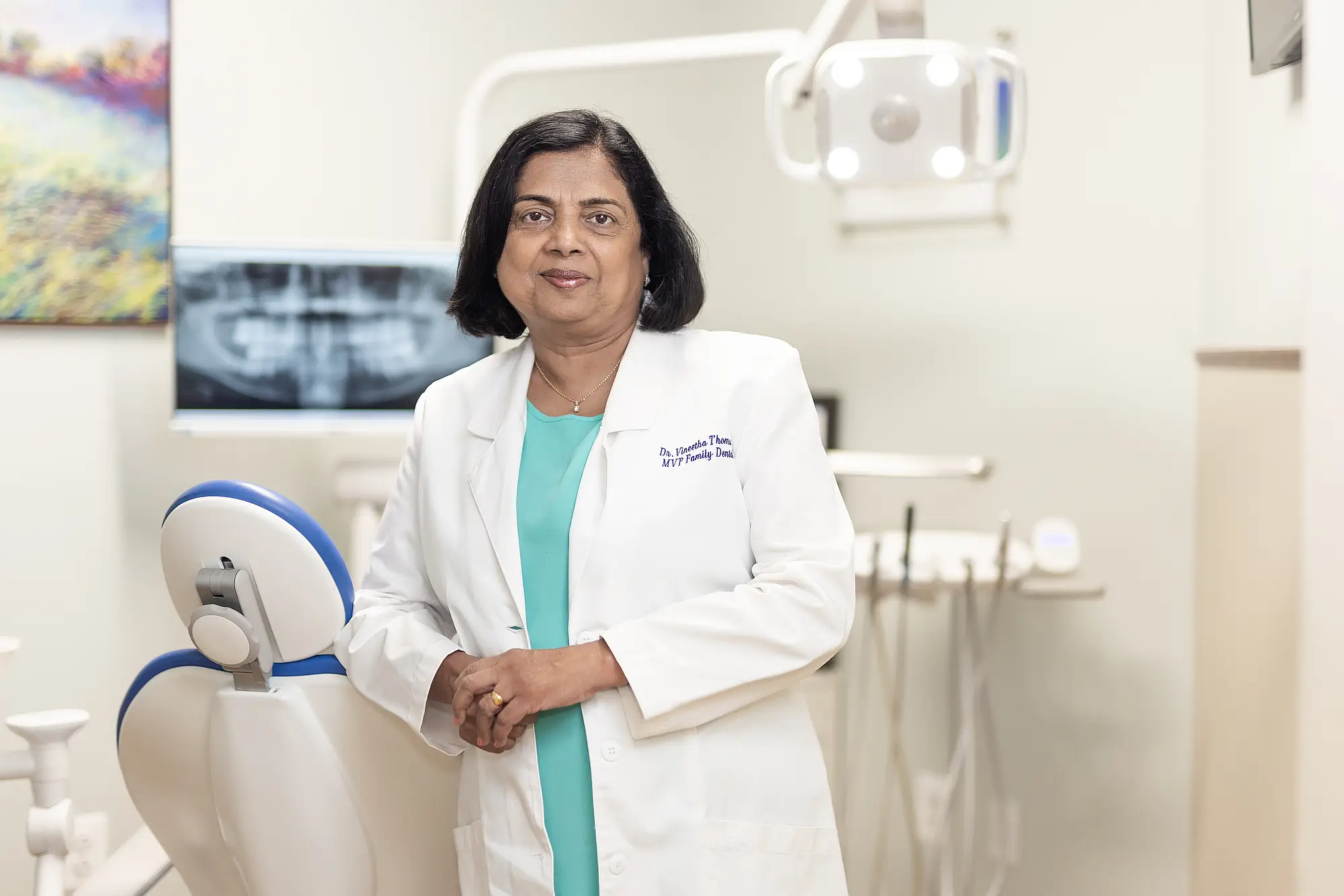
Dr. Vineetha Thomas, D.M.D.
LEARN MORE
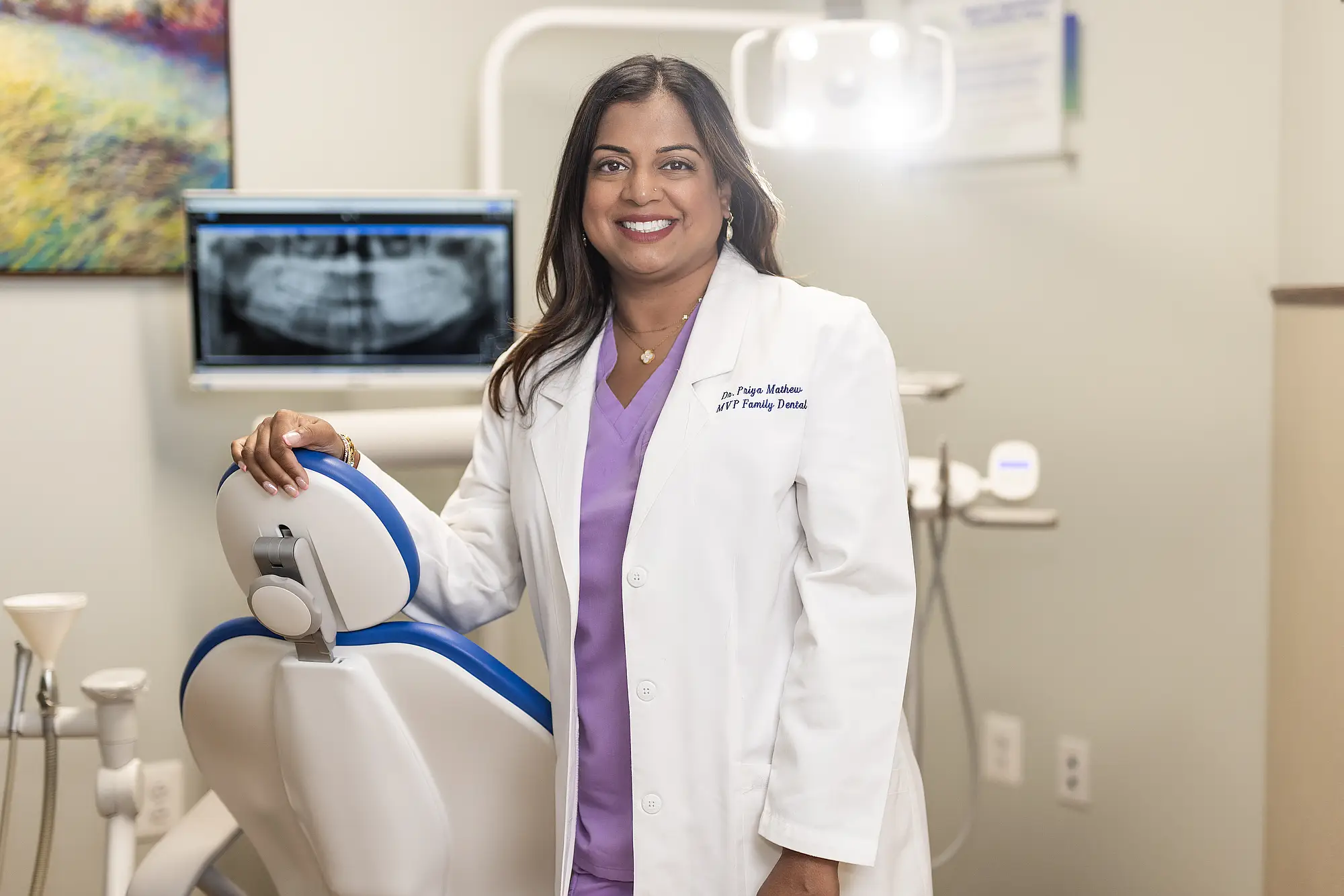
Dr. Priya Mathew, D.M.D.
LEARN MORE