

Preventive & Family Care
Oral Cancer Screening in Jenkintown, PA
A few quiet minutes at the end of a routine examination.
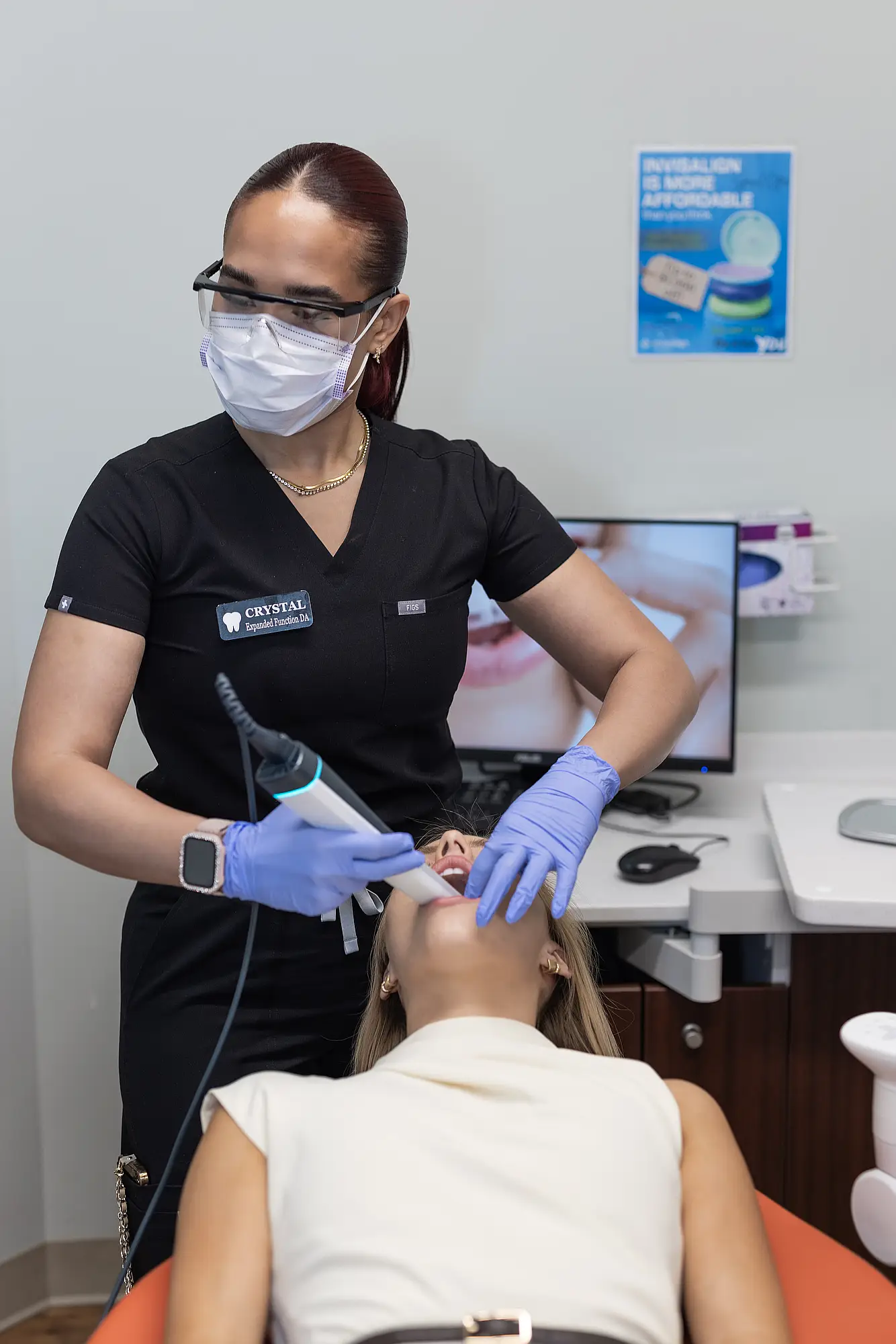
An oral cancer screening is a systematic look at the soft tissues of the mouth and neck. It is quick, it does not hurt, and it happens as part of a routine examination rather than as an appointment you have to think about booking.

Exceptional care for a lifetime of healthy smiles

Screening at MVP Family Dental
The point of a screening is that most early changes in the mouth cause no symptoms at all. There is nothing to feel and often nothing you would notice in a mirror, which is why the check is done by someone looking deliberately rather than left to chance.
A screening does not diagnose anything. It finds things worth a closer look and makes sure they get one, promptly, rather than being watched indefinitely.
What we check
A systematic look and feel
The screening covers the whole mouth and the tissues around it, in the same order every time so nothing is skipped.
- Lips and cheeksThe lips, the inside of the cheeks and the vestibule are examined and gently felt.
- Tongue and floor of mouthThe tongue is checked on all surfaces including underneath, along with the floor of the mouth.
- Palate and throatThe hard and soft palate and the visible part of the throat are inspected.
- Neck and jawThe lymph nodes in the neck and under the jaw are felt for anything enlarged or firm.
What we are looking for
Changes that have not settled
Most findings in the mouth are ordinary and resolve on their own. What draws attention is anything that has been there for weeks without changing.
- Sores that do not healMost mouth ulcers settle within a couple of weeks. One that has not is worth showing us.
- Red or white patchesA patch of tissue that looks different from what surrounds it, and stays that way.
- Lumps and thickeningAny firm area in the mouth, lip or neck that was not there before.
- Persistent symptomsOngoing hoarseness, difficulty swallowing, numbness, or a feeling that something is caught.
Who should be screened
Part of every examination
Screening is not restricted to people with risk factors – it forms part of a normal examination for every adult patient, because early changes give no warning. If you have a specific concern, say so at the start of the visit rather than at the end.
- Every adultScreening is part of the routine examination, not an add-on you have to request.
- Between visitsAnything that has been present for more than two weeks is worth an appointment on its own.
- Your own checkYou see your mouth far more often than we do – tell us about anything that looks new.
Tell us about
- A sore, ulcer or patch that has lasted more than two weeks.
- A lump in the mouth, lip, jaw or neck.
- Persistent hoarseness, numbness or difficulty swallowing.
- Any change you have noticed but assumed was nothing.
If something is found
A clear next step
If a finding needs more than observation, we explain what we have seen and arrange the appropriate referral so it is assessed properly. A screening finding is not a diagnosis, and most turn out to be benign.
Where something is being watched rather than referred, we agree a review date before you leave, so it does not quietly become next year’s problem.
Two weeks is the number worth remembering. Anything in your mouth that has not settled by then is worth showing someone.
MVP Family Dental · Jenkintown, PA

The short answer
An oral cancer screening is a systematic visual and technology-assisted examination of the soft tissues of the mouth and neck, to detect precancerous conditions and oral cancer at the earliest, most treatable stage. It covers the lips and cheeks, the tongue on all surfaces including underneath, the floor of the mouth, the palate and throat, and the lymph nodes of the neck and jaw. It is quick, it does not hurt, and it forms part of a routine examination for every adult patient rather than an appointment you have to book separately.
Oral Cancer Screening Questions
- What is an oral cancer screening?
- An oral cancer screening is a systematic examination of the soft tissues of the mouth, covering the lips, cheeks, tongue, floor of mouth, palate and throat, along with feeling the lymph nodes of the neck and jaw. It is done in the same order every time so nothing is skipped. It does not diagnose anything; it finds things worth a closer look and makes sure they get one. Most early changes in the mouth cause no symptoms at all, which is why the check is done deliberately rather than left to chance.
- Does it hurt?
- No. It is a visual examination combined with gentle pressure with the fingers. Nothing is removed and no anesthetic is involved. It takes a few quiet minutes at the end of a routine examination.
- Do I need to book it separately?
- No. It forms part of a routine dental examination for adult patients rather than being an add-on you have to request. If you have a specific concern, say so at the start of the visit rather than at the end.
- What are you actually looking for?
- Sores that have not healed, since most mouth ulcers settle within a couple of weeks and one that has not is worth showing us. Red or white patches that look different from the tissue around them and stay that way. Lumps or thickened areas in the mouth, lip or neck that were not there before. And persistent symptoms such as hoarseness, difficulty swallowing, numbness, or a feeling that something is caught.
- Does a finding mean I have cancer?
- No. Most findings in the mouth are ordinary and resolve on their own, and most turn out to be benign. A screening identifies things that warrant a closer look, and we arrange for that assessment. Where something is being watched rather than referred, we agree a review date before you leave.
- How often should I be screened?
- At your routine examinations, since it is part of every adult examination here. Between visits, anything that has been present for more than two weeks is worth an appointment of its own. Two weeks is the number worth remembering.
- Can I check my own mouth?
- Yes, and it helps. You see your mouth far more often than we do, so tell us about anything that looks or feels new. Anything you have noticed but assumed was nothing is worth mentioning.
- How do I book?
- Contact the office for a routine examination, or sooner if you have a specific concern. Say so when you book, and the time will be there for it. A sore, ulcer or patch lasting more than two weeks, a lump in the mouth, lip, jaw or neck, or persistent hoarseness, numbness or difficulty swallowing are all reasons not to wait.

Dr. Vineetha Thomas, D.M.D.
LEARN MORE

Dr. Priya Mathew, D.M.D.
LEARN MORE