

Restorative & Implant Care
Single Tooth Implants in Jenkintown, PA
One gap, one implant, and the teeth either side left untouched.
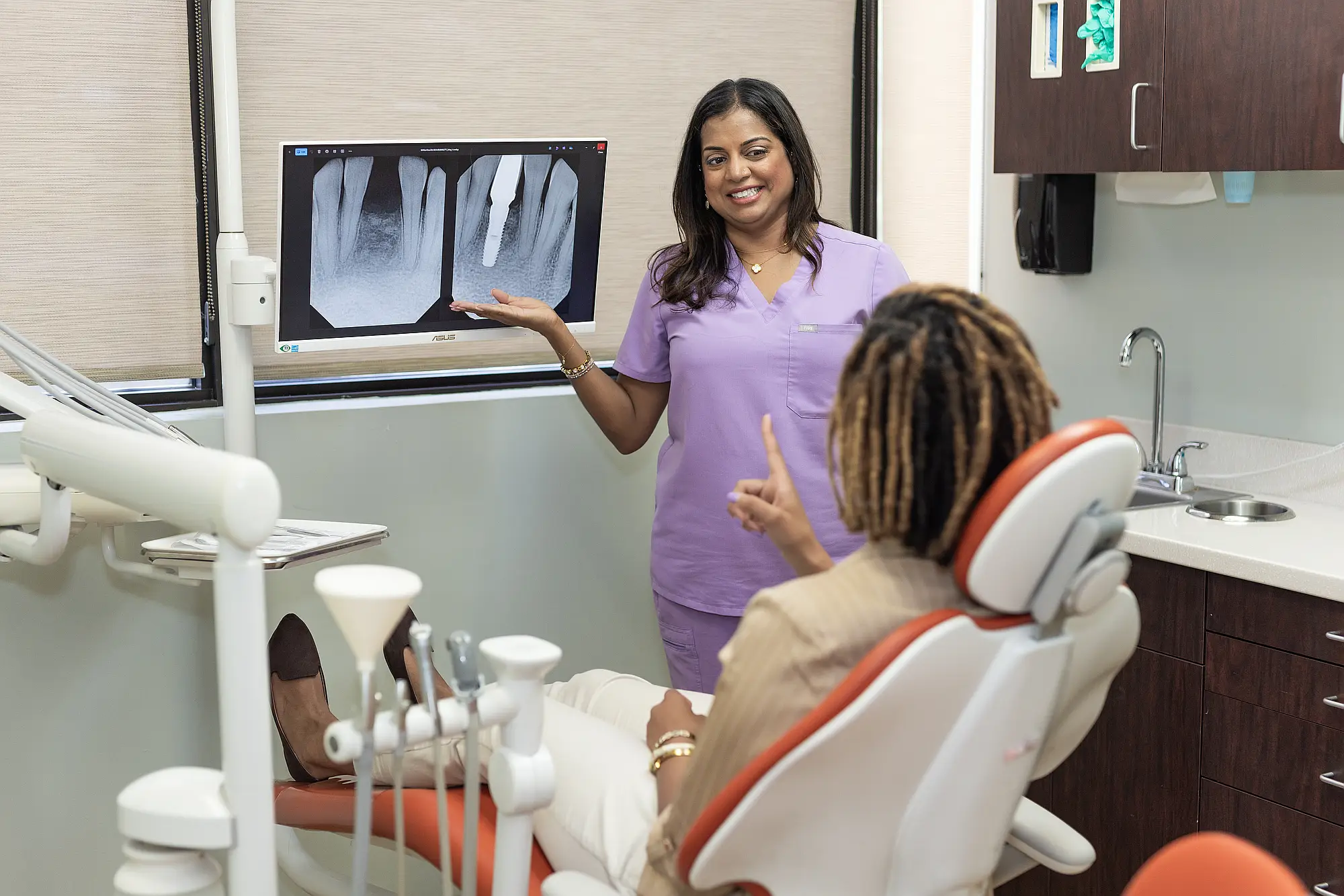
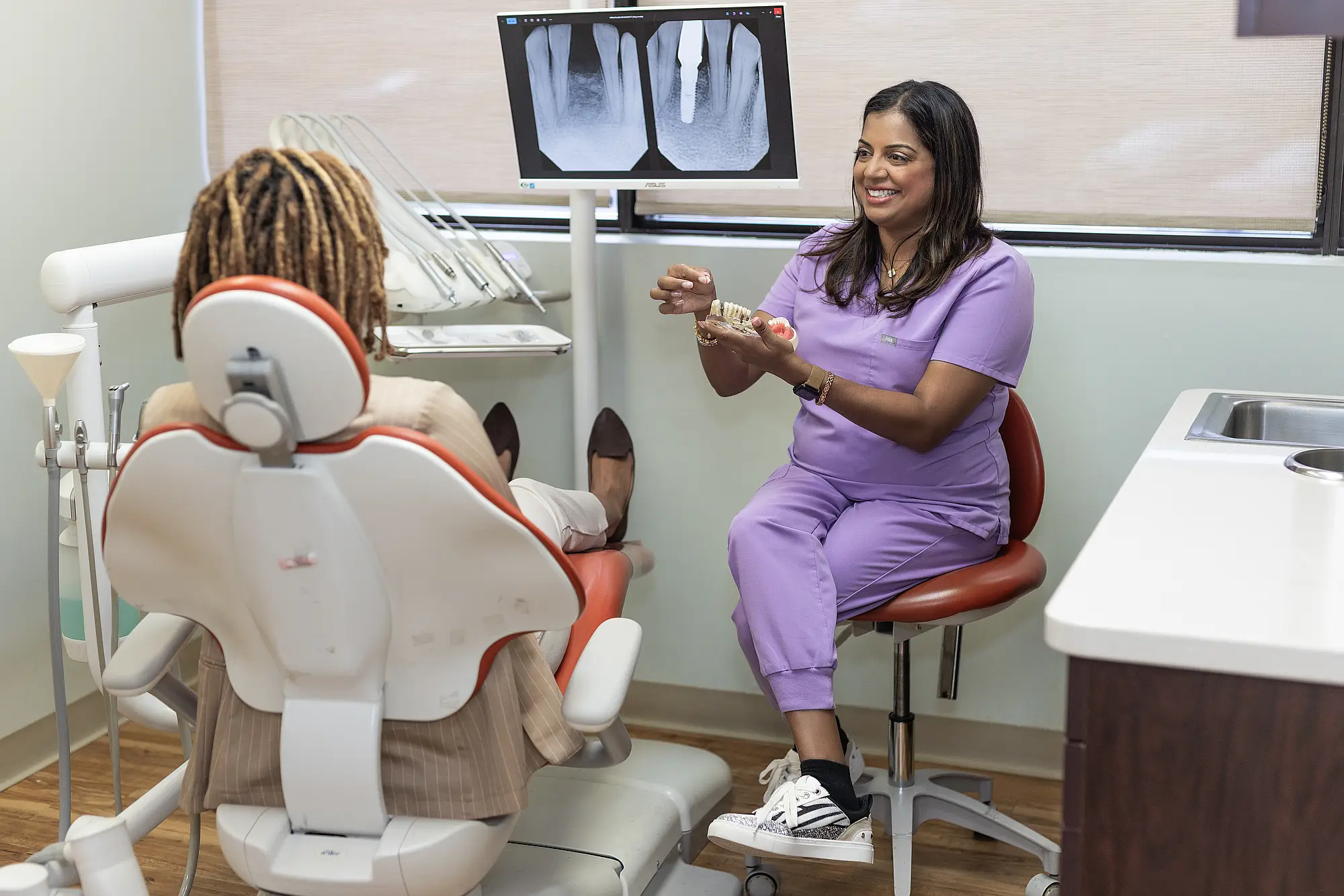
A single tooth implant fills one space in the mouth. A post takes the place of the root and a crown is fitted on top of it. It is fixed, it stays in at night, and unlike a bridge it does not require anything to be done to the healthy teeth on either side.
Exceptional care for a lifetime of healthy smiles
Single tooth implants at MVP Family Dental
A single implant is the most self-contained way to replace one tooth. It only involves the space where the tooth used to be. Nothing is clasped to the teeth beside it, and nothing comes in and out.
That is usually the deciding factor for patients choosing between an implant and a bridge. A conventional bridge is carried by the teeth on either side of the gap, which means preparing and crowning them — and if those teeth are healthy and did not otherwise need work, an implant leaves them alone.
What is involved
Planned from a scan, placed to a guide
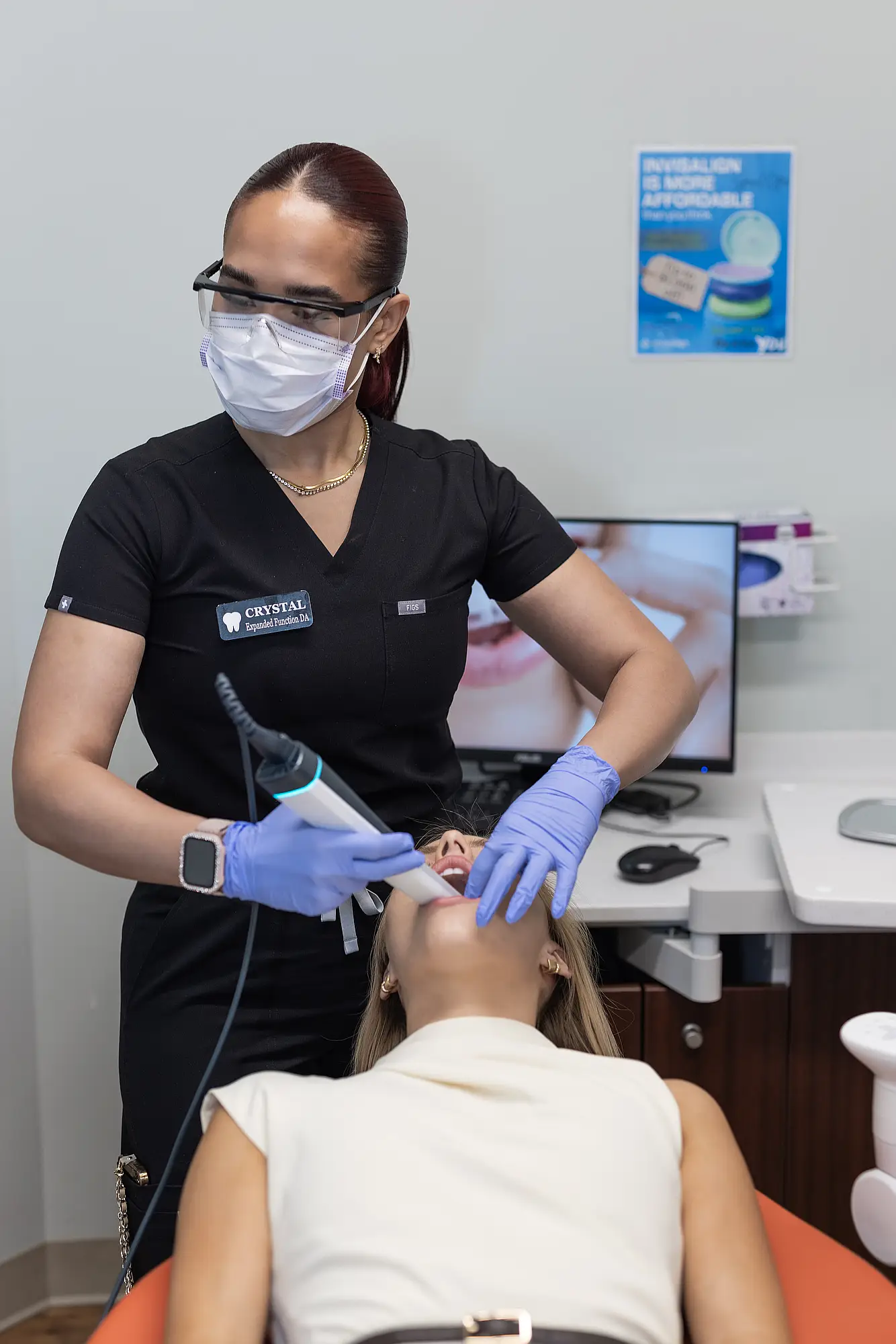
The position of a single implant is decided before the appointment rather than at the chair. Scans of the area are taken and used to make a guide, so the implant goes in where it was planned to go.
- Assessment firstWe scan the space to see the bone and check whether the site is suitable for an implant.
- A guide is madeThe scans are used to produce a stent that guides the implant into the planned position.
- The post is placedA single surgical appointment under local anesthetic.
- The crown comes laterOnce the implant has integrated with the bone, a scan is taken and the crown is made for it.
How treatment works
From evaluation to a finished tooth
Dr. Mathew places single implants across a small number of appointments with a healing period in the middle. The sequence is mapped out for you at the consultation.
- Evaluation and scansWe look at the area that needs replacing and take scans to check whether it is a good candidate for an implant.
- Making the guideThose scans are used to make a stent, which acts as a guide for placing the implant.
- Placing the implantThe post is placed using the guide. You are numbed for the appointment.
- Healing and integrationThe implant is left to heal and integrate with the bone before it carries anything.
- Fitting the crownA scan is taken once the implant is ready, and the crown is made and fitted on top of it.
Comparing the options
Implant, bridge or partial denture
All three replace a missing tooth. They differ in what else they involve, and that is usually what decides it.
- Single implantAffects only the space where the tooth is missing. Fixed, and stays in at night.
- Conventional bridgeCarried by the teeth either side of the gap, which have to be prepared and crowned.
- Partial dentureReplaces the gap but comes in and out, and is generally less comfortable than a fixed option.
Worth bringing to your consultation
- Any X-rays or records from a previous dentist.
- How long the tooth has been missing.
- A current list of medications and medical conditions.
- Questions about the order of appointments and the wait between them.

Afterwards
Cleaned like a natural tooth
An implant crown cannot decay, but the gum and bone holding the post underneath it can be lost. So a single implant is looked after the same way your own teeth are: brushing, cleaning between the teeth, and keeping to your hygiene visits.
At your checkups we look at the gum around the implant, check the crown is still seated correctly, and make sure the bite has not shifted around it.
Two generations of dentists, one shared commitment to helping Jenkintown families eat, speak and smile with confidence.
MVP Family Dental · Jenkintown, PA
The short answer
A single tooth implant replaces one missing tooth with a post that takes the place of the root and a crown fitted on top of it, without preparing or altering the healthy teeth on either side of the gap. It is fixed and stays in at night, and it only involves the space where the tooth used to be. The position is decided before the appointment: the area is scanned, a guide is made from those scans, the post is placed under local anesthetic, and the crown is made once the implant has integrated with the bone.
Single Tooth Implant Questions
- What is a single tooth implant?
- A single tooth implant is a way of replacing one space in your mouth. A post takes the place of the root and a crown is fitted on top of it. It is the most self-contained way to replace one tooth, because it only involves the space where the tooth used to be. Nothing is clasped to the teeth beside it and nothing comes in and out.
- How does it differ from other replacements?
- It is permanent and fixed. Once it is placed it stays in place and does not come out at night the way a partial denture does. It also leaves the neighboring teeth untouched, where a conventional bridge has to be carried by them. That is usually the deciding factor for patients choosing between the two.
- What does the process involve?
- It starts with an evaluation of the area that needs replacing, with scans taken to see the bone and check whether the site is a good candidate. Those scans are used to make a stent that guides the implant into the planned position. The post is then placed at a single surgical appointment under local anesthetic. After a healing period a scan is taken and the crown is made and fitted on top.
- Will I need a bone graft?
- Sometimes, and it depends. If the tooth has been missing for a long time, bone may need to be added to the area first. If the tooth was lost recently and there is enough bone there, a graft is not needed. The scan at the assessment is what establishes which applies.
- How does it compare with a bridge?
- A bridge is carried by the two teeth either side of the gap, so those teeth have to be prepared. If they did not otherwise need crowning, that is work being done to healthy teeth. A single implant only affects the area where the tooth is missing. A partial denture is a third option, but it comes in and out.
- What is healing like?
- You are numbed for the placement itself, and the implant then needs time to integrate with the bone before it carries anything. Most patients are comfortable the following day. The crown is fitted at a later appointment once that integration is complete.
- How do I look after it?
- The same way you look after your own teeth: brushing twice a day, cleaning between the teeth, and keeping to your hygiene appointments. An implant crown cannot decay, but the gum and bone holding the post underneath it can be lost, and that is what needs protecting. At your checkups we look at the gum around the implant, check the crown is still seated correctly, and make sure the bite has not shifted around it.
- How do I find out whether I am a candidate?
- Book a consultation. We scan the area, look at the bone and talk through whether an implant, a bridge or a denture fits your case best. It helps to bring any X-rays or records from a previous dentist, a current list of medications and medical conditions, and to know roughly how long the tooth has been missing.
Dr. Vineetha Thomas, D.M.D.
LEARN MORE
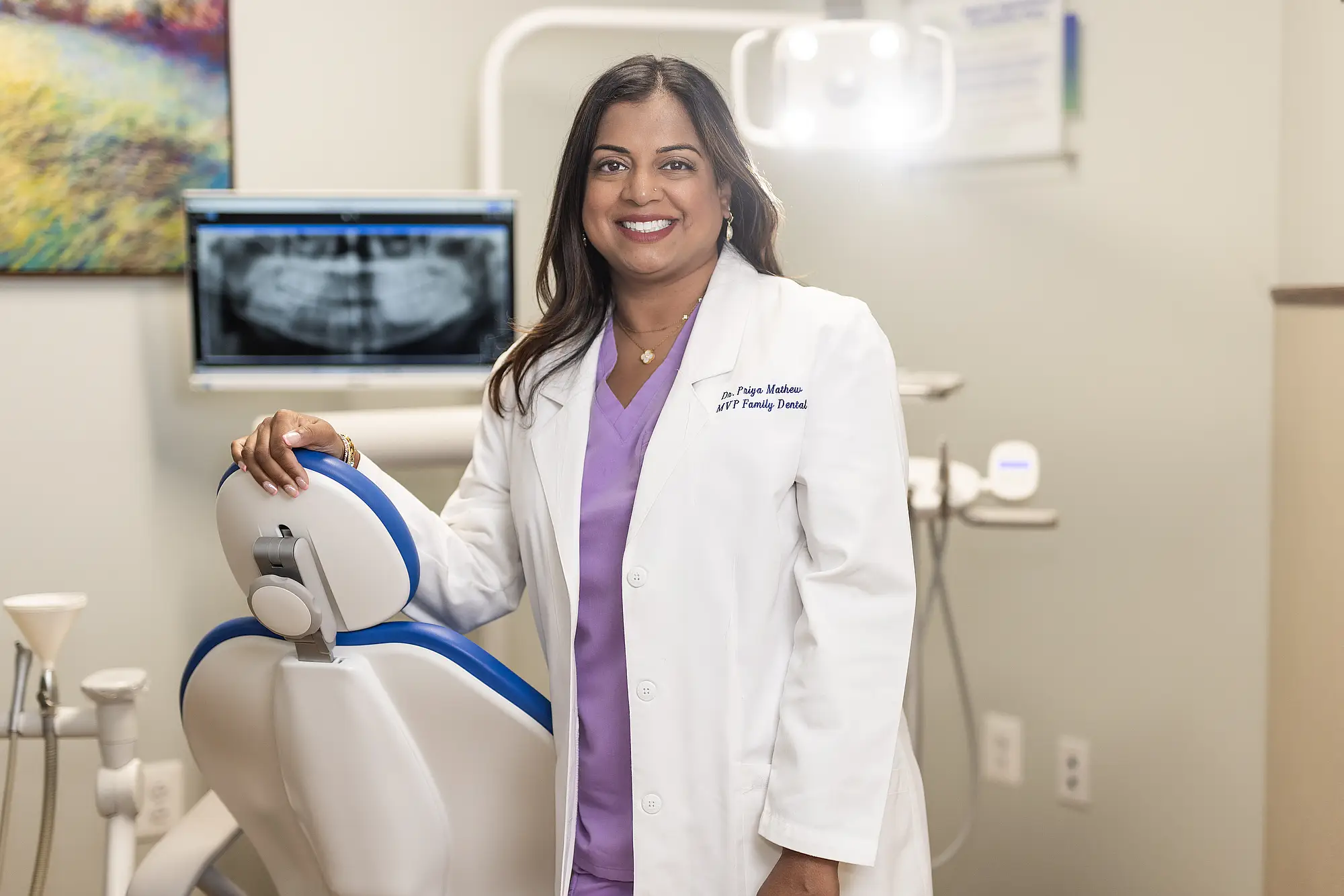
Dr. Priya Mathew, D.M.D.
LEARN MORE