
Cosmetic & Smile Care
Teeth Whitening in Jenkintown, PA
Professional gel, custom trays, and a shade you actually chose.
Whitening lifts the color of the tooth itself rather than polishing something off the surface. Done professionally, it starts from an examination, uses gel at a concentration matched to your teeth, and stops at a shade you picked – not wherever the strip happened to leave it.
Exceptional care for a lifetime of healthy smiles
Whitening at MVP Family Dental
There are two kinds of tooth discoloration and they behave completely differently. Surface staining sits on the enamel and comes off with a cleaning. Intrinsic color is in the tooth structure, and that is what whitening gel changes.
The examination that comes first is not a formality. Whitening gel on a tooth with untreated decay, or on exposed root surfaces, is uncomfortable and unhelpful, and existing crowns and fillings will not change color at all.
How it can be done
Two approaches, one result
In-office and take-home whitening use the same chemistry at different concentrations over different timescales. Which suits you depends on your teeth and how you would rather do it.
-
In-Office Teeth Whitening
Professional chairside whitening treatment using high-concentration bleaching gel to dramatically brighten teeth in a single office visit.
-
Take-Home Whitening
Custom-fitted whitening trays with professional-grade gel for convenient, gradual teeth whitening in the comfort of your home.

Before the gel
What has to be checked first
Four things are established at the assessment, and each one can change the plan or rule whitening out for now.
- Decay and gum healthWhitening is done on a healthy mouth. Anything active is treated first.
- Existing restorationsCrowns, veneers and fillings do not lighten. Where they show, they may need replacing to match afterwards.
- The cause of the colorStaining from food and drink responds differently from discoloration that came from within the tooth.
- Sensitivity historyTeeth that are already sensitive need the concentration and the schedule adjusted.
How treatment works
From shade tab to finished result
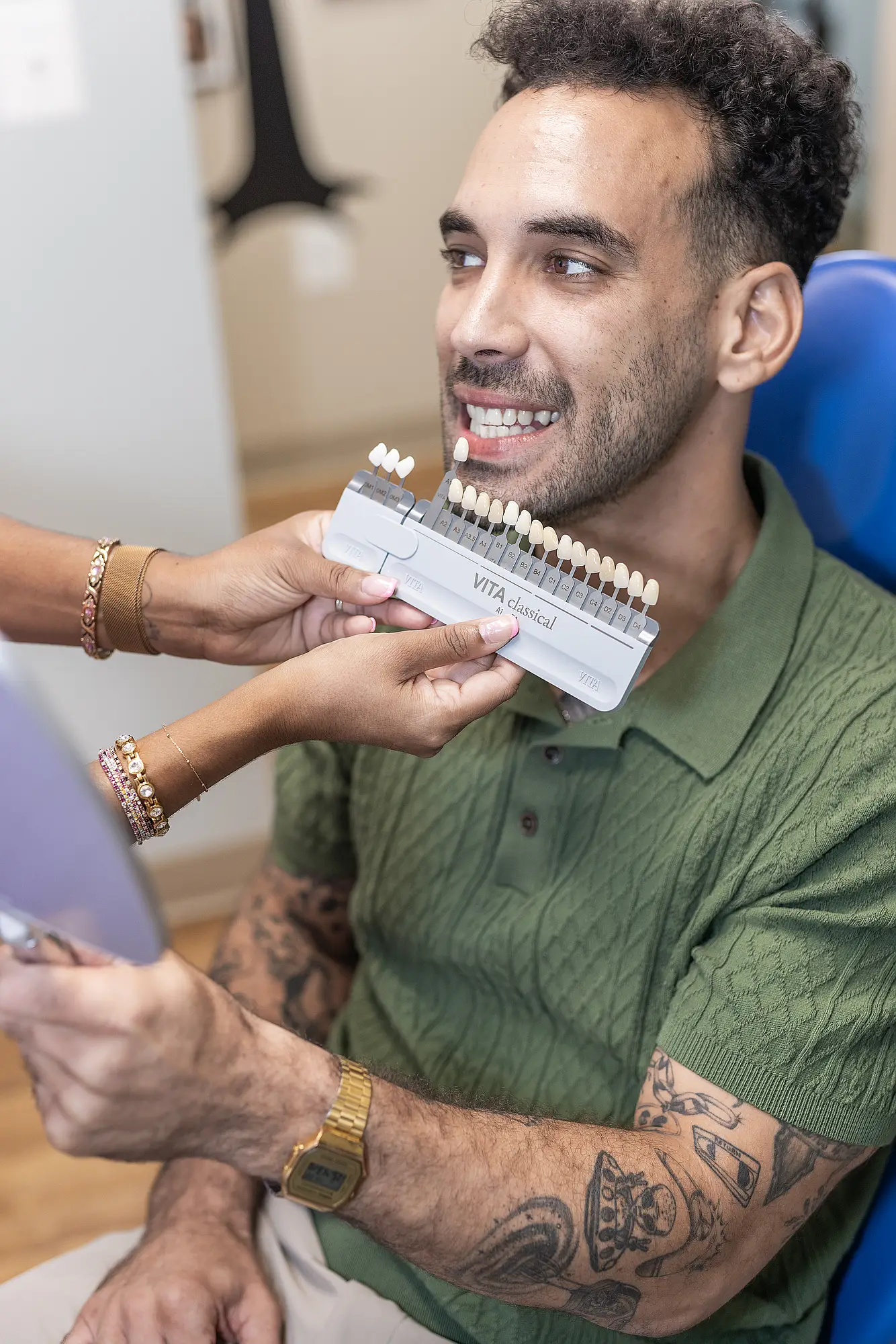
Whichever route you take, the sequence starts and ends the same way – with a recorded shade, so the change is measured rather than remembered.
- Examination and shadeThe mouth is checked and your starting shade is recorded against a shade guide.
- Choosing the approachIn-office, take-home, or a combination, depending on your teeth, your sensitivity and your preference.
- Custom trays where usedTake-home whitening uses trays made to your own teeth so the gel stays on the teeth and off the gums.
- Reviewing the shadeThe result is checked against the starting shade, and any restorations that now stand out are discussed.
Is whitening right for you
What it will not change
The honest limits are worth stating up front. Whitening does not change the color of crowns, veneers, bonding or fillings; it does not work the same way on every kind of discoloration; and results vary from person to person because the starting tooth structure varies.
If restorations show when you smile, the sequence matters: whiten first, let the shade settle, then match new work to the result. Doing it the other way round means matching new work to a color you are about to change.
- Natural teethOnly natural tooth structure lightens. Restorations stay the shade they were made.
- Sequenced firstWhitening comes before bonding, veneers or crowns in any cosmetic plan.
- IndividualHow much a tooth lightens depends on the tooth, so results are not the same for everyone.
Worth telling us
- Whether you have crowns, veneers or fillings that show when you smile.
- Any sensitivity to cold or sweet things.
- What you have already tried, and what happened.
- Whether you are working toward a particular date.
Keeping the shade
The color drifts back
Whitening is not permanent. Teeth pick color back up from coffee, tea, red wine, dark fruits and tobacco, so the shade drifts over time. How quickly depends almost entirely on what goes past them.
Keeping your trays makes topping up straightforward later. Your dentist will advise on how and when, rather than leaving you to guess – overusing gel is the most common way people end up with sensitivity.
Whitening first, then everything else. It is the one step that cannot be undone out of order.
MVP Family Dental · Jenkintown, PA
The short answer
Professional teeth whitening uses a peroxide-based gel to lighten the color within the tooth structure itself, rather than polishing stain off the surface the way a cleaning does. It can be done in the office with a higher-concentration gel in a single visit, or at home with custom-made trays and a lower concentration used over a longer period. It starts from an examination, because gel on untreated decay or exposed root surfaces is uncomfortable and unhelpful, and because crowns, veneers, bonding and fillings keep the shade they were made in.
Teeth Whitening Questions
- How does teeth whitening work?
- A peroxide-based gel lightens the color within the tooth structure itself, rather than polishing stain off the outside the way a cleaning does. There are two kinds of tooth discoloration and they behave differently: surface staining sits on the enamel and comes off with a cleaning, while intrinsic color is in the tooth structure and is what the gel changes. Your starting shade is recorded against a shade guide so the change is measured rather than remembered. The result is then checked against that starting shade.
- What is the difference between in-office and take-home whitening?
- In-office whitening uses a higher-concentration gel applied at the practice, in a single visit. Take-home whitening uses custom-made trays and a lower concentration used gradually over a longer period. They use the same chemistry at different concentrations over different timescales. Which suits you depends on your teeth, your sensitivity and how you would rather do it.
- Will whitening work on my crowns or fillings?
- No. Crowns, veneers, bonding and fillings keep the shade they were made in. If they show when you smile, they may need replacing to match after whitening. That is why the sequence matters: whiten first, let the shade settle, then match new work to the result.
- Does whitening make teeth sensitive?
- Some people experience sensitivity during whitening. Tell us if you are already sensitive, because the concentration and the schedule can be adjusted. Overusing gel is the most common way people end up with sensitivity, which is why your dentist advises on how and when rather than leaving you to guess.
- Why do I need an examination first?
- Whitening gel on untreated decay or on exposed root surfaces is uncomfortable and unhelpful, so anything active is treated first. The examination also establishes what kind of discoloration you have, because staining from food and drink responds differently from color that came from within the tooth. It identifies any restorations that will not lighten, and any history of sensitivity that would change the concentration or the schedule.
- How long does it last?
- It is not permanent. Teeth pick color back up from coffee, tea, red wine, dark fruits and tobacco, so the shade drifts over time. How quickly depends almost entirely on what goes past them. Keeping your trays makes topping up straightforward later.
- Are shop-bought whitening kits the same?
- No. They use lower concentrations and generic trays, so the gel is less well controlled and more likely to reach the gums. They also skip the examination that establishes whether whitening is suitable and what kind of discoloration you have. And they stop wherever the strip happens to leave it, rather than at a shade you chose.
- How do I get started?
- Book a consultation. Your starting shade is recorded so the change can be measured rather than guessed at. It helps to say whether you have crowns, veneers or fillings that show when you smile, any sensitivity to cold or sweet things, what you have already tried, and whether you are working toward a particular date.
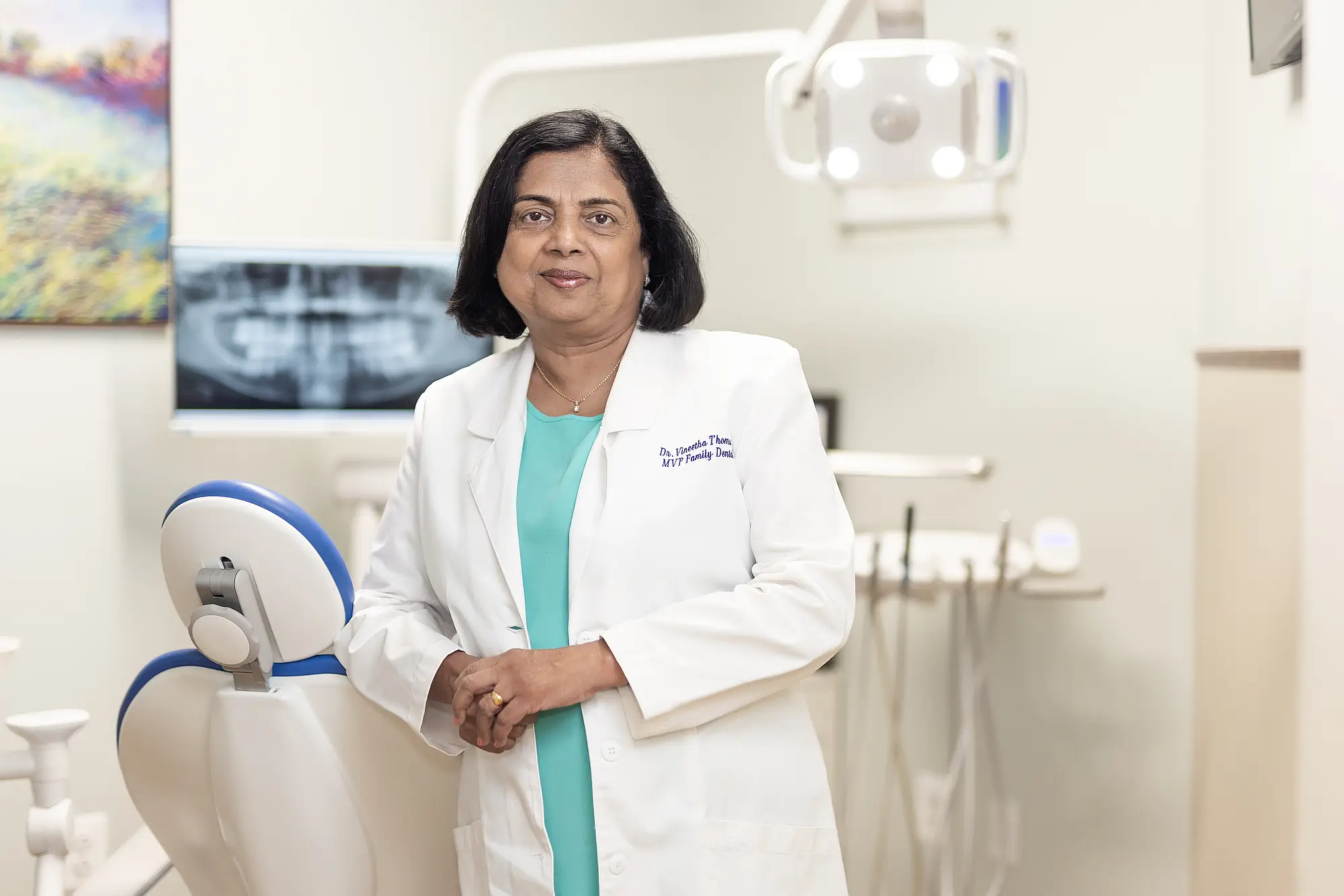
Dr. Vineetha Thomas, D.M.D.
LEARN MORE
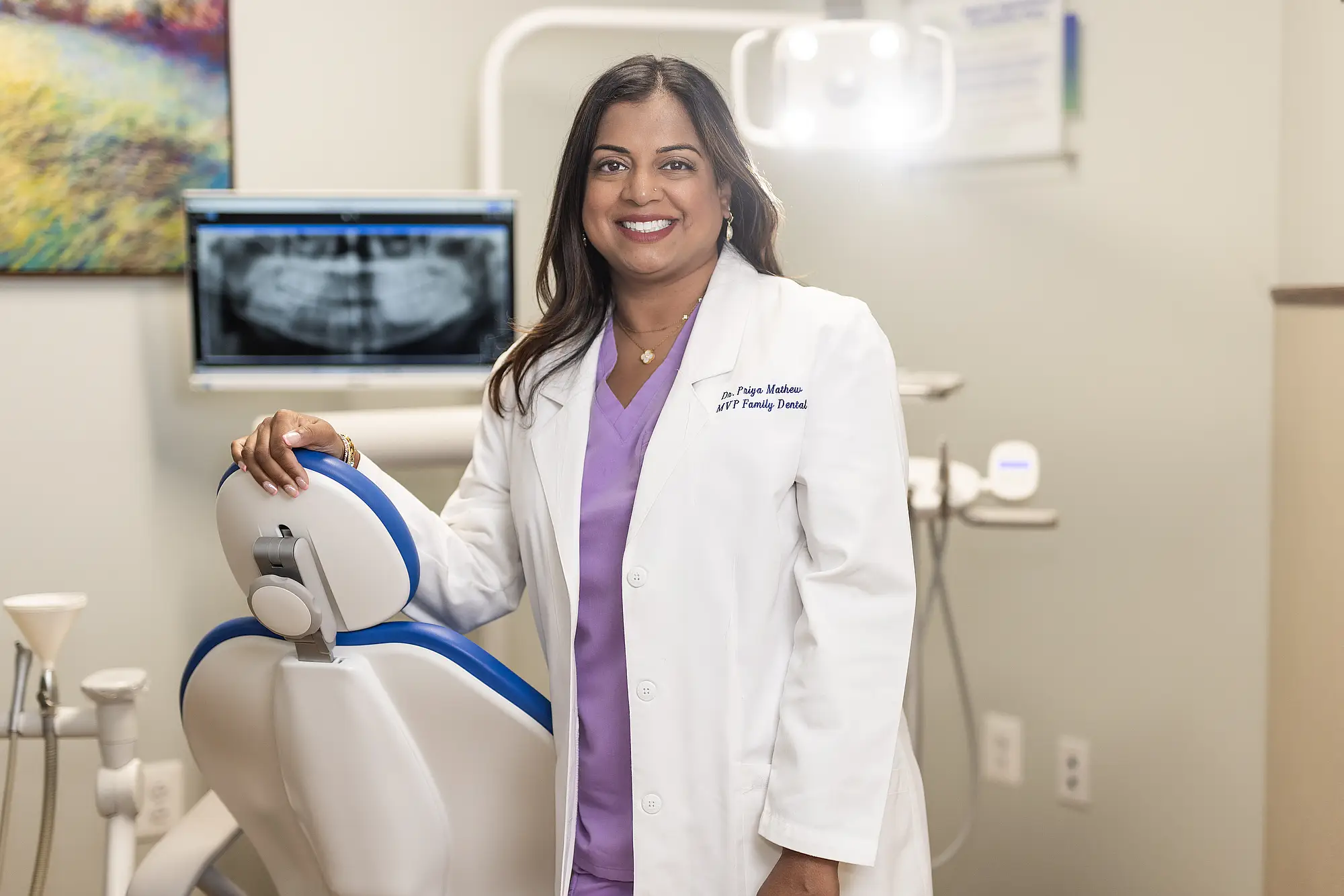
Dr. Priya Mathew, D.M.D.
LEARN MORE