

Preventive & Family Care
Dental Exams & X-Rays in Jenkintown, PA
Looking at what is there, and at what a mirror cannot reach.
An examination covers what can be seen. X-rays cover the rest – between the teeth, under existing fillings, and in the bone that holds everything in place. Together they are how a small problem gets found while it is still small.
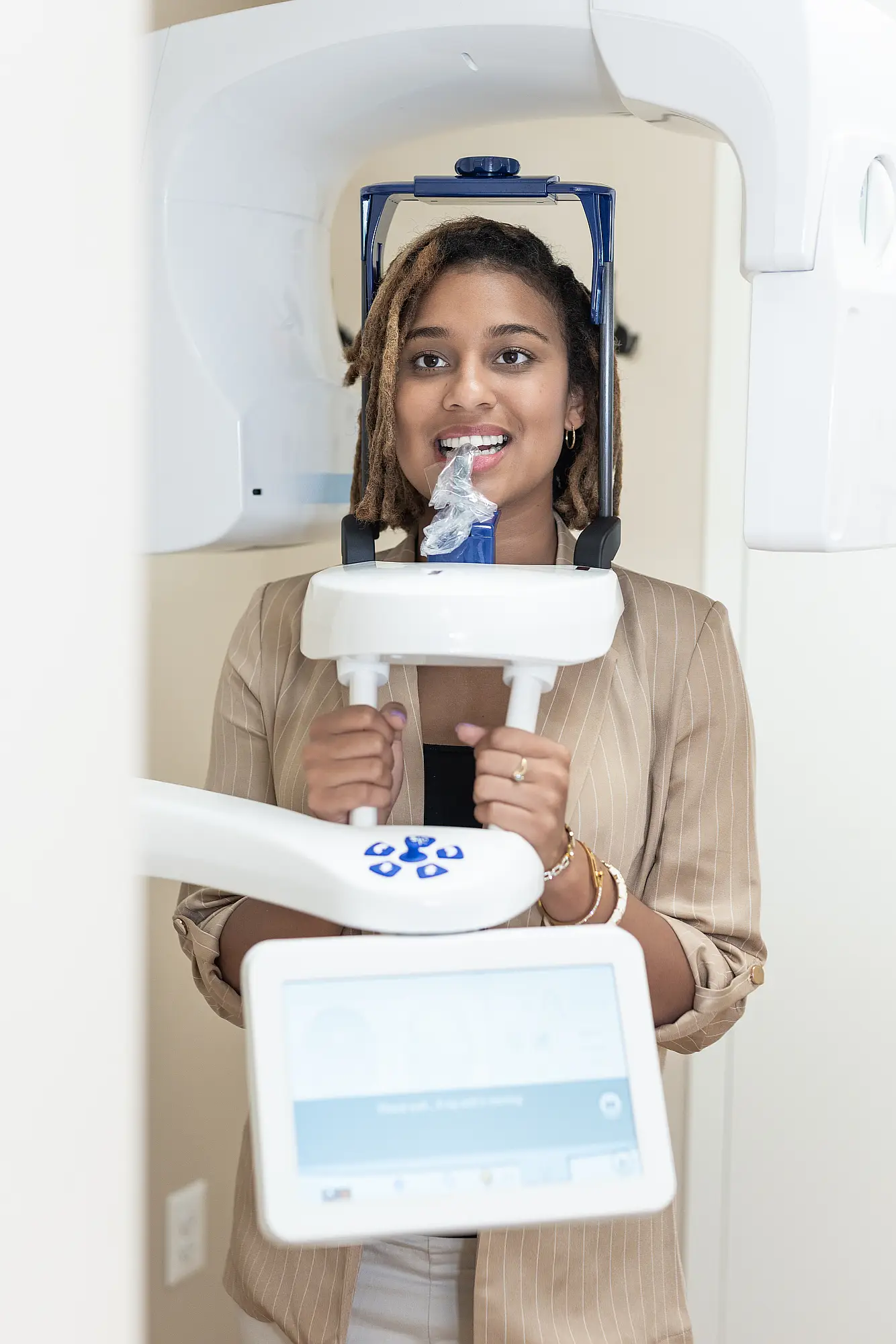
Exceptional care for a lifetime of healthy smiles
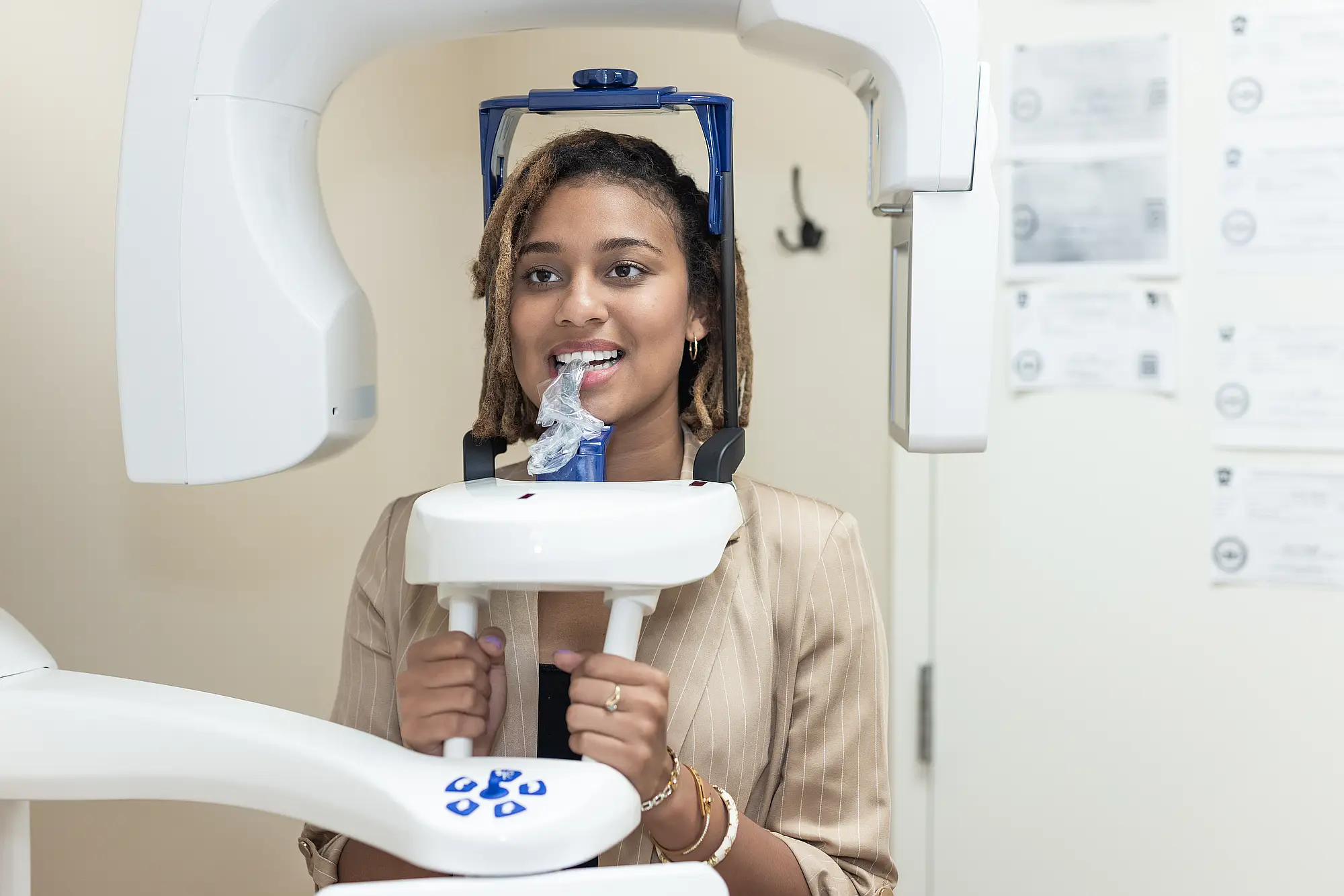
Exams and X-rays at MVP Family Dental
Roughly a third of every tooth is out of sight – the surfaces facing its neighbors, the root, and the bone around it. A visual examination cannot report on any of that, which is why the two go together rather than one replacing the other.
The examination is also where the soft tissues are checked, where the bite is watched for changes, and where existing dentistry is assessed while there is still a choice about what to do next.
What the visit covers
More than a look at the teeth
The examination is systematic rather than a glance, and it takes in several things that have nothing to do with cavities.
- The teethEach tooth is checked for decay, cracks, wear, and the condition of any existing fillings or crowns.
- The gums and boneGum health is assessed around each tooth, since the support underneath matters as much as the tooth itself.
- The soft tissuesCheeks, tongue, palate and the floor of the mouth are examined – this is where oral cancer screening sits.
- The biteHow the teeth meet, and whether there are signs of grinding or of the bite having shifted.

What X-rays show
The part a mirror cannot reach
Different views answer different questions, which is why the type taken depends on what is being looked for.
- Between the teethDecay starting on a contact surface is invisible from above and often painless until it is deep.
- Under existing workRecurrent decay around the edge of an old filling or crown shows on an image before it shows anywhere else.
- Bone levelsThe height of the bone around each tooth is how gum disease is measured over time.
- Developing teethIn children, images show whether adult teeth are present, positioned and coming through in the right order.
How often
Set by your mouth, not a calendar
How often images are taken is a clinical judgment, not a fixed schedule. Someone with a lot of restorative history and a tendency to decay is imaged more often than someone with a settled, low-risk mouth. Your dentist will explain the reasoning before anything is taken.
- ChildrenImages also track the sequence the adult teeth are arriving in.
- AdultsFrequency follows decay risk, gum history and how much existing dentistry there is.
- New patientsA baseline set gives every later image something to be compared against.
Worth bringing or mentioning
- Records or X-rays from a previous dentist, if you have them.
- Any tooth that is sensitive, sore or feels different.
- Medical history changes and current medications.
- If you are pregnant or may be – tell us before any imaging.

After the exam
Findings, then options
Anything found is explained before anything is planned. Where there is a choice – and there usually is – the options are laid out with what each one involves, so the decision is yours rather than presented as settled.
Where nothing needs doing, that is a result too. Not every examination ends in treatment, and a visit that confirms things are stable has done its job.
The cheapest problem to fix is the one found before it started hurting.
MVP Family Dental · Jenkintown, PA

The short answer
A dental examination with X-rays assesses your oral health and detects cavities, gum disease and other conditions early. Roughly a third of every tooth is out of sight, including the surfaces facing its neighbors, the root and the bone around it, so a visual examination and imaging go together rather than one replacing the other. The examination also covers the gums and the bone supporting each tooth, the soft tissues, where oral cancer screening sits, and the bite.
Exam & X-Ray Questions
- What happens at a dental exam?
- Each tooth is checked for decay, cracks, wear and the condition of any existing fillings or crowns. Gum health is assessed around each tooth, since the support underneath matters as much as the tooth itself. The cheeks, tongue, palate and floor of the mouth are examined, which is where oral cancer screening sits, and the bite is checked for grinding or for signs it has shifted. Findings are explained to you afterwards.
- Why do I need X-rays if my teeth look fine?
- The surfaces where teeth touch each other, the area under existing fillings and the bone around the roots cannot be seen in a visual examination. Those are common places for problems to start, and decay on a contact surface is often painless until it is deep. Recurrent decay around the edge of an old filling shows on an image before it shows anywhere else. Bone levels around each tooth are also how gum disease is measured over time.
- Are dental X-rays safe?
- Modern dental imaging uses a very low dose, and images are only taken where there is a clinical reason. The type of view taken depends on what is being looked for. Tell us if you are pregnant or may be, before anything is taken.
- How often should I have an exam?
- Many people are seen twice a year, but the interval depends on your decay risk, your gum history and how much existing dentistry you have. Someone with a lot of restorative history is imaged more often than someone with a settled, low-risk mouth. How often images are taken is a clinical judgment rather than a fixed schedule, and your dentist will explain the reasoning before anything is taken.
- Do children need X-rays?
- Sometimes. As well as checking for decay between the teeth, images show whether the adult teeth are present, positioned and coming through in the right order. For children the imaging tracks that sequence as much as it looks for problems. Your dentist will explain why any particular image is being taken.
- Can I bring X-rays from my last dentist?
- Yes, and it is worth doing. Previous images give us something to compare against, which often means fewer new ones are needed. For a new patient a baseline set gives every later image something to be measured against. Bring any written records you have alongside them.
- What if something is found?
- It is explained to you first: what it is, where it is and what the options are, before any treatment is planned. Where there is a choice, and there usually is, the options are laid out with what each one involves so the decision is yours. Where nothing needs doing, that is a result too, and a visit that confirms things are stable has done its job.
- How do I book an exam?
- Contact the office. Exams are usually booked alongside a cleaning, and several family members can often be seen in the same visit. It is worth mentioning any tooth that is sensitive, sore or feels different, any changes to your medical history or medications, and whether you are pregnant or may be.
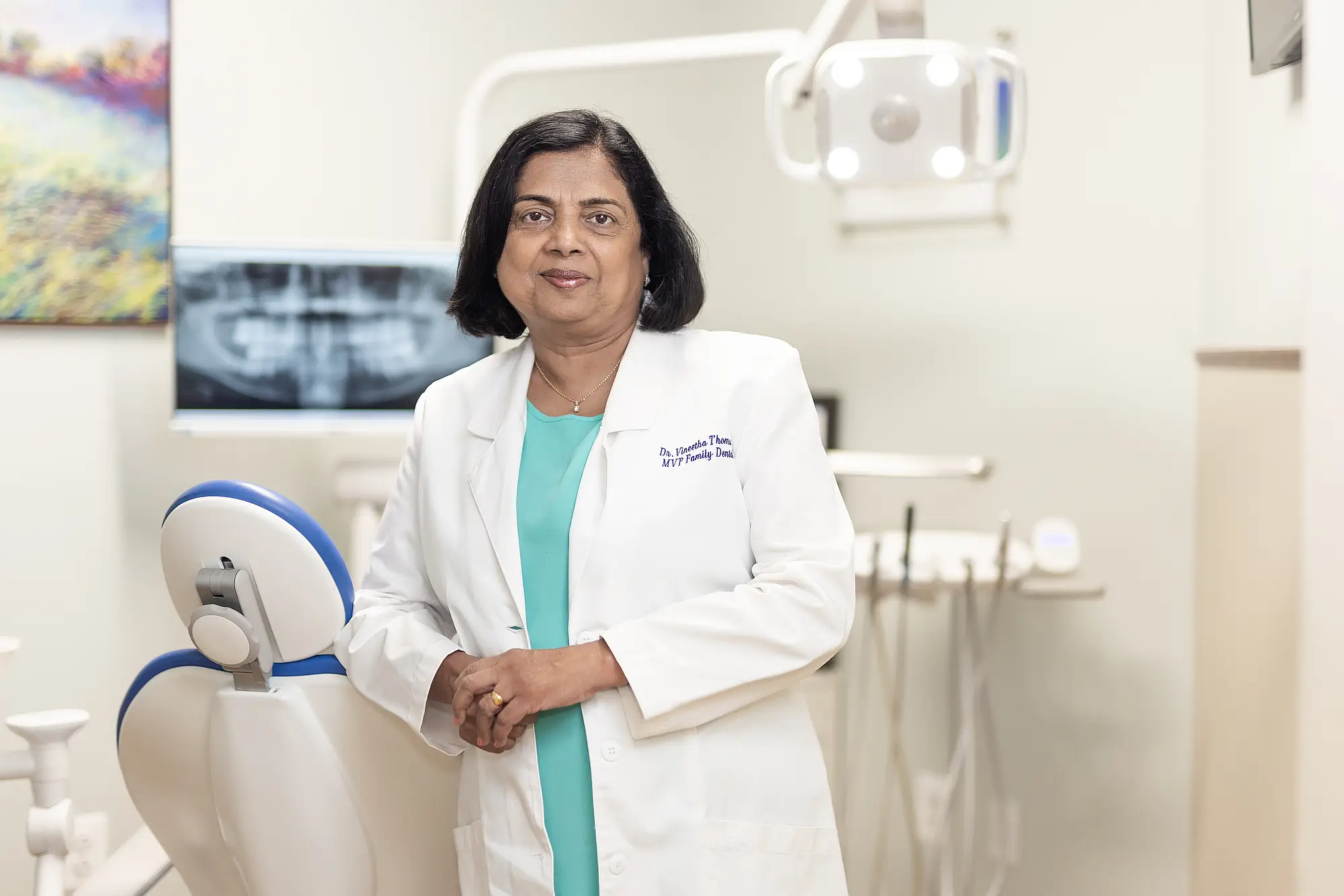
Dr. Vineetha Thomas, D.M.D.
LEARN MORE
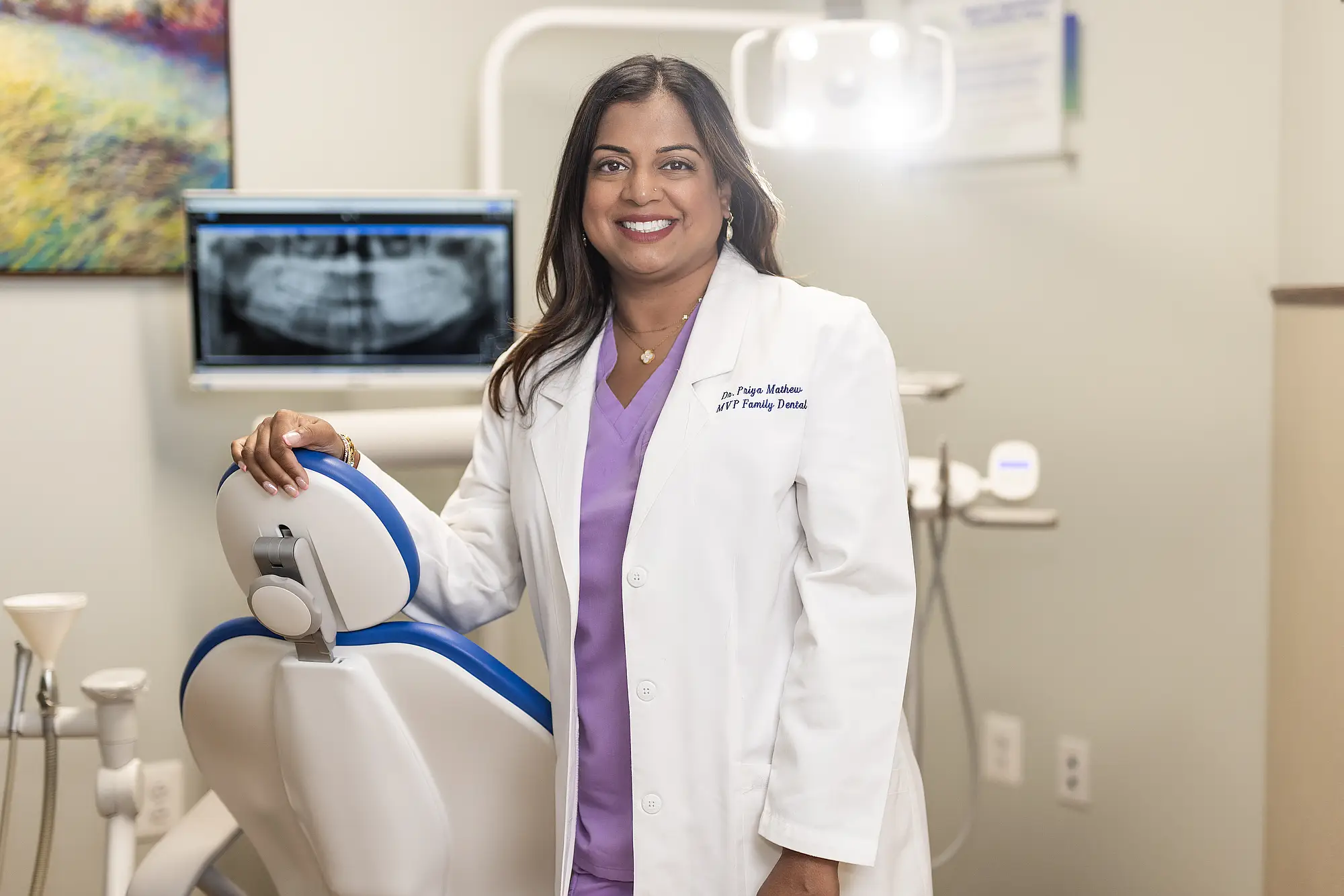
Dr. Priya Mathew, D.M.D.
LEARN MORE