

Orthodontics & Specialty Care
TMJ Treatment in Jenkintown, PA
Working out what is actually causing the jaw pain before treating it.
The temporomandibular joints do more work than any other joints in the body, and when they hurt the cause is rarely a single thing. TMJ treatment starts with identifying which of the possible causes is yours, because the answer decides everything that follows.

Exceptional care for a lifetime of healthy smiles
Jaw joint problems at MVP Family Dental
TMJ is not a diagnosis so much as a location. Pain in front of the ear, a jaw that clicks or catches, difficulty opening wide, headaches at the temples – these are symptoms that can come from the muscles, the joint itself, the bite, a grinding habit, or some combination.
Muscle-related pain and joint-related pain are treated quite differently, so the assessment is not a formality. Treating the wrong one produces no improvement and no useful information.
How assessment works
Symptoms, then cause
The examination looks at the joints, the muscles and the bite together, because each affects the other.
- HistoryWhen it started, what makes it worse, whether it is constant or comes and goes, and what you have already tried.
- Examining the jointsHow far the jaw opens, whether it deviates to one side, and whether there is clicking, grating or locking.
- Examining the musclesThe muscles of the jaw, temple and neck are palpated – muscle tenderness is a very common finding.
- The bite and the teethHow the teeth meet, and whether there is wear or other evidence of a grinding or clenching habit.

What can be behind it
Four common contributors
Most cases involve more than one of these, which is part of why symptoms can be hard to pin down.
- Muscle overuseClenching and grinding, often stress-related, fatigue the jaw muscles the way any overworked muscle is fatigued.
- The joint itselfThe disc inside the joint can move out of position, which is a common source of clicking and catching.
- The biteHow the teeth meet affects how the jaw closes and where the muscles have to work to hold it there.
- Habits and postureNail biting, chewing gum, and sustained head-forward posture all load the same system.
What treatment can involve
Conservative first
TMJ management starts with reversible measures. What is appropriate for you depends on what the assessment found.
-
An occlusal splint
A custom appliance worn to separate the teeth and take grinding force off the joints and muscles.
-
Self-management
Soft diet during flare-ups, jaw rest, heat, and avoiding wide opening and chewy foods – simple and often effective.
-
Addressing the habit
Where clenching is the driver, becoming aware of it during the day is part of the treatment rather than an afterthought.
-
Referral
Where symptoms point beyond dentistry – to physical therapy, or to a specialist – we say so and arrange it.
Also offered here
BTL treatment for TMJ
Alongside the measures above, the practice offers BTL treatment for TMJ. Whether it is the right option for you is something we would talk through after the assessment, once it is clear what is driving your symptoms.
BTL devices are also used for the facial treatments offered here, so there is more about them on our facial esthetics page.
When to be seen
Symptoms worth bringing in
Occasional jaw clicking without pain is common and often needs nothing. What is worth an appointment is pain that persists, opening that has become limited, or a jaw that locks – and anything that is getting worse rather than settling.
It is also worth mentioning even when it seems minor. A grinding habit picked up early is much easier to manage than one that has already worn the teeth down.
- PainPersistent tenderness in front of the ear, in the temples, or in the jaw muscles.
- FunctionLimited opening, a jaw that deviates on opening, or one that locks open or closed.
- WearFlattened, chipped or polished tooth surfaces indicating a grinding habit.
Useful to note before your visit
- When the symptoms started and whether anything set them off.
- What time of day they are worst – waking versus evening tells us a lot.
- Whether anyone has heard you grind at night.
- What you have already tried and whether it helped.

Managing it over time
Usually managed, not cured
TMJ symptoms often come and go rather than resolving permanently, and flare-ups commonly track with periods of stress. Knowing your own pattern – and having a plan for a flare-up – is a large part of managing it well.
Where a splint is part of the plan, bring it to your routine visits. The wear pattern on it is a useful record of what your jaw has actually been doing.
Jaw pain has several possible causes and they are treated differently. Finding out which one is yours is the treatment.
MVP Family Dental · Jenkintown, PA

The short answer
TMJ treatment is the diagnosis and treatment of temporomandibular joint disorders, to relieve jaw pain, clicking, headaches and limited jaw movement. TMJ is really a location rather than a diagnosis: pain in front of the ear, a jaw that clicks or catches, difficulty opening wide and headaches at the temples can all come from the muscles, the joint itself, the bite, a grinding habit, or some combination. Because muscle-related and joint-related pain are treated quite differently, the assessment examines the joints, the muscles and the bite together, and management starts with conservative, reversible measures.
TMJ Questions
- What is TMJ?
- The temporomandibular joints connect the lower jaw to the skull, and they do more work than any other joints in the body. TMJ is commonly used to describe pain or dysfunction in that area, which can come from the joint, the muscles, the bite or a grinding habit. It is a location rather than a diagnosis. Most cases involve more than one contributor, which is part of why symptoms can be hard to pin down.
- Why does my jaw click?
- Clicking often comes from the disc inside the joint moving out of position as the jaw opens. Clicking without pain is common and may need nothing at all. Clicking with pain, or a jaw that catches, is worth assessing. The examination looks at how far the jaw opens, whether it deviates to one side, and whether there is grating or locking.
- Can a dentist help with jaw pain?
- Often, yes, particularly where clenching, grinding or the bite are involved. The assessment looks at the joints, the muscles and the bite together, because each affects the other. Where symptoms point beyond dentistry, to physical therapy or to a specialist, we will say so and arrange it.
- Will a night guard fix it?
- A splint can take grinding force off the joints and muscles, which helps in many cases. Whether it is the right measure for you depends on what the assessment finds, because muscle-related and joint-related pain are treated differently. Where a splint is part of the plan, bring it to your routine visits, since the wear pattern is a useful record of what your jaw has actually been doing.
- Is surgery needed?
- TMJ management starts with conservative, reversible measures: a splint, self-management such as a soft diet during flare-ups and jaw rest, and addressing the habit where clenching is the driver. Surgical options are a specialist matter and are not the first line. Where symptoms point beyond dentistry we arrange the appropriate referral.
- Why is it worse in the morning?
- Symptoms that are worst on waking commonly point to night-time clenching or grinding. Symptoms that build through the day often point to daytime habits such as nail biting, chewing gum or sustained head-forward posture. That is why noting what time of day the symptoms are worst is genuinely useful before the appointment.
- Does stress cause TMJ problems?
- Stress does not cause the joint itself to fail, but it strongly influences clenching and grinding, which load the joints and muscles. Flare-ups commonly track with stressful periods. Symptoms often come and go rather than resolving permanently, so knowing your own pattern and having a plan for a flare-up is a large part of managing it well.
- Do you offer BTL treatment for TMJ?
- Yes. BTL treatment for TMJ is available at our Jenkintown practice, alongside the conservative measures. Whether it is appropriate for you is decided after the assessment, once it is clear what is driving your symptoms. BTL devices are also used for the facial treatments offered here, so there is more about them on the facial esthetics page.
- How do I get assessed?
- Contact the office. Noting when your symptoms are worst before the appointment is genuinely useful, along with when they started and whether anything set them off. It also helps to know whether anyone has heard you grind at night, and what you have already tried and whether it helped.

Dr. Vineetha Thomas, D.M.D.
LEARN MORE
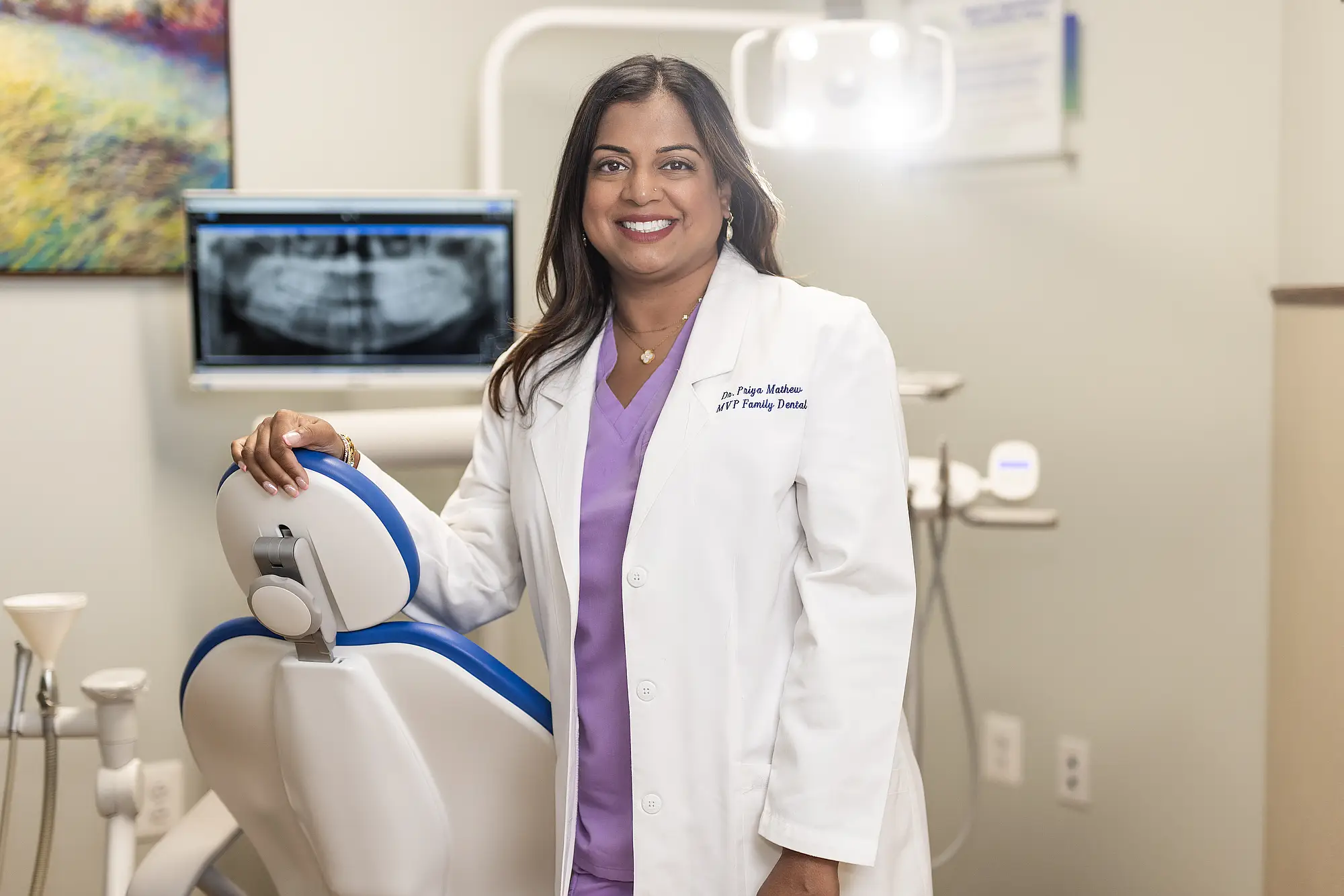
Dr. Priya Mathew, D.M.D.
LEARN MORE