

Oral Surgery
Tooth Extraction in Jenkintown, PA
It is not only wisdom teeth.
Extraction is often misunderstood as something that only happens to wisdom teeth. In practice a tooth may need removing because it is damaged beyond repair, because an infection has become a risk, or to make room for orthodontic treatment. We plan it properly and see you through the recovery.

Exceptional care for a lifetime of healthy smiles
Tooth extraction at MVP Family Dental
Extraction relieves pain and stops infection spreading. It is not the first option we reach for — where a tooth can be saved, saving it is the plan — but there are situations where removing it is the safest thing for your dental health.
Why a tooth comes out
The usual reasons
Most extractions fall into one of these groups, and which one you are in shapes what follows.
- Damaged beyond repairTrauma or extensive decay, where restorative treatment such as root canal therapy would not be enough.
- InfectionWhen decay reaches the pulp it can cause severe pain and swelling. Root canal therapy is usually the first step, but an infected tooth can pose a real risk — particularly for immunocompromised patients.
- OvercrowdingRemoving one or more teeth can create the space braces need to realign the smile properly.
- Emergency situationsWhere waiting would risk further complications.
How treatment works
Consultation first, then the procedure
Nothing is removed before it has been assessed and discussed with you.
- ConsultationWe go through your dental history, your medications and any treatment you already have planned.
- X-raysTo give a clear view of the tooth, the root and the bone around it.
- Comfort discussedIf your procedure calls for it, we will talk through the options for keeping you comfortable.
- The extractionTypically quick, and carried out under safe and effective anesthesia so you stay comfortable.
- Aftercare instructionsYou leave with everything you need for a smooth recovery.
Recovery
The days afterwards
Aftercare is what makes recovery straightforward, so the instructions matter as much as the appointment.
- Managing discomfortWe give you guidance on pain relief, including prescribed medication where appropriate.
- EatingDietary adjustments to help the site heal.
- Most discomfort settlesMost patients find it subsides within a few days.
When to call us
- Pain that persists rather than easing.
- Anything that does not look or feel like it is settling.
- Questions about the aftercare instructions.
- Replacing the tooth — implants, bridges and dentures are all options to discuss.
Two generations of dentists, one shared commitment to helping Jenkintown families eat, speak and smile with confidence.
MVP Family Dental · Jenkintown, PA

The short answer
A tooth extraction is the removal of a tooth that is damaged beyond repair, infected, or being taken out to create space for orthodontic treatment, carried out under local anesthetic with aftercare guidance. It is not the first option: where a tooth can be saved, saving it is the plan, and extraction is recommended when restorative treatment such as root canal therapy would not be enough or when leaving the tooth poses a risk. Nothing is removed before it has been assessed with X-rays and discussed with you, and most patients find the discomfort subsides within a few days.
Tooth Extraction Questions
- Is it only wisdom teeth that get extracted?
- No, that is a common misconception. Many dental situations can call for an extraction, including teeth damaged beyond repair by trauma or extensive decay, infected teeth, and teeth removed to create space for orthodontic treatment. There are also emergency situations where waiting would risk further complications. Which group you are in shapes what follows.
- Will you try to save the tooth first?
- Where a tooth can be saved, that is the plan. Extraction is recommended when restorative treatment such as root canal therapy would not be enough, or when leaving the tooth poses a risk. It is not the first option we reach for, but there are situations where removing it is the safest thing for your dental health.
- Why would an extraction be needed for braces?
- Overcrowding. Removing one or more teeth can create the space braces need to realign the teeth effectively. That is planned as part of the orthodontic treatment rather than decided on its own. We go through any treatment you already have planned at the consultation.
- Does it hurt?
- The procedure is carried out under safe and effective anesthesia to keep you comfortable throughout, and it is typically quick. If your procedure calls for it, we will talk through the options for keeping you comfortable beforehand. You leave with aftercare instructions and guidance on pain relief, including prescribed medication where appropriate.
- What if I am anxious about it?
- Tell us. The office is designed to promote comfort and relaxation, and we will talk through what to expect so you feel more at ease. Raising it at the consultation means it can be planned for rather than managed on the day.
- How long does recovery take?
- Most patients find the discomfort subsides within a few days. Following the aftercare instructions is what keeps healing smooth, including the dietary adjustments that help the site heal. You leave with everything you need for that. Contact us if pain persists rather than easing.
- What happens if something does not feel right afterwards?
- Contact us. If complications arise, or you have persistent pain, we would rather hear from you than have you wait. Anything that does not look or feel like it is settling is worth a call, as are any questions about the aftercare instructions.
- Can the tooth be replaced?
- Yes. Implants, bridges and dentures are all options, depending on the tooth, the bone available and your preferences. We will go through them with you rather than leaving it as a separate question. It is worth raising at the same appointment, since the plan can account for it.

Dr. Vineetha Thomas, D.M.D.
LEARN MORE
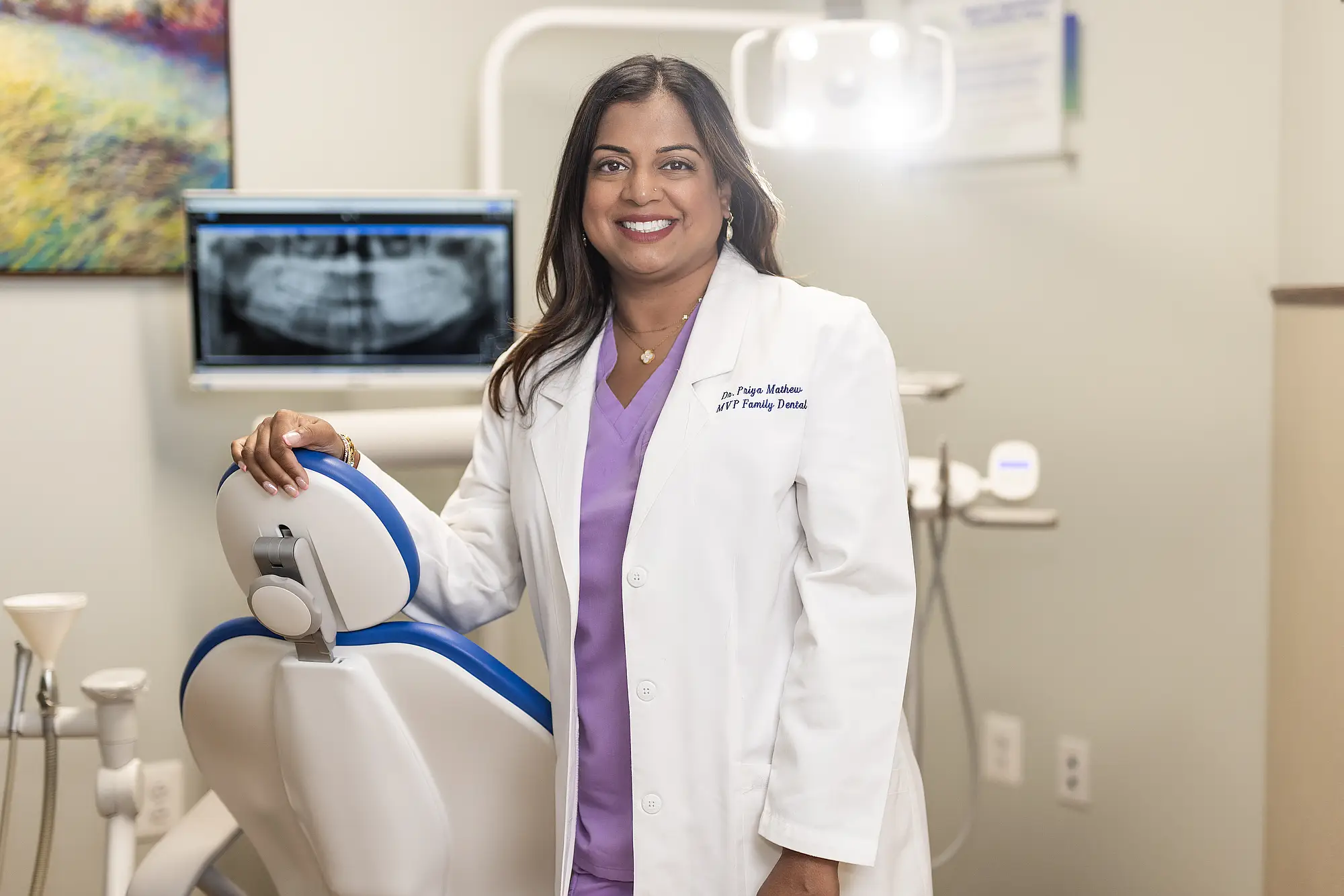
Dr. Priya Mathew, D.M.D.
LEARN MORE