
Cosmetic & Smile Care
Veneers in Jenkintown, PA
Thin porcelain shells, made to a design you approve first.
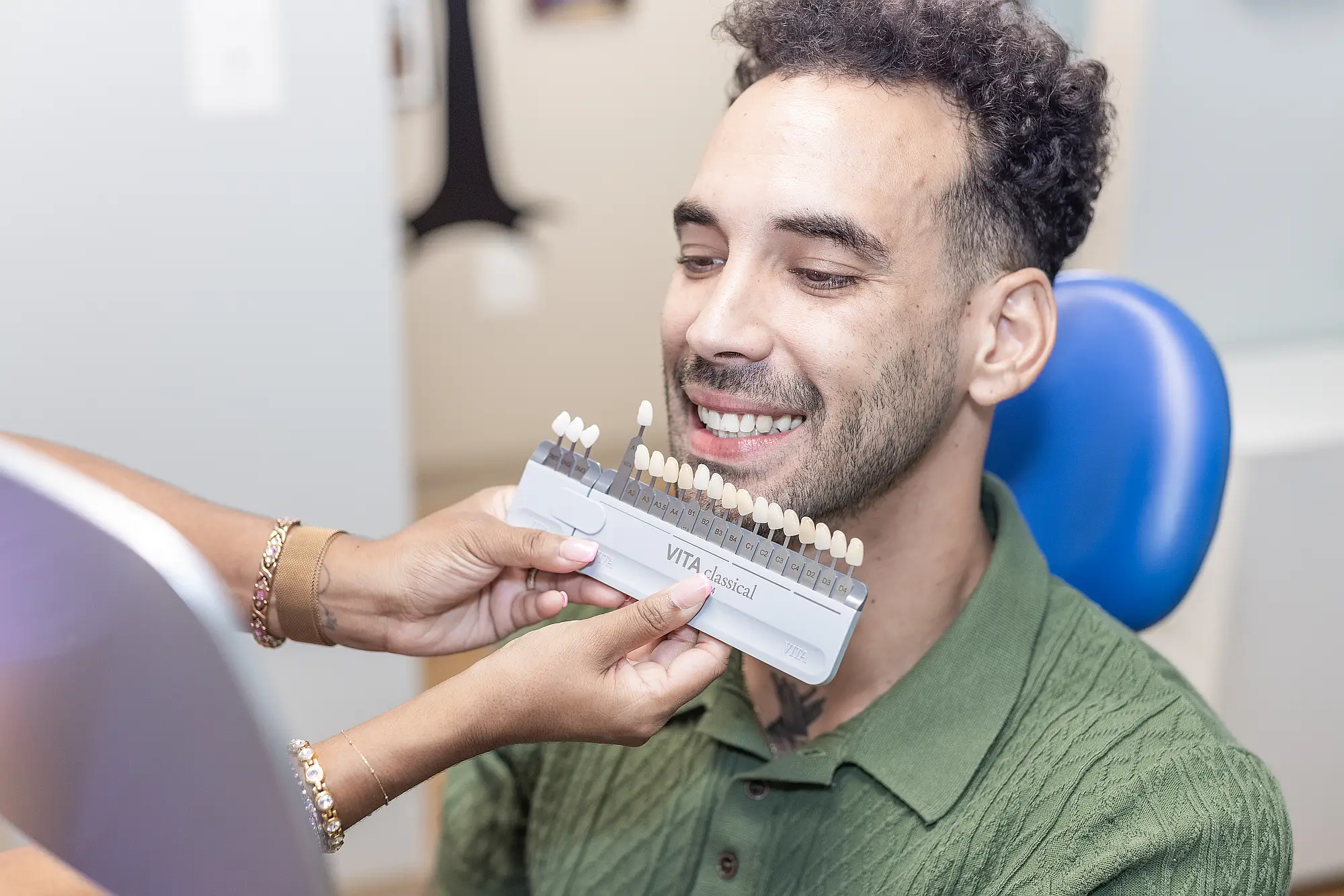
A veneer is a thin shell bonded to the front of a tooth. Because each one is made in a laboratory to a design rather than sculpted in the mouth, veneers can change shape, color and apparent alignment across several teeth at once – and hold that result far longer than composite will.
Exceptional care for a lifetime of healthy smiles
Veneers at MVP Family Dental
Veneers are a design job as much as a clinical one. The shells themselves are straightforward; deciding the length, the width, the way the edges catch light and how the whole set sits against your lip is the part that determines the result.
That is why veneers run across more than one appointment and why the design is agreed before any tooth is prepared. Preparation removes enamel, and enamel does not grow back.
The materials
What a veneer is made from
The choice of material is made with you, against what you want changed and how much tooth preparation each route involves.
-
Porcelain veneers
Custom-crafted porcelain shells permanently bonded to teeth to reshape, resize and brighten the smile. Porcelain holds its color and resists staining better than composite.
-
Composite veneers
Built up directly in composite resin. Less tooth preparation and often a single visit, but the material picks up stain more readily over time.
-
Minimal-preparation options
Where the change needed is small, a thinner veneer may allow more of the enamel to be kept. Whether this suits your teeth is a clinical judgment.
What is being designed
Four decisions, made together
These are the variables a veneer case actually turns on. Bring opinions about them – it is your smile, and vague briefs produce vague results.
- Length and proportionHow long the teeth are, and how the widths relate to each other across the smile.
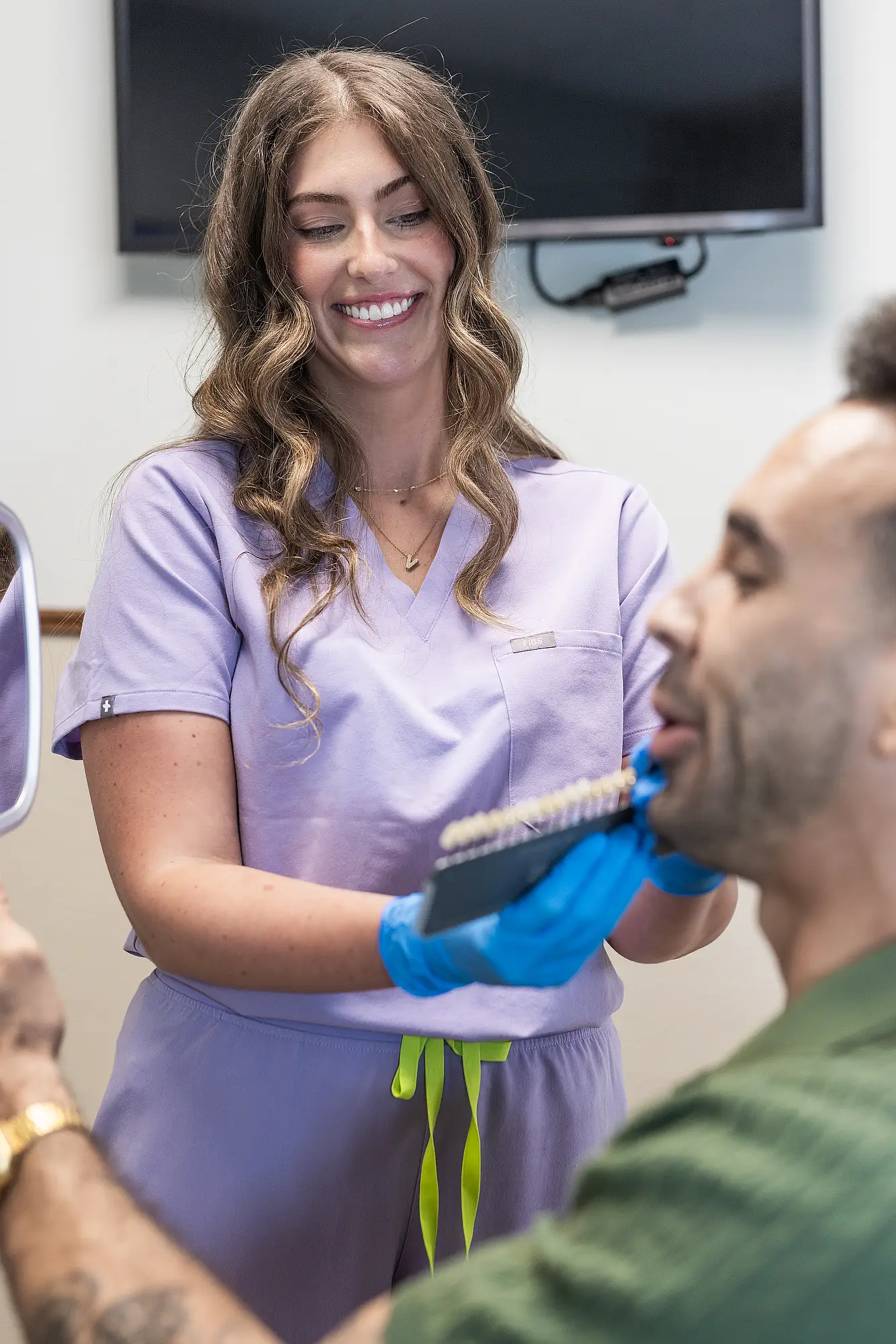
- ShadeChosen against your own teeth and skin in natural light, not against a target from a photograph.
- Surface and edgeHow the surface catches light and how the biting edges are shaped – this is what reads as natural or not.
- The smile lineHow the whole set sits relative to your lip when you smile and when you speak.
How treatment works
Designed, made, then bonded
Veneers run across several appointments because the shells are made in a laboratory to the agreed design.
- Consultation and designWe look at your teeth, gums, bite and smile line, and agree what the finished teeth should look like.
- Preparation and recordsThe teeth are prepared where preparation is needed, and impressions or a scan are taken for the laboratory.
- TemporariesTemporary veneers protect the prepared teeth and let you live with the proposed shape before it is final.
- FittingThe finished veneers are tried in, checked for fit, shade and bite, and then bonded in place.
Is a veneer right for you
The trade-off worth understanding
Most veneers involve removing some enamel, and that is not reversible – a prepared tooth will need a veneer or crown on it from then on. That is a reasonable trade for the result, but it is a decision to make deliberately rather than casually.
Grinding matters too. Porcelain is hard but it is not indestructible, and a heavy grinding habit affects both the design and whether a night guard is part of the plan. If bonding or orthodontics would get you what you want with less removed, we will say so.
- Several teethVeneers usually work across a set of teeth, since the result is judged as a whole.
- Stain resistantPorcelain holds its color better than composite over the long term.
- Whiten firstVeneers are matched to your final tooth shade, so any whitening comes before them.
Worth bringing to the consultation
- Photographs of smiles you like, and of your own smile as it is now.
- What specifically you want changed – shape, color, alignment, or all three.
- Whether you grind or clench your teeth.
- Whether whitening or orthodontics is also under consideration.

Living with veneers
Looked after like your own teeth
The porcelain does not decay, but the tooth behind it and the gum around it still can. Brushing, cleaning between the teeth and regular hygiene visits are what keep the margins healthy, and the margin is where a veneer case is won or lost.
Avoid using veneered teeth as tools, and if you grind, wear the guard. A night guard is not an optional extra on a veneer case where grinding has been identified.
Preparing a tooth is a decision you only get to make once. Design first, prepare second.
MVP Family Dental · Jenkintown, PA
The short answer
A veneer is a thin porcelain or composite shell bonded to the front of a tooth to correct chips, gaps, discoloration and minor misalignment. Because each shell is made to a design rather than sculpted in the mouth, veneers can change shape, color and apparent alignment across several teeth at once, and porcelain holds that result far longer than composite will. Most veneers involve removing some enamel, which is not reversible, so the design is agreed before any tooth is prepared.
Veneer Questions
- What is a dental veneer?
- A veneer is a thin shell, usually porcelain, bonded to the front of a tooth to change its shape, color or apparent alignment. Each one is made in a laboratory to an agreed design rather than sculpted in the mouth. Veneers usually work across a set of teeth, since the result is judged as a whole. The design is as much of the job as the clinical work.
- How are veneers different from bonding?
- Bonding is composite shaped directly on the tooth in one visit. Veneers are made in a laboratory to an agreed design and bonded at a later appointment. Porcelain resists stain better, and bonding removes less tooth structure. If bonding or orthodontics would get you what you want with less removed, we will say so.
- Do you have to file down my teeth?
- Most veneers involve removing some enamel so the shell sits flush. How much depends on the case, and it is not reversible, so a prepared tooth will need a veneer or crown on it from then on. Where the change needed is small, a thinner veneer may allow more of the enamel to be kept, though whether that suits your teeth is a clinical judgment. It is a reasonable trade for the result, but a decision to make deliberately.
- Will veneers look fake?
- That is a design question rather than a material one. Length and proportion, shade, surface texture and the biting edges are all agreed before anything is made, along with how the whole set sits against your lip when you smile and when you speak. The shade is chosen against your own teeth and skin in natural light rather than against a photograph. Bringing opinions about those variables is what produces a result you recognize as yours.
- Do veneers stain?
- Porcelain resists staining well and holds its color better than composite over the long term. The margins where a veneer meets the tooth still need cleaning, and that is where most staining shows up. The margin is where a veneer case is won or lost.
- Can I whiten veneers?
- No. Porcelain does not lighten, which is why any whitening is done before the veneers are made and matched to the final shade. Doing it the other way round means matching new work to a color you are about to change.
- What if I grind my teeth?
- Tell us at the consultation. Porcelain is hard but it is not indestructible, and a heavy grinding habit affects both the design and whether a night guard is part of the plan. Where grinding has been identified, a night guard is part of the plan rather than an optional extra.
- How do I find out if veneers suit my case?
- Book a consultation. Bring photographs of your own smile as it is now and of smiles you like, because they are far more useful than descriptions. Say what specifically you want changed, whether that is shape, color, alignment or all three, and whether you grind or clench. It also helps to know whether whitening or orthodontics is under consideration, since both change the sequence.

Dr. Vineetha Thomas, D.M.D.
LEARN MORE

Dr. Priya Mathew, D.M.D.
LEARN MORE