
Orthodontics & Specialty Care
Braces in Jenkintown, PA
Fixed appliances that move teeth a little at a time.
Braces work by holding a gentle, continuous force against a tooth. Bone remodels around the root in response, and the tooth moves into its new position – slowly, predictably, and in a direction that was planned before the first bracket went on.

Exceptional care for a lifetime of healthy smiles
Braces at MVP Family Dental
Fixed braces are still the most versatile way to move teeth. Because the brackets are bonded on, the force is applied continuously and in three dimensions, which means rotations, root positions and larger movements are all within reach.
They are also not going anywhere between appointments, which matters more than it sounds. Treatment that depends on an appliance being worn only works if it is worn.
How treatment works
Planned first, then adjusted
Orthodontics is a sequence of small planned movements rather than one event. Most of the appointments are short.
- Assessment and recordsExamination, photographs and imaging establish where the teeth are, where the roots sit and how the jaws relate.
- The treatment planThe intended movements and the appliance to achieve them are agreed with you before anything is fitted.
- Fitting the bracesBrackets are bonded to the teeth and connected by an archwire. Nothing is drilled.
- Adjustment visitsThe wire is changed or adjusted at intervals so the force keeps working in the planned direction.

What braces can address
Not only crooked teeth
Appearance is the usual reason people ask, but several of the reasons to treat are functional.
- CrowdingTeeth overlapping because there is not enough room in the arch for all of them to line up.
- SpacingGaps between teeth, whether from arch size, missing teeth or tooth proportion.
- Bite relationshipsHow the upper and lower teeth meet – overbite, underbite, crossbite and open bite are all bite problems rather than tooth problems.
- Cleaning accessOverlapped teeth are harder to clean, so alignment is a preventive measure as well as a cosmetic one.
The appliance
Choosing what goes on
Which appliance suits a case depends on the movements needed, not on preference alone. Your dentist will explain what your case requires.
-
Metal braces
Stainless steel brackets and archwires. The most versatile option and the one that handles the widest range of movements.
-
Ceramic braces
Tooth-colored brackets that are less conspicuous, working the same way as metal ones.
-
Clear aligners
A removable alternative for suitable cases – see the Clear Aligners page for how they compare.
Is treatment right for you
What the assessment decides
Braces move teeth through bone, so the health of the bone and gums around them comes first. Any decay or gum disease is treated before an appliance is fitted, because brackets make cleaning harder rather than easier.
Age is much less of a limit than people assume. Growth is useful in some cases and irrelevant in others, and plenty of orthodontic treatment is carried out on adults.
- Children and teensGrowth can be worked with – see Interceptive Orthodontics for treatment during development.
- AdultsTeeth move at any age, provided the bone and gums supporting them are healthy.
- Health firstDecay and gum disease are treated before an appliance is fitted.
Worth asking at your consultation
- What specifically will be moved, and in what order.
- Which appliance options your case allows, and why.
- How often adjustment visits will be needed.
- What the retention plan is once the braces come off.

During and after
Cleaning around brackets
Brackets and wires create places for plaque to sit that were not there before, so cleaning takes longer and matters more. Interdental brushes and a floss threader reach where a brush cannot, and hygiene visits continue through treatment.
When the braces come off, retainers begin. Teeth that have been moved will drift back toward where they were without retention – that is not a failure of treatment, it is how teeth behave. See the Retainers page.
Straightening the teeth is the visible half. Keeping them there is the half that decides the result.
MVP Family Dental · Jenkintown, PA
The short answer
Braces are fixed appliances that straighten teeth and correct how the upper and lower teeth meet. Brackets are bonded to the teeth and connected by an archwire that holds a gentle, continuous force against each tooth, and the bone around the root remodels in response so the tooth moves into its planned position. Because the brackets stay on between appointments, fixed braces handle the widest range of movements, including rotations and larger changes in root position.
Braces Questions
- How do braces move teeth?
- They hold a gentle, continuous force against the tooth. The bone around the root remodels in response, and the tooth moves into the position planned for it. Because the brackets are bonded on, that force is applied continuously and in three dimensions. The movements are small and planned in sequence rather than happening all at once.
- Do braces hurt?
- Teeth are commonly tender for a short period after the braces are fitted and after each adjustment. That usually settles as the teeth respond. Nothing is drilled at any stage, and most adjustment appointments are short. Tell your dentist if anything is sharp or persistently painful.
- How long does treatment take?
- It depends entirely on what has to be moved. Orthodontics is a sequence of small planned movements, so the number of appointments follows from what your case needs. Your dentist will give you an estimate at the planning stage, once those movements are known and agreed with you.
- Am I too old for braces?
- No. Teeth move at any age, provided the bone and gums supporting them are healthy, and a good deal of orthodontic treatment is carried out on adults. Growth is useful in some cases and irrelevant in others. Any decay or gum disease is treated before an appliance is fitted, because brackets make cleaning harder rather than easier.
- Braces or clear aligners?
- It depends on the movements needed rather than on preference alone. Fixed braces handle the widest range, including rotations and significant changes in root position. Aligners suit many cases but depend on being worn, because they only apply force while they are in. The assessment establishes which category your case is in.
- How do I clean my teeth with braces on?
- It takes longer, and it matters more. Brackets and wires create places for plaque to sit that were not there before, so a brush alone will not reach everywhere. Interdental brushes and a floss threader get around the brackets and under the wire. Hygiene visits continue through treatment.
- Is there anything I cannot eat?
- Hard and sticky foods are the usual causes of a broken bracket. You will be given specific advice about this when the braces are fitted. The advice is practical rather than restrictive, and it is there to keep the appliance working as planned.
- What happens when the braces come off?
- Retainers begin. Teeth that have been moved will drift back toward where they were without retention, which is not a failure of treatment but simply how teeth behave. Retention is therefore part of the treatment rather than an optional extra. It is worth asking what the retention plan is before the braces come off.
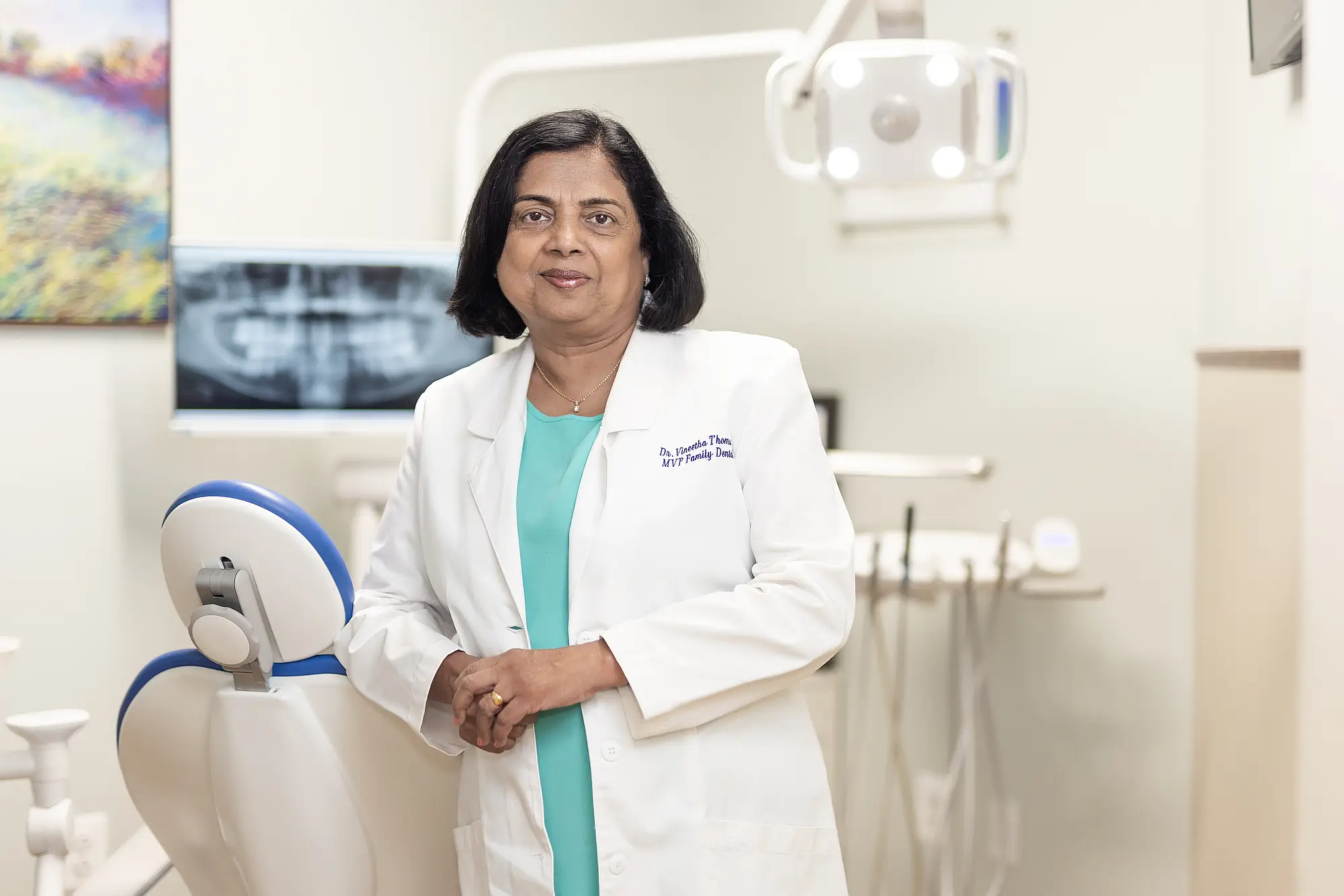
Dr. Vineetha Thomas, D.M.D.
LEARN MORE
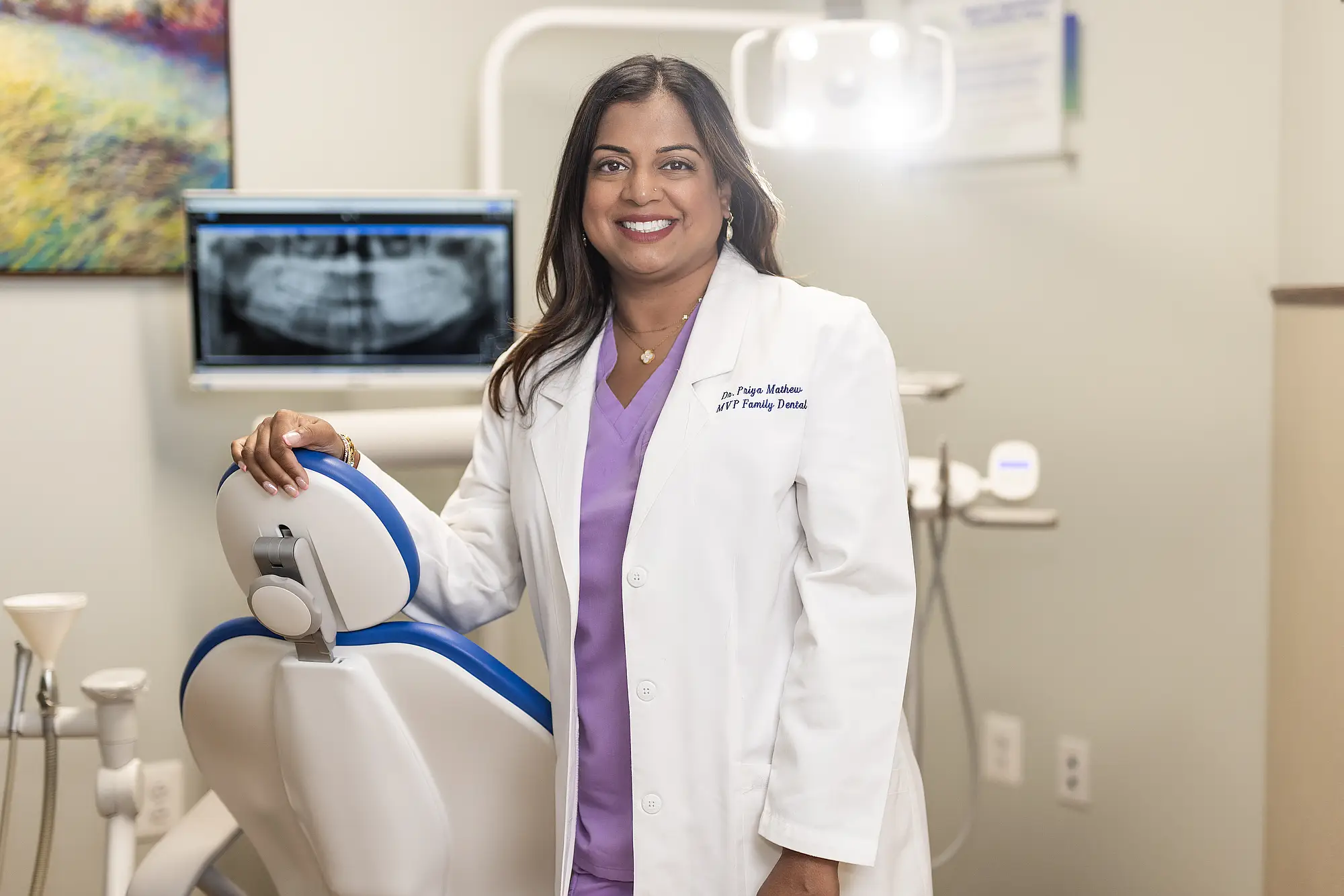
Dr. Priya Mathew, D.M.D.
LEARN MORE