
Restorative Dentistry
Immediate Dentures in Jenkintown, PA
Made before the extractions, fitted on the day.
An immediate denture is made in advance of your extractions and fitted straight after them, so you are not without teeth while the gums heal. It is a transitional appliance, with a definitive denture following once healing has settled.
Exceptional care for a lifetime of healthy smiles
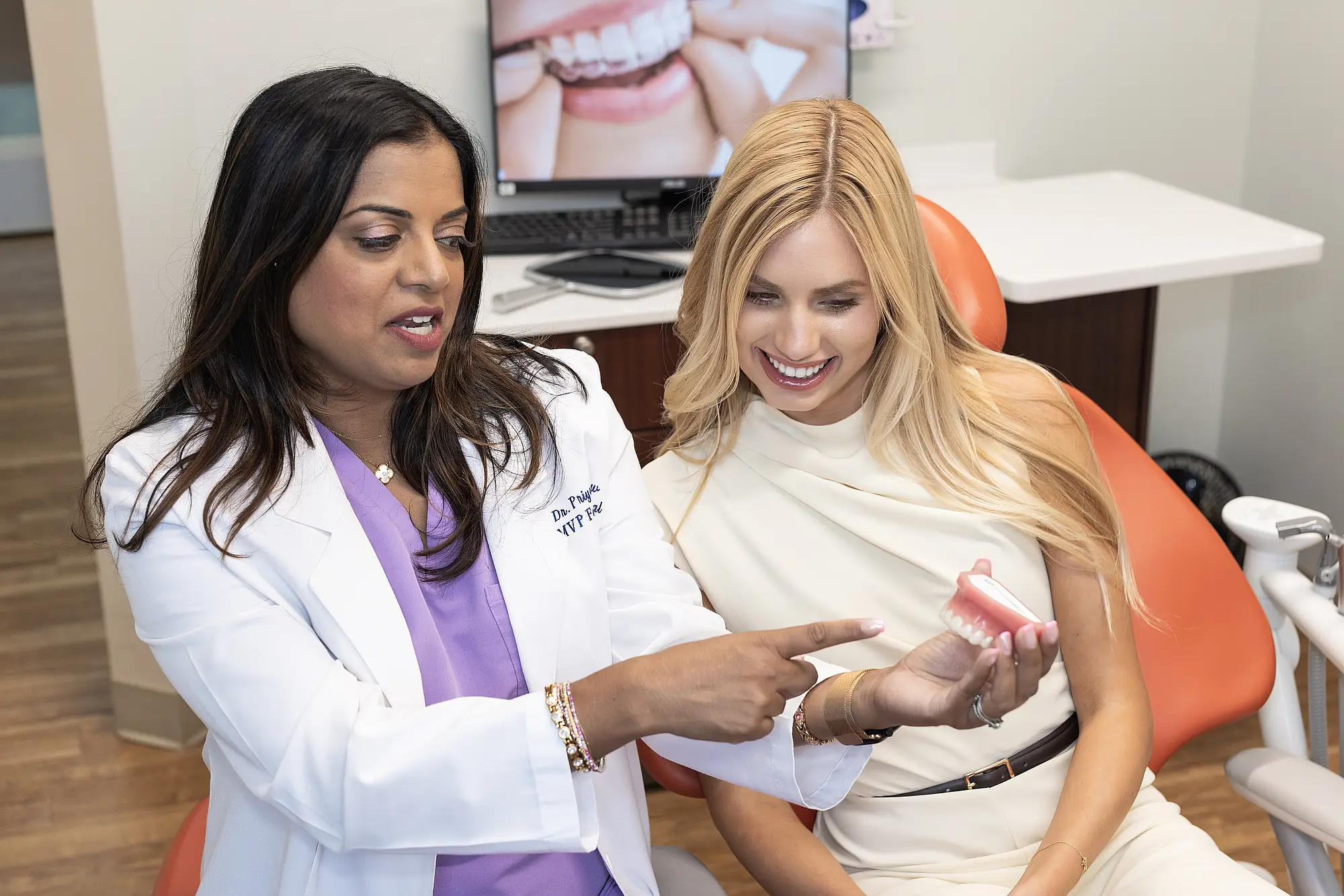
Immediate dentures at MVP Family Dental
A conventional full denture is made after the gums have healed, which means a period without teeth. An immediate denture is prepared beforehand from records taken while the teeth are still there, and placed as soon as they come out.
For most people the reason is straightforward: not wanting to be without teeth, at work or socially, during healing.
The trade-off
Immediate against conventional
Both are custom-made for your mouth. The difference is when they are made, and that has consequences worth understanding before you choose.
- ImmediateMade before extraction and fitted the same day, so there is no period without teeth.
- ConventionalMade after the gums have healed, so the fit is taken from a settled ridge.
- Fit changes as you healBecause the gums reshape after extraction, an immediate denture will need adjustment and relining.
- A definitive denture followsThe immediate denture is transitional, not the end point.
How treatment works
Planned before anything is removed
The sequence is what makes this work: the denture has to exist before the appointment where the teeth come out.
- Assessment and planningWe examine the teeth to be removed, the ridge and your bite, and confirm whether an immediate denture is appropriate.
- Records takenImpressions or scans are taken while the teeth are still present, so the denture can be made in advance.
- Extractions and fittingThe teeth are removed and the denture fitted at the same appointment.
- Healing reviewsWe see you as the gums heal, adjusting the denture and relieving sore spots.
- Reline or definitive dentureOnce healing has settled, the denture is relined or a definitive one is made.
What to expect
Adjustments are part of the plan
An immediate denture needs follow-up by design, not because something has gone wrong. Knowing that in advance makes the healing period easier.
- The fit will changeGums reshape as extraction sites heal, so adjustments are expected.
- Soreness is reviewedPressure points are relieved at the review appointments rather than endured.
- A reline followsOnce healing settles, the denture is relined or replaced with a definitive one.
Worth discussing at your consultation
- Whether you can be without teeth at all, and for how long.
- How many appointments the healing period involves.
- Any medical conditions or medications relevant to extractions.
- What happens if you would rather wait for a conventional denture.
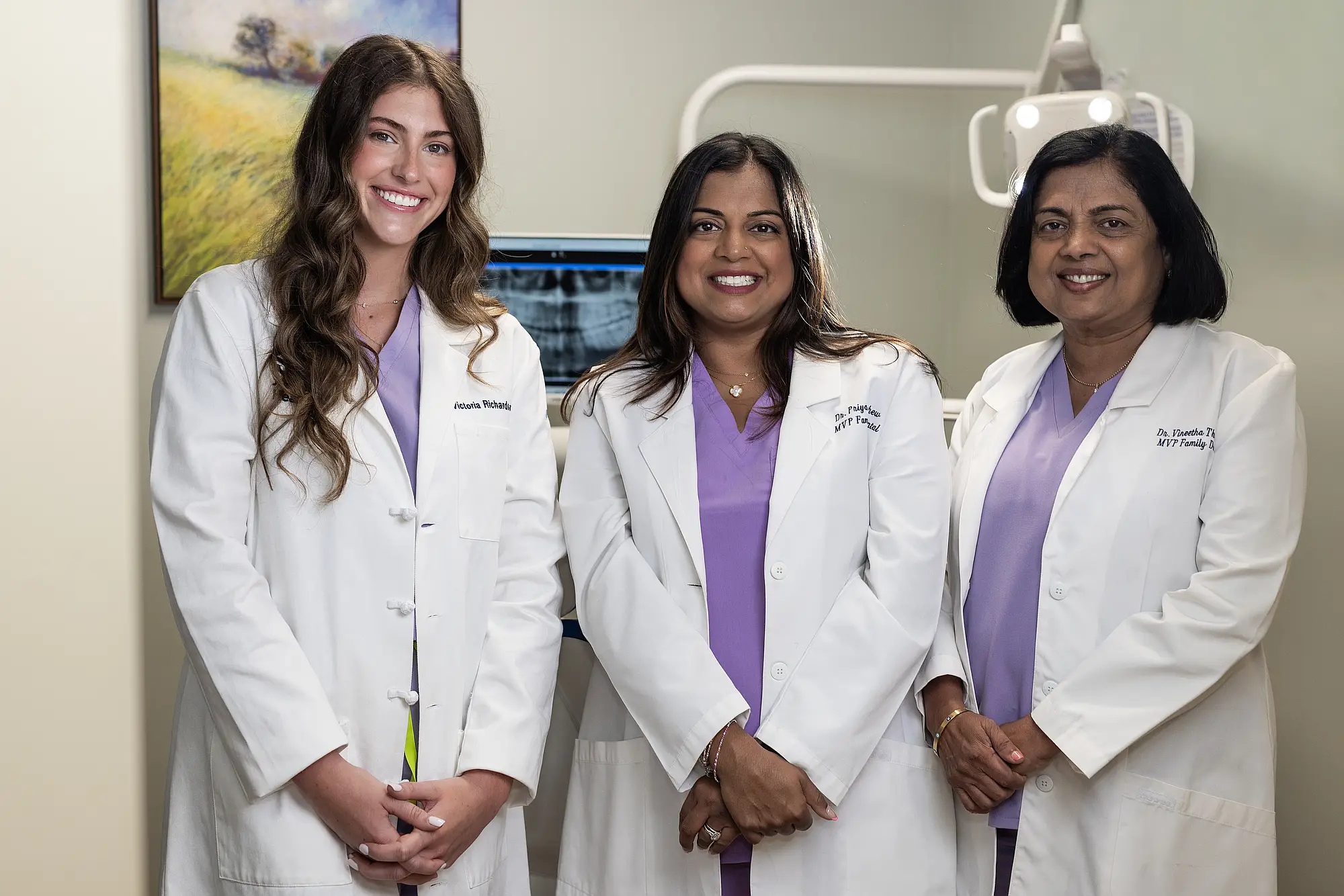
Two generations of dentists, one shared commitment to helping Jenkintown families eat, speak and smile with confidence.
MVP Family Dental · Jenkintown, PA
The short answer
An immediate denture is made in advance of your extractions and fitted on the same day, so you are not left without teeth while the gums heal. A conventional full denture is made after the gums have healed, which means a period without teeth, whereas an immediate denture is prepared beforehand from records taken while the teeth are still there. It is transitional by design: the gums reshape as the extraction sites heal, so it needs adjustment and relining, and a definitive denture follows once healing has settled.
Immediate Denture Questions
- What is an immediate denture?
- An immediate denture is a denture made in advance of your extractions and fitted on the same day, so you are not left without teeth while the gums heal. Records are taken while the teeth are still present so it can be made beforehand. The teeth are then removed and the denture fitted at the same appointment. For most people the reason is straightforward: not wanting to be without teeth, at work or socially, during healing.
- How is it different from a conventional denture?
- A conventional denture is made after the gums have healed, which means a period without teeth but a fit taken from a settled ridge. An immediate denture is made beforehand from records taken while the teeth are still there. Both are custom-made for your mouth; the difference is when they are made, and that has consequences for the fit afterwards.
- Will the fit stay the same?
- No, and that is expected. Gums and bone reshape as the extraction sites heal, so an immediate denture needs adjustment and later relining. That is part of the plan rather than a sign something has gone wrong. Knowing it in advance makes the healing period easier.
- Is it my permanent denture?
- No, it is transitional. Once healing has settled, it is relined or a definitive denture is made. It is designed to carry you through the healing period rather than to be the end point.
- Will it be sore?
- Some soreness during healing is common. Pressure points are relieved at the review appointments rather than endured, so tell us rather than putting up with it. We see you as the gums heal and adjust the denture at each visit.
- How many appointments are involved?
- More than for a conventional denture, because the healing period includes reviews and adjustments on top of the fitting. There is an assessment and planning stage, records taken while the teeth are present, the extraction and fitting appointment, healing reviews, and then a reline or a definitive denture. The sequence is set out at the consultation.
- Can everyone have one?
- Not always. It depends on which teeth are being removed, the state of the ridge and your general health, which is what the assessment establishes. Any medical conditions or medications relevant to extractions are worth raising at the consultation.
- How do I decide?
- Book a consultation. The main question is usually whether being without teeth for a period is acceptable to you, and we will talk through both routes. It is worth asking how many appointments the healing period involves, and what happens if you would rather wait for a conventional denture.
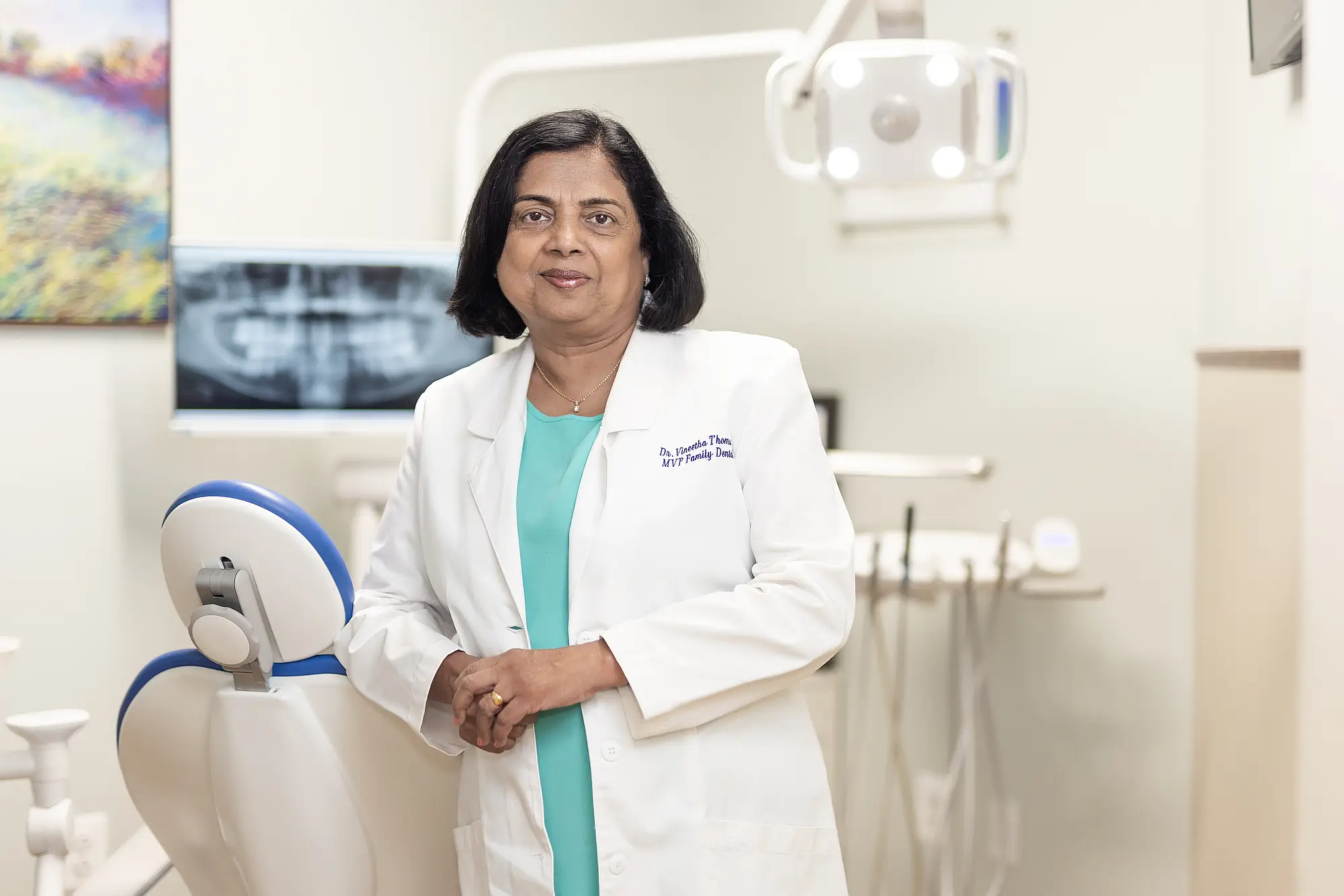
Dr. Vineetha Thomas, D.M.D.
LEARN MORE
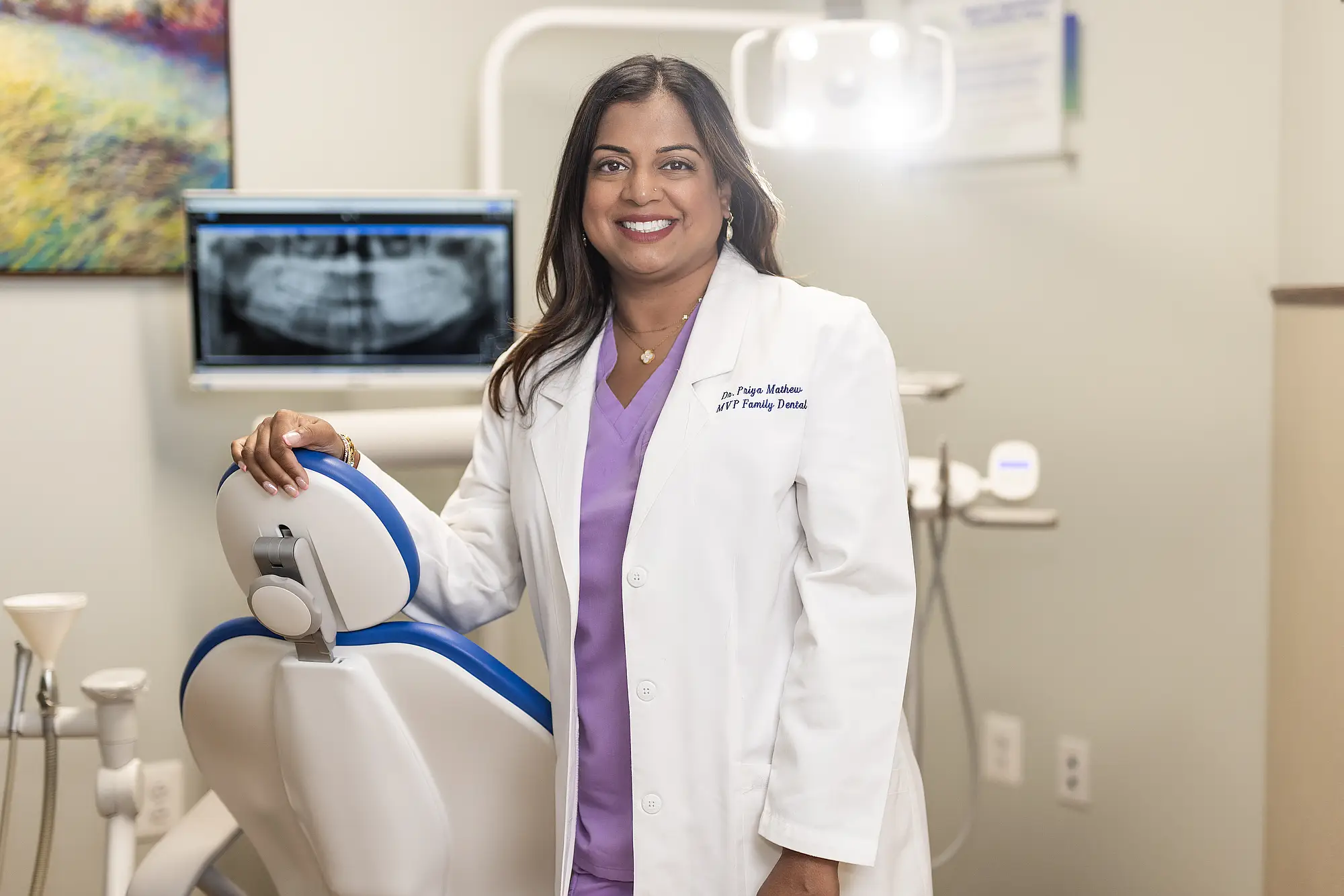
Dr. Priya Mathew, D.M.D.
LEARN MORE