

Cosmetic & Smile Care
Dental Bonding in Jenkintown, PA
Composite resin, shaped on the tooth, in a single visit.
Bonding is the most direct cosmetic treatment there is. Tooth-colored composite is applied straight onto the tooth, sculpted to shape by hand, and set hard – no laboratory stage, no temporary, and usually nothing removed from the tooth underneath.
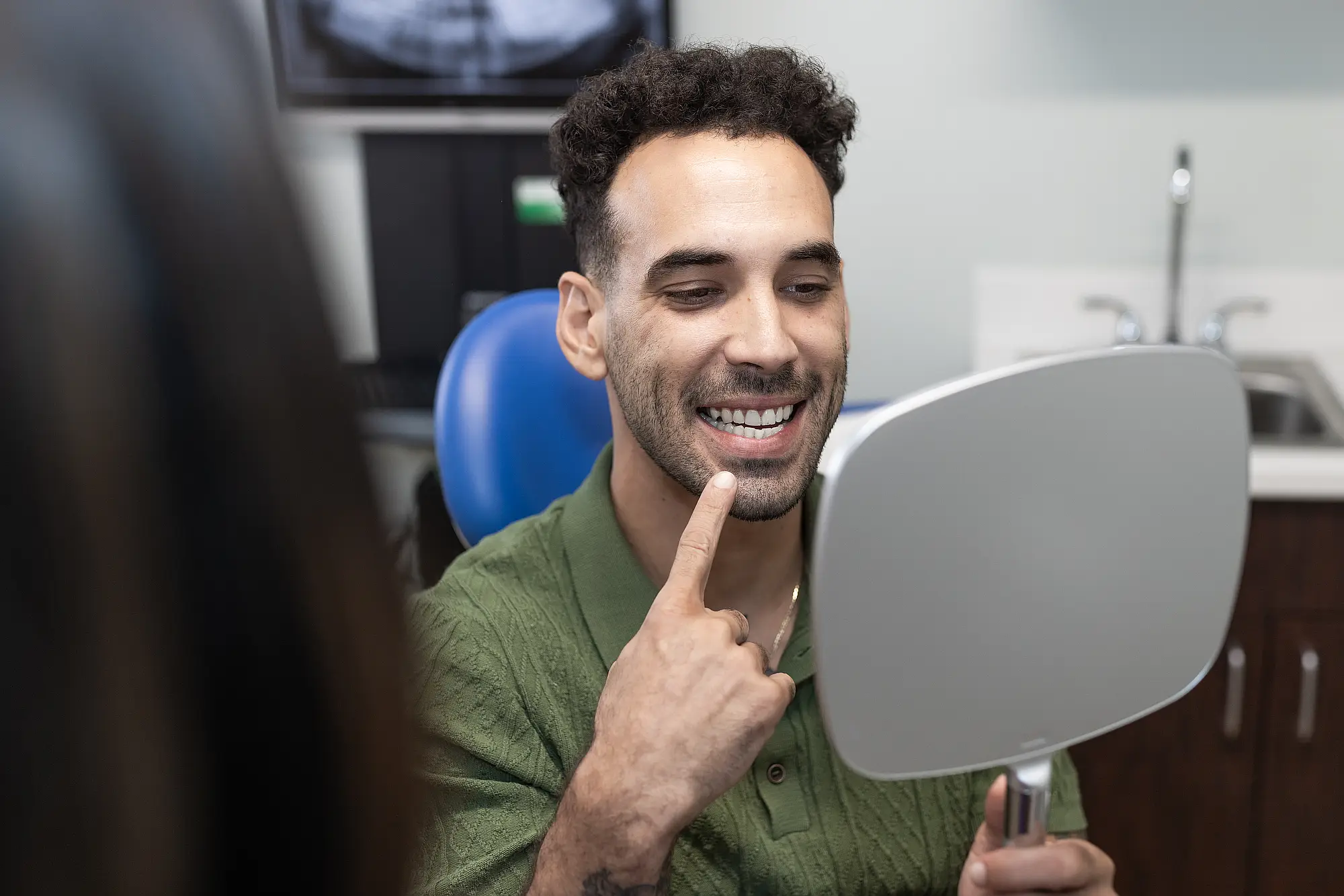
Exceptional care for a lifetime of healthy smiles
Bonding at MVP Family Dental
Composite resin starts soft. It is placed on the tooth, worked into shape while it is still workable, and then set with a curing light. That is what makes bonding a one-visit treatment while veneers and crowns are not.
It is also the most conservative option on the cosmetic list. Because the material bonds to enamel, there is often little or no need to reduce the tooth first, which keeps other options open later.
What bonding is used for
Small changes, directly made
Bonding suits localised changes to one tooth or a few. Where a whole smile is being reshaped, veneers or a broader plan usually fit better.
-
Chips and worn edges
A chipped incisal edge can be rebuilt in composite and shaped back to match the tooth beside it.
-
Gaps between teeth
A small space can be closed by adding composite to the adjacent surfaces rather than moving the teeth.
-
Shape and proportion
A tooth that is narrower, shorter or more angular than its neighbors can be evened up.
-
Discolored spots
An isolated mark that whitening will not shift can be covered with opaque composite.
-
Exposed root surfaces
Where recession has left a sensitive notch at the gumline, composite can cover it.
-
Old composite
Bonding placed years ago picks up stain at its margins and can be refreshed or replaced.

What it is made of
One material, many shades
Composite is a resin filled with fine glass particles. It is chosen shade by shade, and often in layers, because a real tooth is not one flat color.
- Shade matchingThe shade is picked against your own teeth in natural light before anything is placed.
- LayeringDifferent opacities are built up so the result has depth rather than looking like a solid block.
- Bonding to enamelThe surface is conditioned so the resin holds mechanically and chemically to the tooth.
- PolishingThe final polish sets both the shine and how readily the surface will pick up stain.
How the visit works
Done in one appointment
Bonding is completed chairside, so you leave with the finished result rather than a temporary.
- Agreeing the shapeWe look at what is bothering you and at the teeth either side, and agree what the finished tooth should look like.
- Preparing the surfaceThe tooth is cleaned and conditioned. Often nothing is drilled at all.
- Placing and shapingComposite is applied in layers, sculpted to shape, and set with a curing light.
- Refining and polishingThe bite is checked, the contour is refined, and the surface is polished to a natural luster.
Is bonding right for you
What it does, and does not, do
Composite is not as hard as porcelain and it does pick up stain over time, particularly at the margins. That is a fair trade for a conservative, one-visit treatment, but it is a trade, and it is worth knowing about before you choose it.
Whitening also has to come first if it is part of the plan, because composite does not lighten with bleaching gel. Shade-matching to already-whitened teeth is the only way to get the two to agree.
- One visitThere is no laboratory stage, so the treatment starts and finishes at the same appointment.
- ConservativeLittle or no tooth structure is usually removed, so other options stay open.
- RepairableIf composite chips, it can generally be repaired or reshaped rather than replaced entirely.
Worth discussing first
- Whether you are also considering whitening – the order matters.
- Whether you grind your teeth, which affects how bonding holds up.
- How the tooth looks to you, in your own words, rather than in dental terms.
- Whether bonding, veneers or orthodontics fits what you actually want changed.

Looking after it
Keeping the margins clean
Composite stains where the margins are, so the things that stain teeth – coffee, tea, red wine, tobacco – matter more here than they do for enamel. Brushing and flossing normally keeps the edges crisp.
Avoid using bonded front teeth as tools. Opening packaging, biting nails or chewing pens is what usually chips composite, rather than eating.
The most conservative option that solves the problem is usually the right one.
MVP Family Dental · Jenkintown, PA

The short answer
Dental bonding is tooth-colored composite resin applied directly onto a tooth, sculpted to shape by hand and set hard with a curing light, all in a single visit. Because the resin bonds to enamel there is often little or no need to reduce the tooth first, which makes it the most conservative option on the cosmetic list and keeps other treatments open later. It is used for chips and worn edges, small gaps between teeth, shape and proportion, isolated discolored spots and exposed root surfaces.
Dental Bonding Questions
- What is dental bonding?
- Dental bonding is tooth-colored composite resin applied directly onto the tooth, sculpted to shape by hand and set hard with a curing light, all in a single visit. The composite starts soft, which is what allows it to be worked into shape on the tooth. There is no laboratory stage and no temporary. It is the most direct cosmetic treatment there is.
- Does bonding hurt?
- Usually there is little or no drilling, so anesthetic is often not needed. The tooth is cleaned and conditioned rather than reduced, and often nothing is drilled at all. Your dentist will discuss anesthetic if the particular tooth calls for it.
- How is bonding different from veneers?
- Bonding is composite shaped on the tooth in a single visit, while veneers are porcelain shells made in a laboratory and bonded on at a second visit. Porcelain resists stain better, and bonding removes less tooth. Bonding suits localized changes to one tooth or a few, whereas a whole smile being reshaped usually fits veneers or a broader plan better. Which is right depends on what you actually want changed.
- Will bonding match my other teeth?
- Yes. The shade is picked against your own teeth in natural light before anything is placed. Composite is then built up in different opacities so the result has depth, because a real tooth is not one flat color. The final polish sets both the shine and how readily the surface will pick up stain.
- Can bonded teeth be whitened?
- No, composite does not lighten with whitening gel. If you want both, whiten first and then match the bonding to the new shade. Shade-matching to already-whitened teeth is the only way to get the two to agree. That is why the order matters and is worth raising before treatment starts.
- Does bonding stain?
- It can, particularly at the margins, and more readily than enamel or porcelain. Coffee, tea, red wine and tobacco are the usual culprits. Brushing and flossing normally keeps the edges crisp. The staining is a fair trade for a conservative one-visit treatment, but it is a trade worth knowing about before you choose it.
- What if it chips?
- Composite can generally be repaired or reshaped rather than replaced entirely. Contact us and we will take a look. Using bonded front teeth as tools is what usually chips composite rather than eating, so opening packaging, biting nails and chewing pens are worth avoiding.
- How do I find out if bonding suits my case?
- Book a consultation and bring a clear idea of what you want changed, described in your own words rather than in dental terms. That is the most useful thing you can arrive with. It also helps to say whether you are considering whitening, since the order matters, and whether you grind your teeth, which affects how bonding holds up.

Dr. Vineetha Thomas, D.M.D.
LEARN MORE

Dr. Priya Mathew, D.M.D.
LEARN MORE