
Surgical Care
Wisdom Tooth Extractions in Jenkintown, PA
Removing them when there is a reason to — and leaving them when there is not.
Wisdom teeth are the last to arrive and often the least well accommodated. Some come through and cause no trouble at all. Others are impacted, partly erupted or impossible to clean, and those are the ones worth doing something about.
Exceptional care for a lifetime of healthy smiles
The short answer
Wisdom teeth at MVP Family Dental
Surgical removal of impacted or problematic wisdom teeth to prevent crowding, infection, and damage to adjacent teeth.
By the time wisdom teeth arrive, the rest of the arch is already established and there is frequently not enough room left at the back for them. A tooth that cannot come through fully is described as impacted, and impaction is where most of the problems come from.
Removal is not automatic. A wisdom tooth that is fully through, cleanable and not causing trouble is generally left alone. The decision follows the assessment rather than the tooth’s name.
When removal is indicated
Reasons to take one out
These are the situations that usually lead to a recommendation. Your dentist will explain which, if any, apply to yours.
- Repeated infectionA partly erupted tooth has a flap of gum over it that traps debris, and the tissue underneath becomes inflamed and infected.
- Decay that cannot be treatedA wisdom tooth is hard to clean and hard to restore. Decay in one is often better resolved by removal.
- Damage to the tooth in frontAn angled wisdom tooth can push against and decay the second molar, which is a much more valuable tooth.
- Cysts or pathologyLess common, but an unerupted tooth can be associated with changes in the surrounding bone that show on imaging.
How treatment works
Assessed, then planned
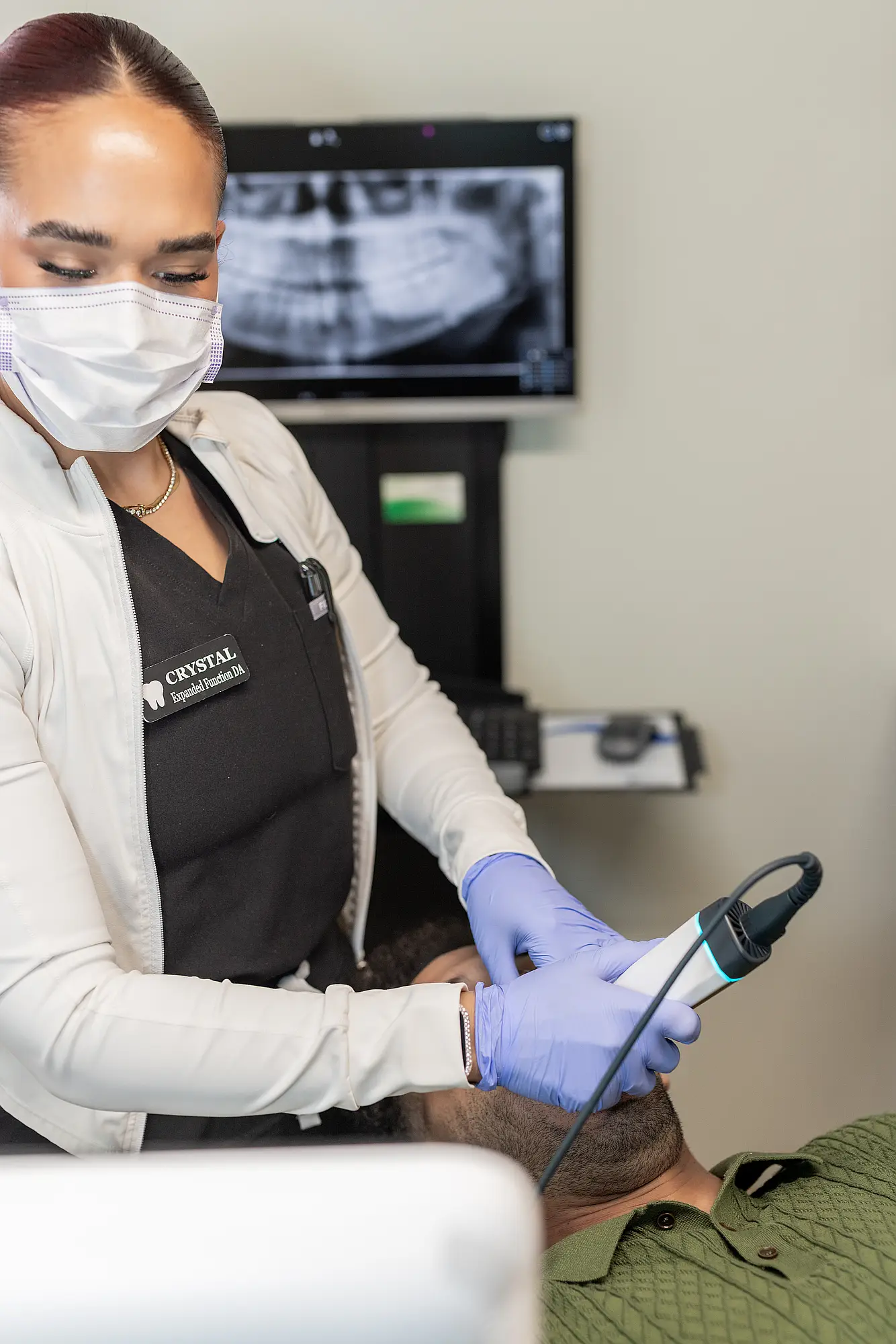
Wisdom tooth removal is planned in advance because the position of the roots and of nearby structures decides the approach.
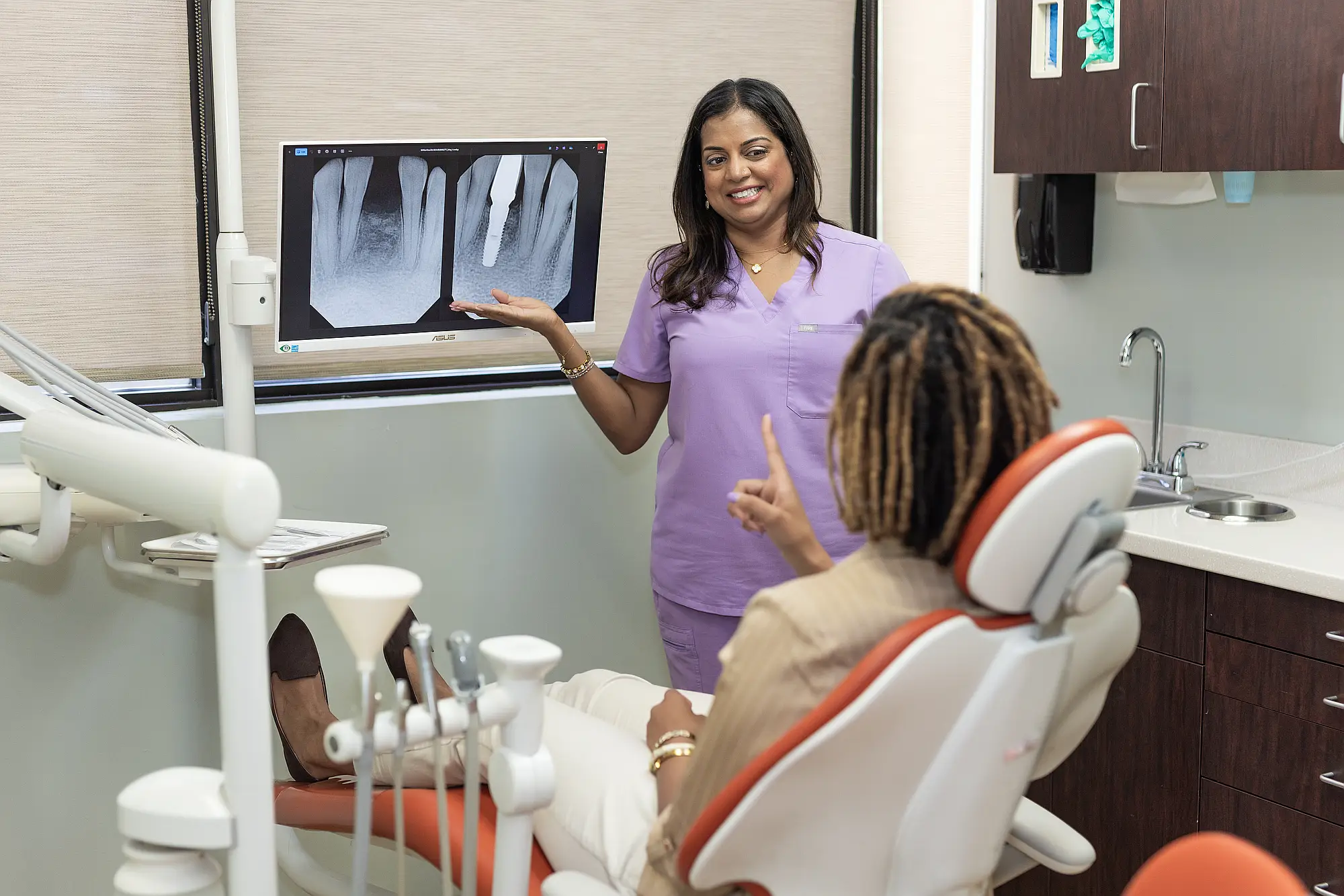
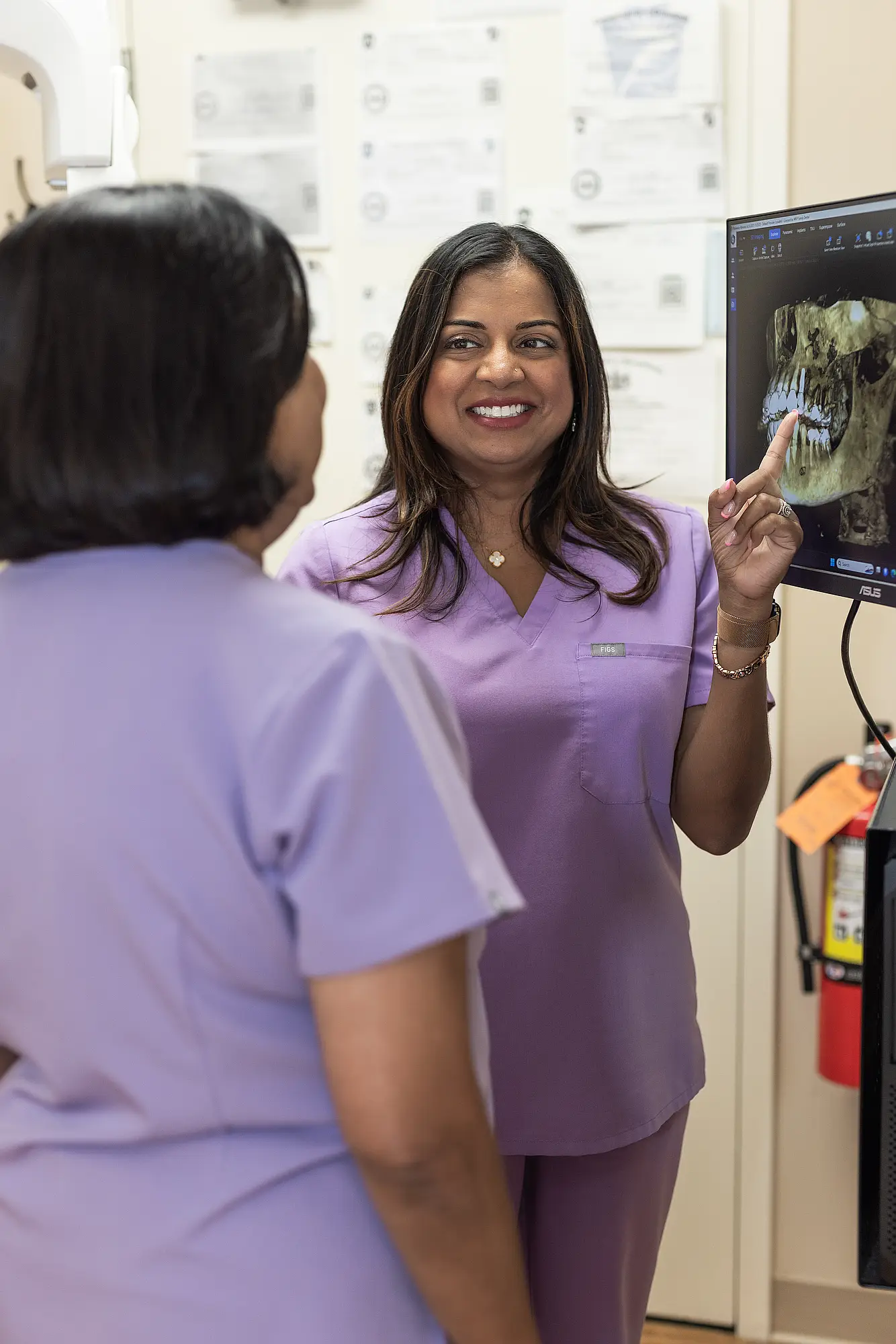
- Examination and imagingImaging shows the angle of the tooth, the shape of the roots and the position of the nerve in the lower jaw.
- Discussing the planWe explain what removal would involve for your particular tooth, and the risks specific to its position.
- The procedureThe area is numbed and the tooth is removed. Where it is impacted, this may involve sectioning the tooth to remove it in pieces.
- Aftercare instructionsYou are given specific instructions for the days that follow, and a review is arranged where needed.
The alternatives
Removal is not the only path
Where symptoms are manageable and the tooth is not damaging anything, other approaches are reasonable.
-
Monitoring
An asymptomatic tooth can be watched with periodic imaging rather than removed.
-
Managing the gum
Where a flap of gum over a partly erupted tooth is the problem, treating that tissue may resolve it.
-
Removal
Where infection recurs, decay cannot be treated, or the tooth in front is at risk.
-
Referral
Some cases are best handled by an oral surgeon. Where that is so, we arrange it rather than proceeding.
Symptoms worth reporting
What usually brings people in
Pain at the very back of the jaw, swelling around a partly erupted tooth, a bad taste, or difficulty opening are the usual presentations. Recurring episodes matter more than a single one – a pattern is what tips the balance toward removal.
Where there is significant swelling, difficulty swallowing or difficulty opening the mouth, contact us promptly rather than waiting for a routine appointment.
- Recurring infectionRepeated episodes around the same tooth are a common reason to remove it.
- AsymptomaticA tooth causing no problems is often monitored rather than removed.
- Position mattersThe angle of the roots and the nerve nearby shape both the plan and the risks.
Useful to tell us
- How many episodes of pain or swelling you have had, and how recently.
- Whether you can open your mouth normally.
- Any previous imaging of your wisdom teeth.
- Current medications and medical conditions.
Recovering
Protect the clot
The blood clot that forms in the socket is what the healing is built on. Avoid rinsing vigorously, smoking, and drinking through a straw in the period your dentist specifies – all of them can dislodge it and leave the socket exposed and painful.
You will be given written instructions covering eating, cleaning and pain relief for your case. Follow those rather than general advice from anywhere else, and contact us if pain increases after the first days instead of easing.
Not every wisdom tooth needs removing. The ones that do usually announce themselves more than once.
MVP Family Dental · Jenkintown, PA
Wisdom Tooth Questions
- Does everyone need their wisdom teeth out?
- No. A wisdom tooth that is fully through, cleanable and causing no problems is generally left alone. Removal follows an assessment, not the tooth’s name.
- What does impacted mean?
- That the tooth cannot come through into a normal position – it is blocked by bone or by the tooth in front, so it stays partly or fully buried.
- Why do partly erupted wisdom teeth get infected?
- A flap of gum sits over the tooth and traps food and bacteria underneath, where a toothbrush cannot reach. The tissue becomes inflamed and can then become infected.
- Is the procedure painful?
- The area is numbed, so the removal itself should not be painful. Your dentist will explain what to expect afterwards and how to manage it.
- Why do I need an X-ray first?
- It shows the angle of the tooth, the shape of the roots and the position of the nerve in the lower jaw – all of which shape the plan and the risks.
- What is a dry socket?
- When the blood clot in the socket is lost, leaving it exposed and painful. Avoiding vigorous rinsing, smoking and straws in the early days is how it is prevented.
- Will I need to see a specialist?
- Some cases are best handled by an oral surgeon. Where that is so, we will tell you and arrange the referral rather than proceeding.
- How do I get assessed?
- Contact our Jenkintown office. If you have had episodes of pain or swelling, note roughly when – the pattern is a large part of the decision.
Dr. Vineetha Thomas, D.M.D.
LEARN MORE
Dr. Priya Mathew, D.M.D.
LEARN MORE