
Restorative & Implant Care
Implant Supported Dentures in Jenkintown, PA
A denture that is held by the jaw, not balanced on the gums.
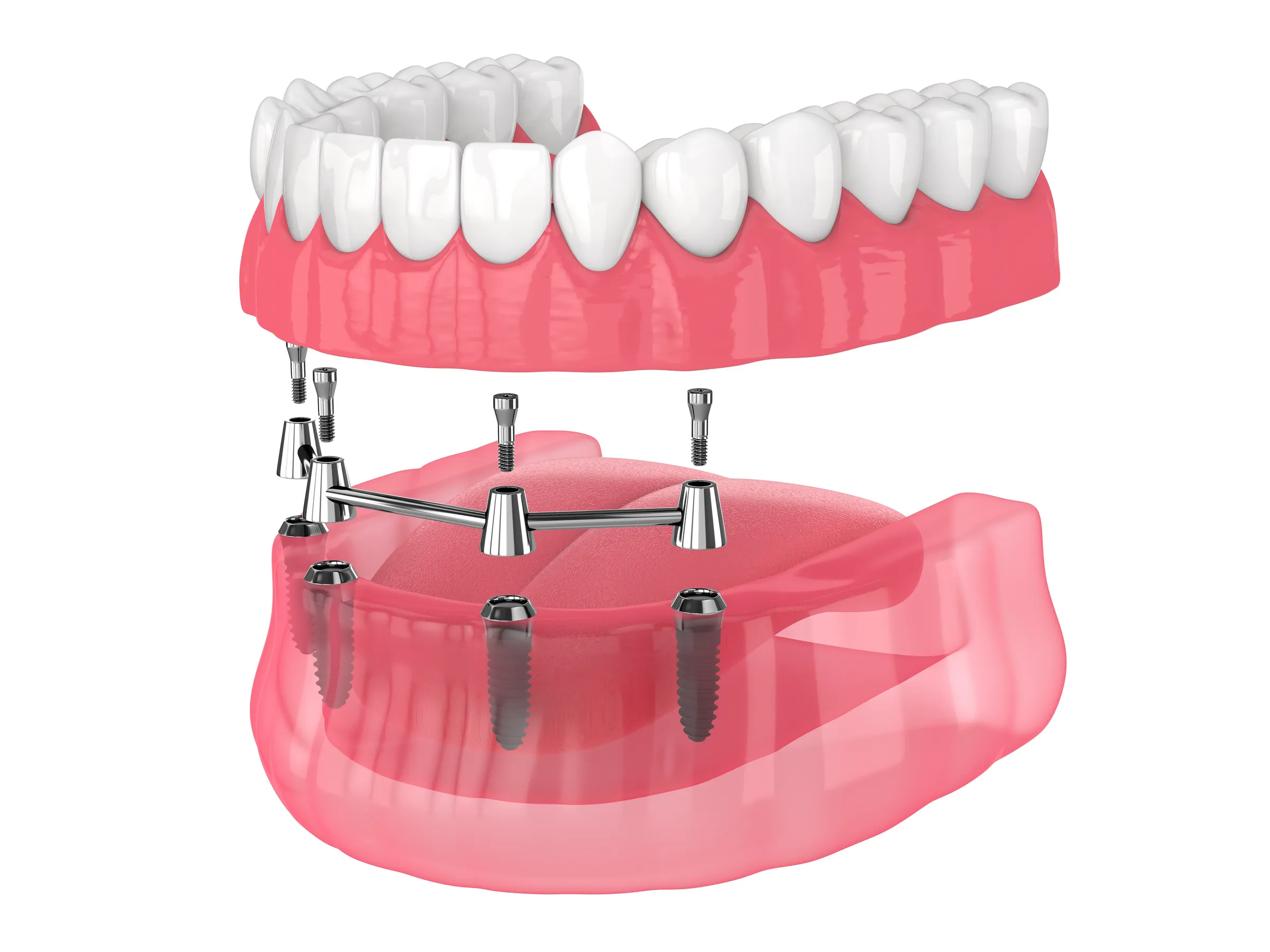
Implant supported dentures are anchored to implants placed in the jawbone, where they do the job a natural tooth root would. Because the denture is attached rather than resting on the gum, it does not shift while you eat or speak.
Exceptional care for a lifetime of healthy smiles
The short answer
Implant supported dentures at MVP Family Dental
Dentures anchored to dental implants in the jawbone rather than resting on the gums, giving improved stability, comfort and chewing ability compared with conventional removable dentures.
The complaint we hear most about conventional dentures is movement. A denture that rests on the gum relies on shape and suction to stay put, and that changes as the ridge underneath it changes shape over the years.
Anchoring the denture to implants takes that variable out. The implants sit in bone and the denture attaches to them, so what holds it in place is fixed rather than a fit that has to be maintained.
What changes
Anchored rather than balanced
The difference is felt at meals more than anywhere else. Patients who have struggled with a conventional denture usually notice it first when eating something that needs real chewing.
- It does not moveThe denture is attached to the implants, so it stays where it is put.
- Held by boneThe implants take the load through the jaw rather than through the gum ridge.
- Fixed or removableDepending on the plan, the denture may snap on and off for cleaning or be fixed in place.
- Assessed firstHow much bone is available decides how many implants are used and how the denture attaches.
How treatment works
From assessment to a stable denture
Treatment runs across several appointments with a healing period between placing the implants and loading them. Your dentist will map the sequence out at the consultation.
- Consultation and imagingWe assess the ridge, the bone beneath it and your existing denture if you wear one.
- Planning the implantsThe number and position of the implants is decided from your scans before any surgery.
- Placing the implantsThe implants are placed during a surgical appointment under local anesthetic.
- Healing and integrationThe implants are left to integrate with the bone before they carry the denture.
- Fitting and adjustingThe denture is connected to the implants, and the fit and bite are checked and adjusted.
Who it suits
When anchoring is worth doing
This is generally a conversation for patients missing all or most of the teeth in an arch, and particularly for those who already wear a denture and are not getting on with it.
- An existing denture that movesThe most common reason patients ask about anchoring one.
- Difficulty chewingWhere a conventional denture limits what you are comfortable eating.
- Enough bone to work withBone volume decides how many implants can be used, and is assessed from imaging.
Worth bringing to your consultation
- Your current denture, if you have one.
- Any X-rays or records from a previous dentist.
- A current list of medications and medical conditions.
- What you find hardest about your denture now — eating, speaking, or the fit.
Living with it
Cleaning around the anchors
The denture itself cannot decay, but the gum and bone around each implant can be lost, and that is what holds everything up. Cleaning therefore focuses on the implants and the tissue around them as much as on the denture.
At your reviews we check the gum around each implant, look at how the denture is seating, and adjust the bite if it has shifted.
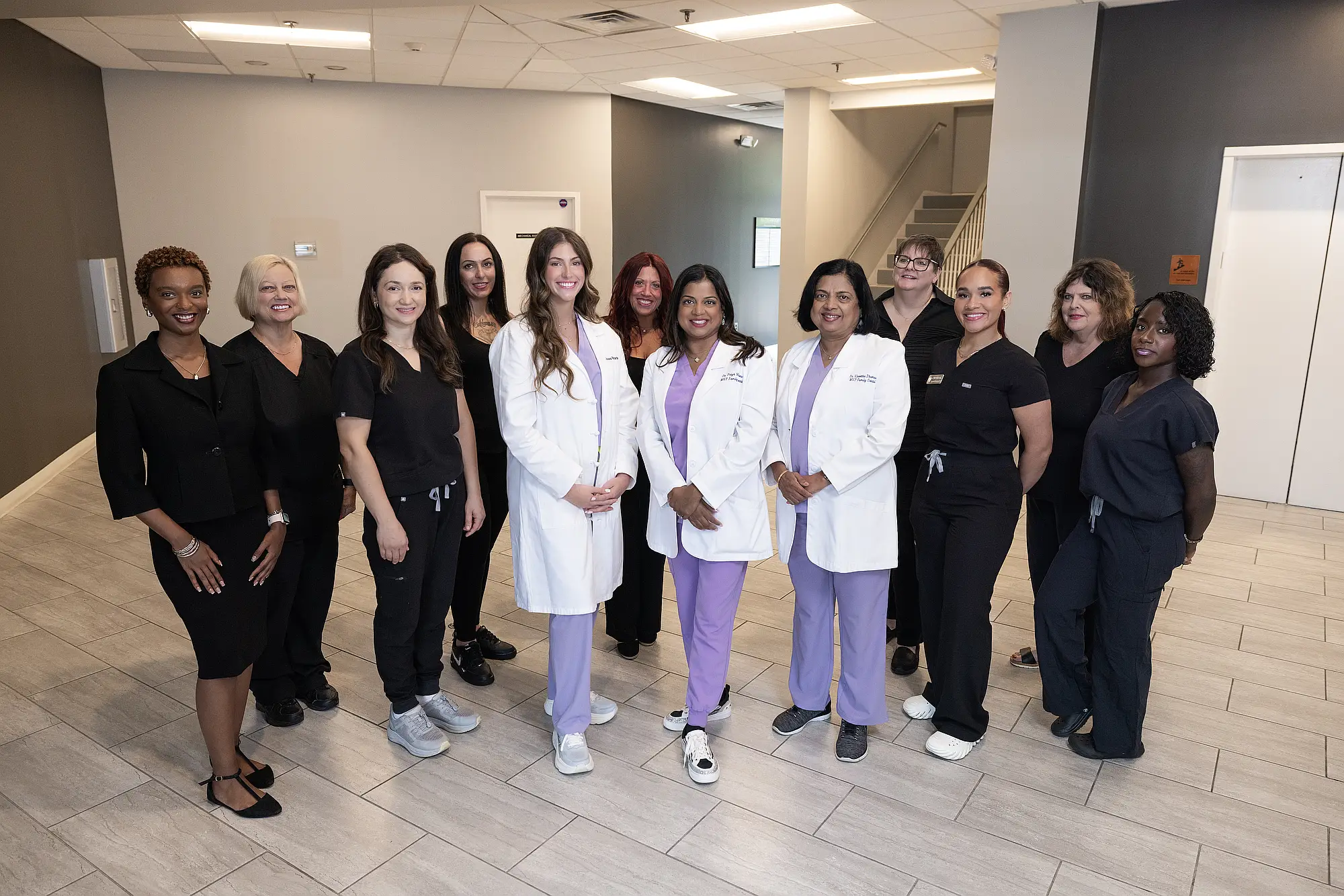
Two generations of dentists, one shared commitment to helping Jenkintown families eat, speak and smile with confidence.
MVP Family Dental · Jenkintown, PA
Implant Supported Denture Questions
- What is an implant supported denture?
- It is a denture that attaches to implants placed in the jawbone, rather than resting on the gums. The implants take the place of tooth roots and hold the denture in position.
- How is it different from a conventional denture?
- A conventional denture sits on the gum and stays in through shape and suction. An implant supported denture is anchored, so it does not rely on the fit against the ridge to hold it.
- Does it come out?
- That depends on the plan. Some are designed to snap on and off for cleaning, and others are fixed in place. Which is appropriate is decided at the consultation.
- How many implants are needed?
- It varies with the arch being treated and the bone available to work with. The number is decided from your imaging rather than set in advance.
- Will I need a bone graft?
- Sometimes. Bone changes shape after teeth are lost, so part of the assessment is looking at how much is there and whether anything needs to be done before implants can be placed.
- Can I use my existing denture?
- Bring it to the consultation. Whether an existing denture can be adapted or a new one is needed depends on its condition and on how the implants end up positioned.
- How do I clean it?
- The denture is cleaned as you would expect, and the implants and the gum around them are cleaned too. The tissue around the anchors is what needs protecting, so hygiene appointments matter.
- How do I find out whether it would work for me?
- Book a consultation at our Jenkintown office. We will look at the arch, the bone supporting it and your current denture, and talk through the options.
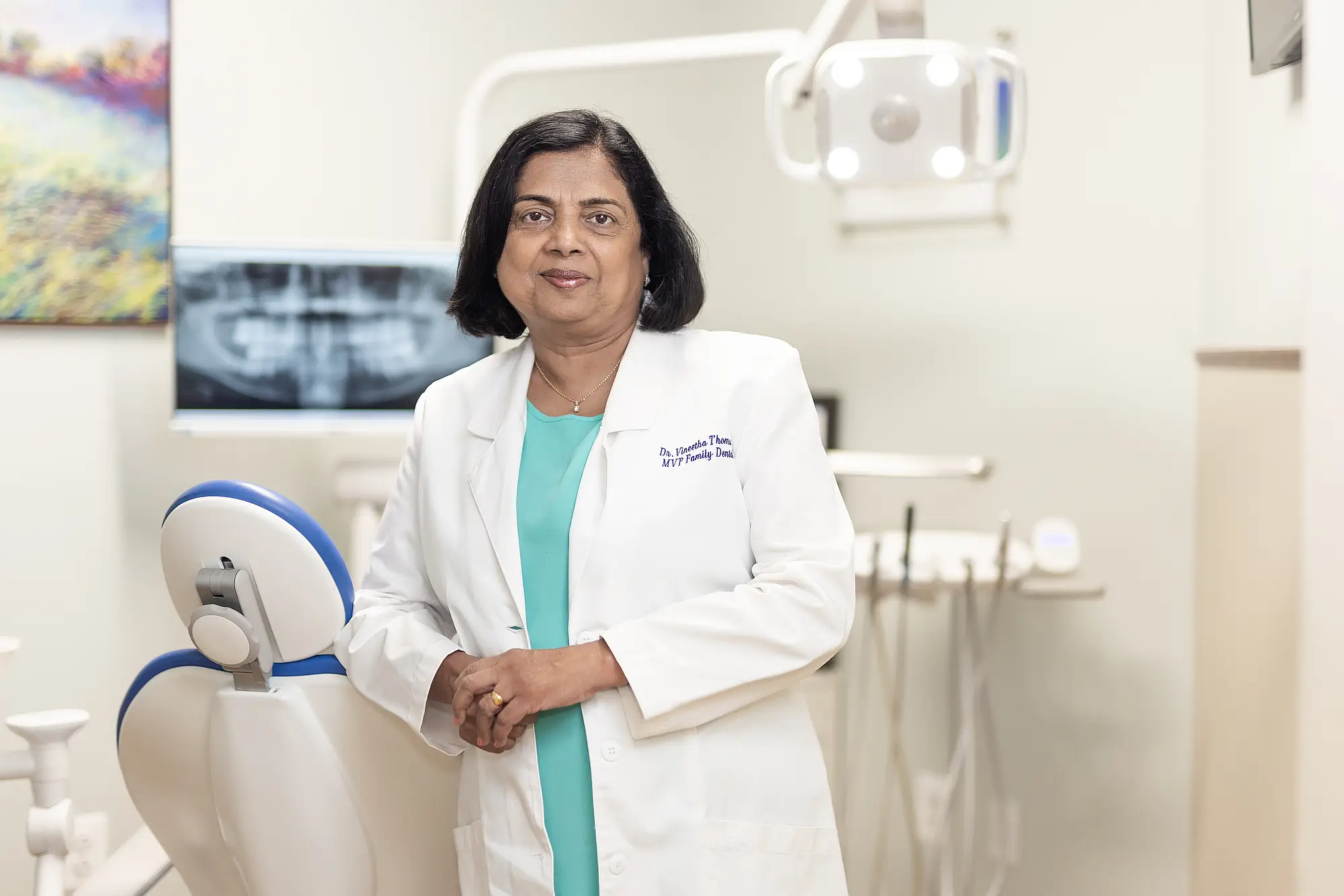
Dr. Vineetha Thomas, D.M.D.
LEARN MORE
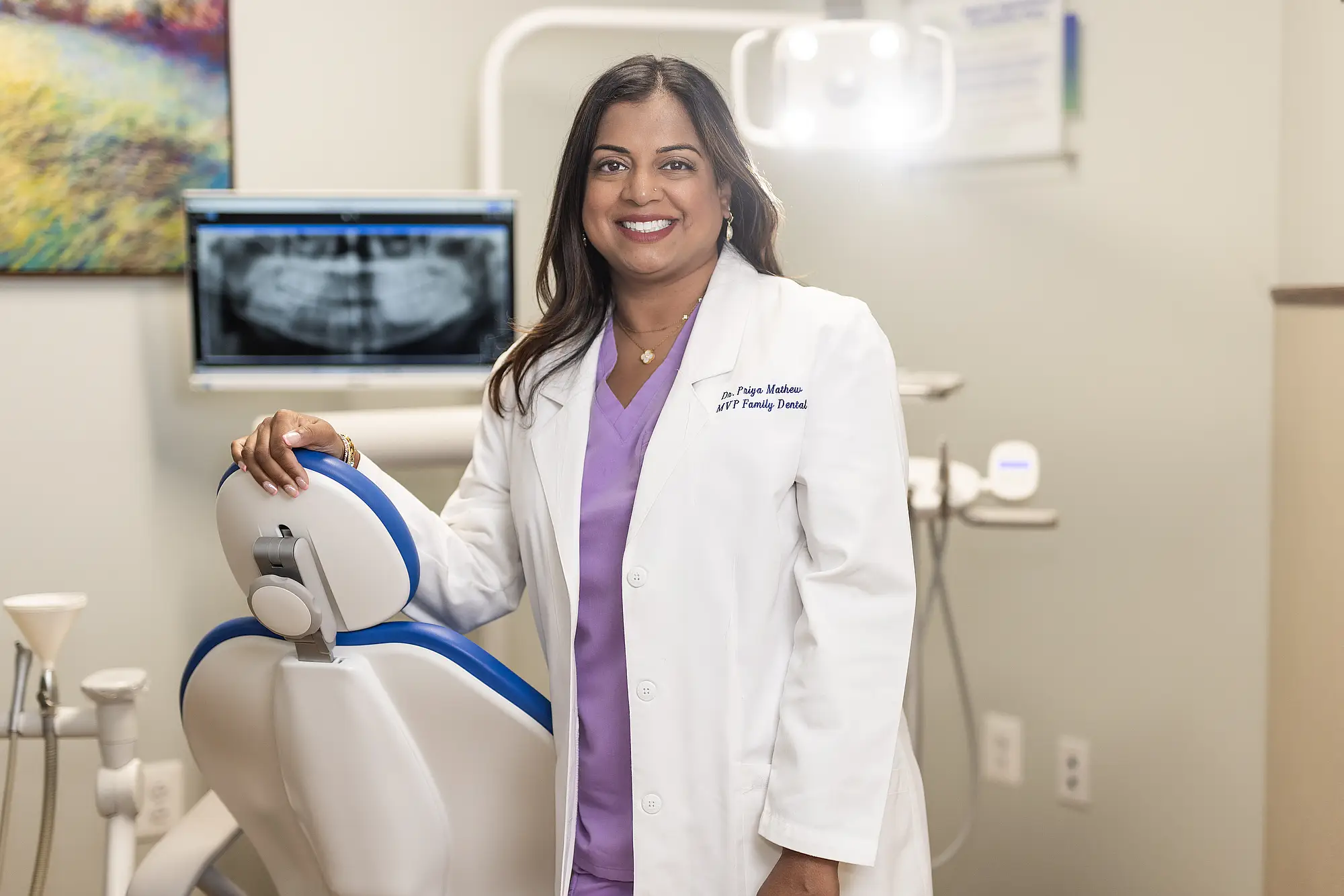
Dr. Priya Mathew, D.M.D.
LEARN MORE