

Preventive Care
Denture Care in Jenkintown, PA
Looking after the denture, and the mouth underneath it.
Dentures need a daily routine of their own. Cleaning them properly keeps bacteria and staining down, and it protects the gums and ridge they rest on — which is what determines how well they keep fitting.
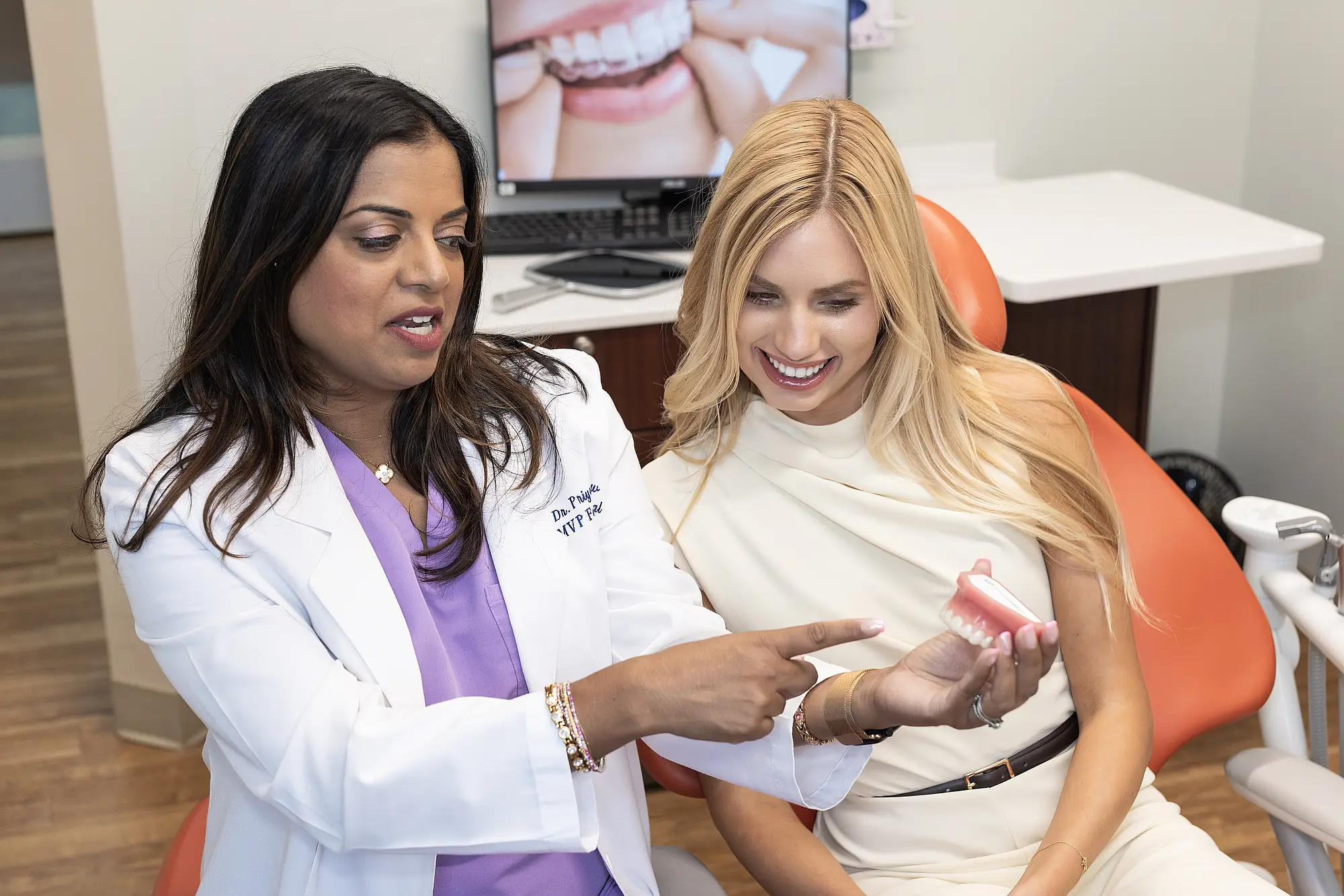
Exceptional care for a lifetime of healthy smiles
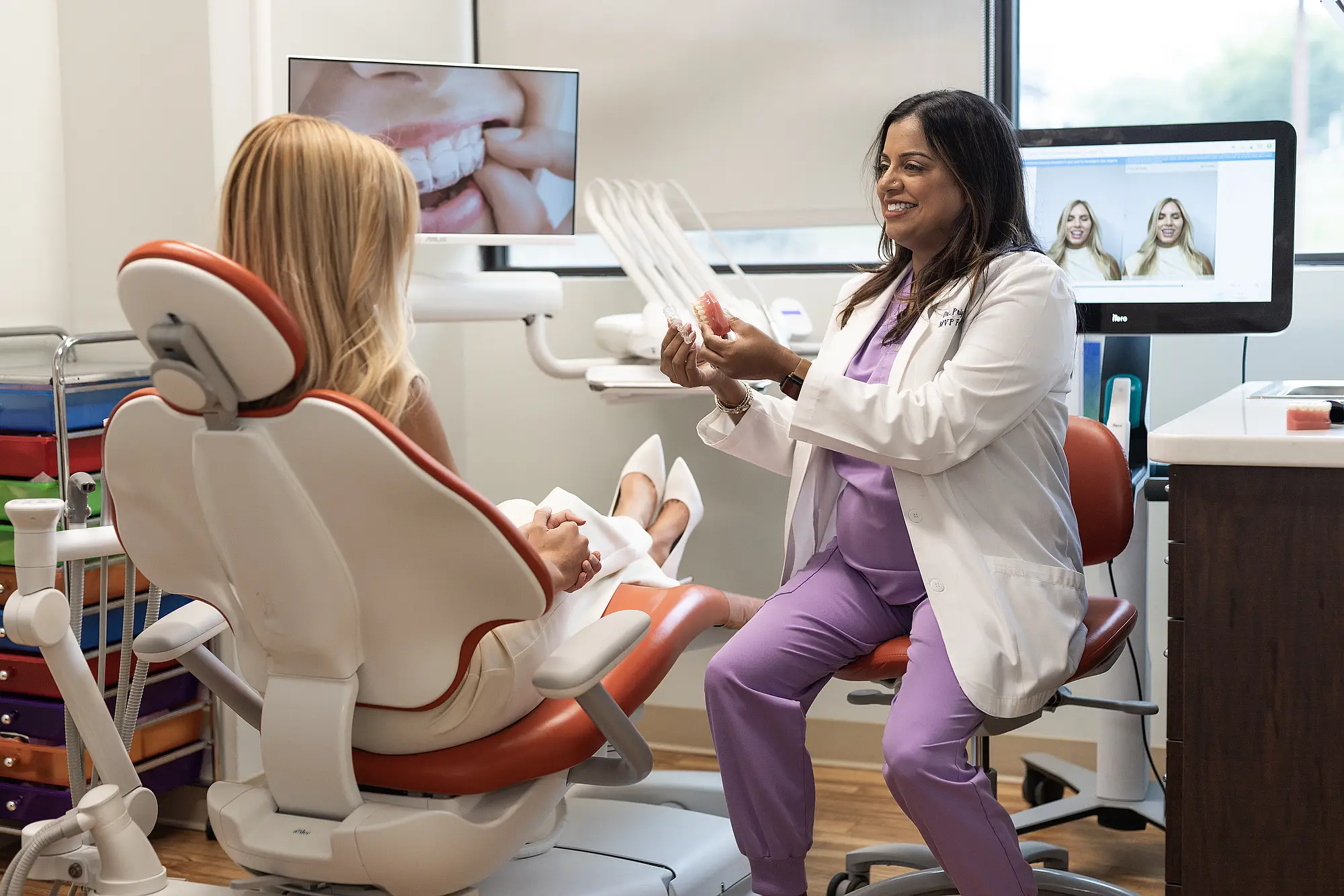
Denture care at MVP Family Dental
A denture collects plaque and food debris the same way natural teeth do. Left on, that affects the gums it sits against, and gum health is what a denture depends on for its fit.
The routine itself is simple. Most of the problems we see come from small habits rather than from anything complicated.
Handling them
Dentures are more fragile than they look
Most denture damage happens outside the mouth, not in it. A few precautions prevent the majority of breakages.
- Work over something softRemove and clean dentures over a folded towel or a sink part-filled with water, so a slip does not become a fracture.
- Rinse after eatingRinsing away food debris after meals keeps bacteria down between full cleans.
- Lukewarm water onlyHot water can distort the denture base, which changes the fit.
- Do not let them dry outDentures are stored in water or a soaking solution overnight rather than left dry.
The daily routine
What good care looks like
The order matters less than the consistency. Doing all of it every day is what protects both the denture and the tissue under it.
- Remove and rinseTake the denture out and rinse away loose debris, working over a towel or water.
- Clean the dentureClean all surfaces with a soft brush and a product intended for dentures, not abrasive toothpaste.
- Clean your mouthBrush the gums, tongue and palate, and any remaining natural teeth, before the denture goes back in.
- Soak overnightLeave the denture in water or a soaking solution so it does not dry out.
- Rinse before wearingRinse the denture before putting it back in, particularly after a soaking solution.
What we check
Reviews matter even with no teeth
Denture wearers still need regular appointments. The denture is only half of what is being looked at.
- The fitGums and bone change shape over time, so a denture that fitted well can stop doing so.
- The tissue underneathWe look at the gums and ridge for soreness, inflammation or anything unusual.
- Oral cancer screeningExamination of the soft tissues continues regardless of whether you have natural teeth.
Worth mentioning at your appointment
- Any soreness, rubbing or ulceration under the denture.
- A denture that has started to move or click.
- Difficulty with particular foods that you did not have before.
- Any chip, crack or missing tooth on the denture itself.
Two generations of dentists, one shared commitment to helping Jenkintown families eat, speak and smile with confidence.
MVP Family Dental · Jenkintown, PA
The short answer
Denture care is the daily routine of cleaning and storing a full or partial denture, and of looking after the mouth underneath it. A denture collects plaque and food debris the same way natural teeth do, and left on, that affects the gums it sits against, which is what the fit depends on. The routine is to remove and rinse the denture, clean every surface with a soft brush and a product intended for dentures, brush the gums, tongue, palate and any remaining teeth, and soak the denture overnight in water or a soaking solution.
Denture Care Questions
- How often should I clean my dentures?
- Rinse them after meals and give them a full clean daily. Rinsing away food debris after eating keeps bacteria down between full cleans. The denture is then stored in water or a soaking solution overnight. The order matters less than doing all of it every day.
- Can I use ordinary toothpaste?
- No, ordinary toothpaste can be too abrasive for a denture surface. Use a soft brush with a product intended for dentures instead, cleaning all surfaces. Any remaining natural teeth are still brushed normally.
- Can I use hot water?
- No. Hot water can distort the denture base, and once the shape has changed the fit changes with it. Use lukewarm water for rinsing and cleaning. The same applies to anything you soak the denture in.
- Should I take them out at night?
- Unless you have been told otherwise, yes. Dentures come out overnight and are stored in water or a soaking solution so they do not dry out. That also gives the tissue underneath a rest. Rinse the denture before putting it back in, particularly after a soaking solution.
- Do I still need to brush if I have no natural teeth?
- Yes. The gums, tongue and palate are brushed as part of the daily routine, before the denture goes back in. Any remaining natural teeth are cleaned normally. Gum health is what a denture depends on for its fit.
- Do I still need dental appointments?
- Yes. We check the fit of the denture, because gums and bone change shape over time and a denture that fitted well can stop doing so. We look at the gums and ridge underneath for soreness, inflammation or anything unusual. Examination of the soft tissues continues regardless of whether you have natural teeth.
- My denture has started to move. Is that normal?
- It is common, because gums and bone change shape over time, but it is worth an appointment rather than putting up with it. Relining or adjustment is often the answer. Difficulty with particular foods that you did not have before is worth mentioning at the same time.
- What if it cracks or a tooth comes off?
- Call us rather than attempting a repair yourself. Household adhesives can make a denture unrepairable. Bring the denture and any pieces in with you. Most denture damage happens outside the mouth, so cleaning over a folded towel or a sink part-filled with water prevents the majority of breakages.

Dr. Vineetha Thomas, D.M.D.
LEARN MORE

Dr. Priya Mathew, D.M.D.
LEARN MORE