
Oral Surgery
Implants Post-Op Care in Jenkintown, PA
The weeks after placement are what decide the result.
An implant succeeds through osseointegration — bone fusing to the implant surface. That happens after the appointment, not during it, which is why aftercare and follow-up visits matter as much as the placement itself.
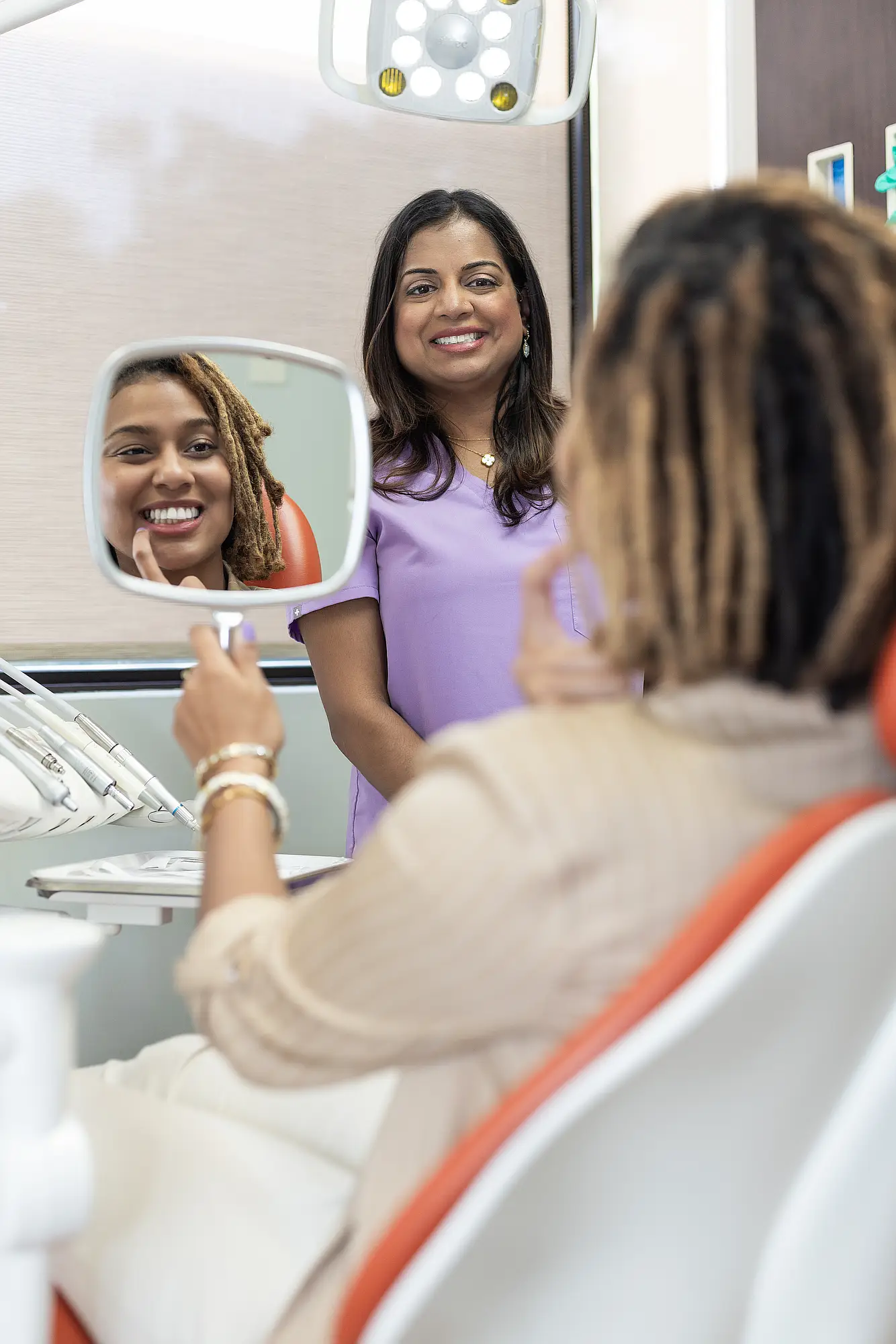
Exceptional care for a lifetime of healthy smiles
Aftercare at MVP Family Dental
Osseointegration is the process by which the implant fuses with your jawbone. While it is happening, the site needs to be kept clean and left undisturbed, and it needs to be looked at by us at intervals.
Most of what can go wrong in this period is preventable, which is the reason the instructions are specific rather than general.

What we watch for
Checked at intervals, not once
Follow-up appointments are scheduled through the healing period rather than only at the end of it, so anything developing is caught while it is still small.
- Signs of infectionSwelling or unusual discomfort around the site is looked for at each review.
- IntegrationWe assess whether the implant is becoming stable in the bone as expected.
- The surrounding gumThe health of the tissue around the implant is part of every check.
- Your routineWe go through how you are cleaning the area and adjust the advice if needed.
Looking after the site
Keeping it clean without disturbing it
The instructions you are given at the appointment are specific to your case. In general terms, aftercare comes down to a few things done consistently.
- Follow the instructions givenThey are written for your site and take priority over general advice.
- Keep the area cleanRemoving bacteria and food debris around the implant site is what prevents infection.
- Be gentle with itThe site should be kept clean without being disturbed while it is healing.
- Attend the reviewsThe follow-up appointments are how problems are caught early.
- Tell us about changesSwelling or discomfort that is not settling is worth a call rather than a wait.
Longer term
After the restoration is fitted
Once the implant carries a crown, bridge or denture, aftercare shifts from healing to maintenance. The principle does not change: protect the gum and bone holding the implant.
- The crown cannot decayBut the gum and bone underneath it can be lost, and that is what holds everything up.
- Hygiene visits matterImplants are checked alongside your own teeth at every appointment.
- Bite changesWe look at whether your bite has shifted around the implant over time.
Worth calling us about
- Swelling around the site that is not settling.
- Discomfort that is increasing rather than decreasing.
- Anything that feels loose.
- Uncertainty about whether you are cleaning the area correctly.
Two generations of dentists, one shared commitment to helping Jenkintown families eat, speak and smile with confidence.
MVP Family Dental · Jenkintown, PA
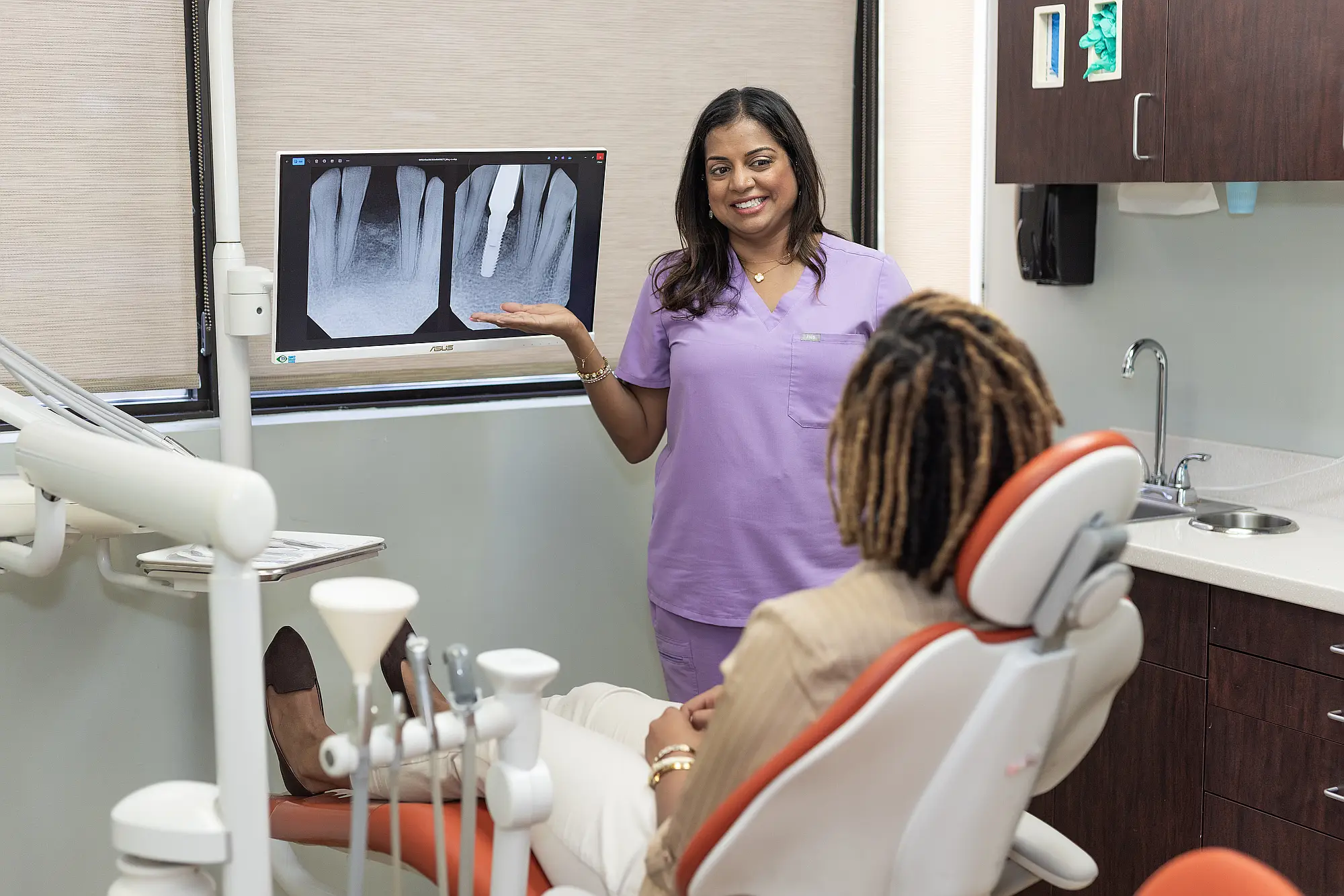
The short answer
Implant post-operative care covers hygiene at the implant site, watching for signs of infection, and follow-up appointments during osseointegration, the process by which the implant fuses with your jawbone. That fusing happens after the appointment rather than during it, which is why the weeks following placement are what decide the result. The site needs to be kept clean and left undisturbed, and it is reviewed at intervals through the healing period rather than only at the end of it.
Post-Op Care Questions
- What is osseointegration?
- Osseointegration is the process by which the implant fuses with your jawbone. It happens during the healing period after placement, and it is what makes the implant stable enough to carry a tooth. While it is happening the site needs to be kept clean and left undisturbed. That is why the restoration is fitted at a later appointment rather than the same day.
- How do I clean the site while it heals?
- Follow the specific instructions given to you at the appointment, which are written for your site and take priority over general advice. In general the aim is to keep the area free of bacteria and food debris without disturbing it. Removing debris around the implant site is what prevents infection. If you are unsure whether you are cleaning it correctly, ask rather than guess.
- What are the warning signs?
- Swelling or unusual discomfort around the site, particularly if it is increasing rather than settling. Anything that feels loose is also worth a call. Contact us rather than waiting for the next scheduled review, because most of what can go wrong in this period is preventable.
- How many follow-up appointments are there?
- Reviews are scheduled through the healing period rather than only at the end, so progress is assessed more than once. The number depends on your case. Checking at intervals is what catches anything developing while it is still small.
- What are you checking at those visits?
- Signs of infection, such as swelling or unusual discomfort around the site. Whether the implant is becoming stable in the bone as expected. The health of the gum around it. And how you are managing the cleaning, so the advice can be adjusted if it needs to be.
- Does aftercare stop once the crown is on?
- No, it changes. Aftercare shifts from healing to maintenance, but the principle is the same: protect the gum and bone holding the implant. The crown cannot decay, but the gum and bone underneath it can be lost, and that is what holds everything up. Cleaning around the implant and attending hygiene visits continues indefinitely.
- Can I clean it normally straight away?
- Not necessarily. The early instructions are deliberately more careful than your normal routine, because the site has to be kept clean without being disturbed. We will tell you when to return to your usual routine. Until then, follow the instructions given at the appointment.
- Who do I contact if I am unsure?
- Call the office. Questions about a healing implant site are worth asking early rather than left until the next appointment. Swelling that is not settling, discomfort that is increasing, or anything that feels loose are all reasons to call.
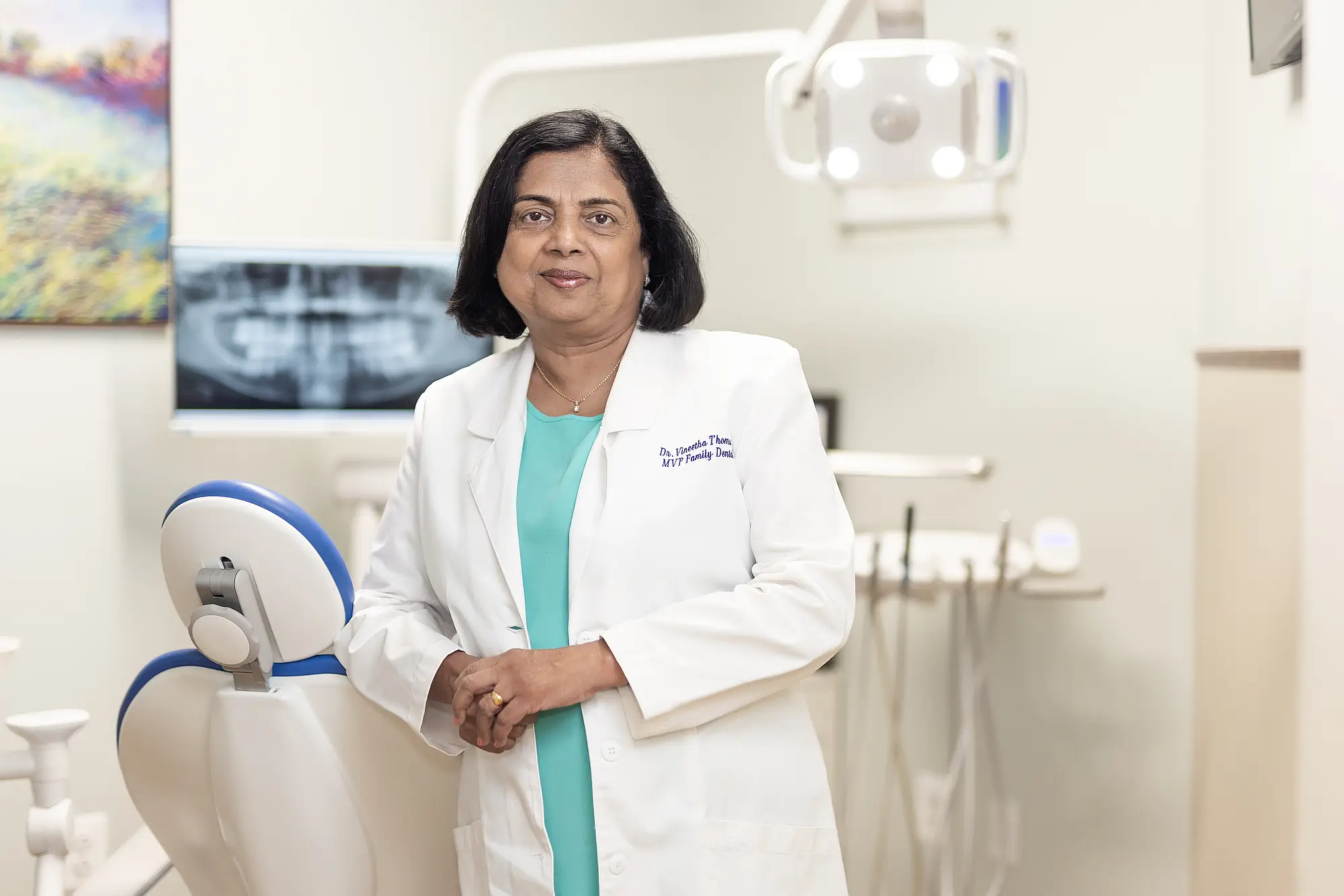
Dr. Vineetha Thomas, D.M.D.
LEARN MORE
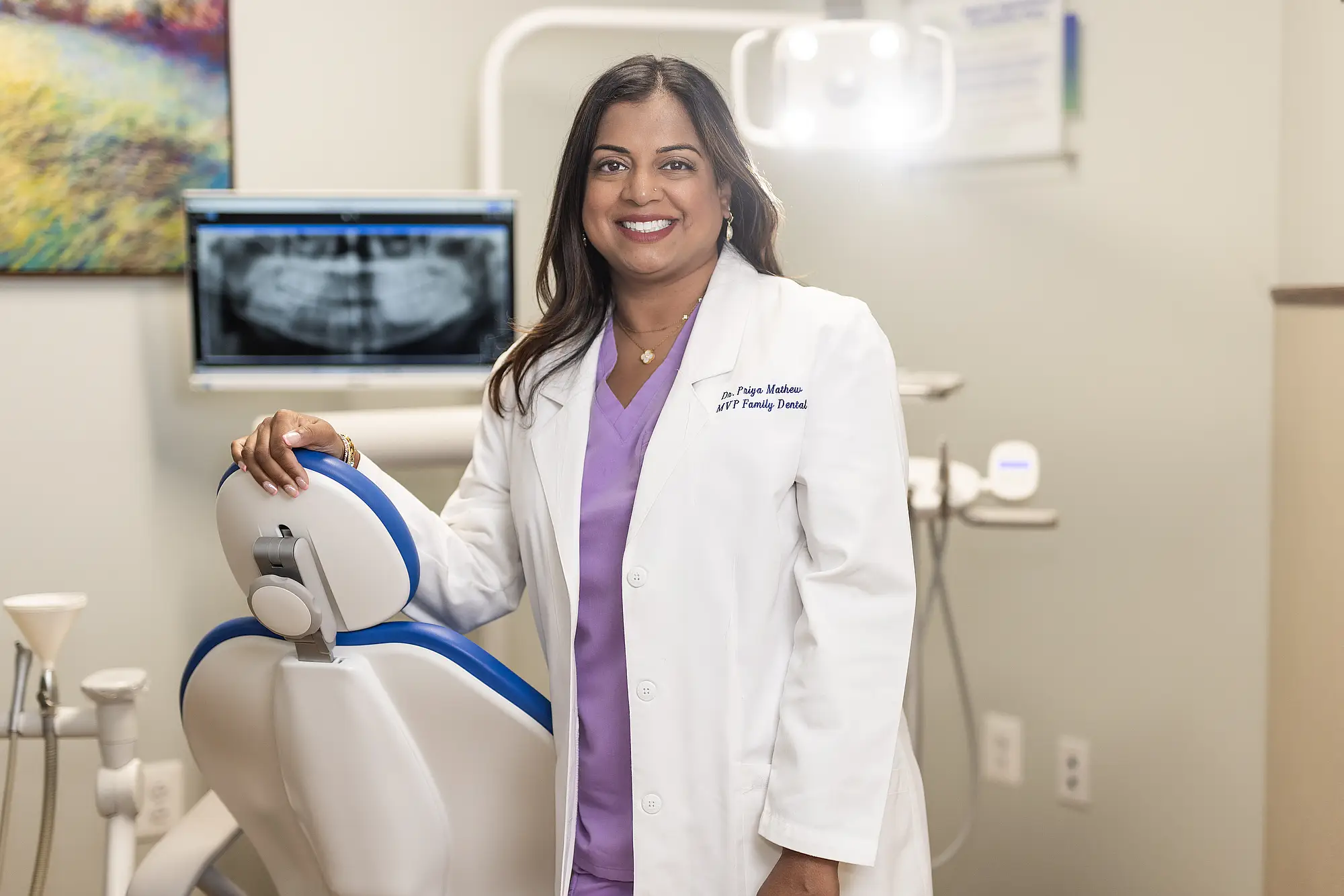
Dr. Priya Mathew, D.M.D.
LEARN MORE