
Restorative & Implant Care
Mini Dental Implants in Jenkintown, PA
A narrower implant, for sites where a conventional one will not fit.
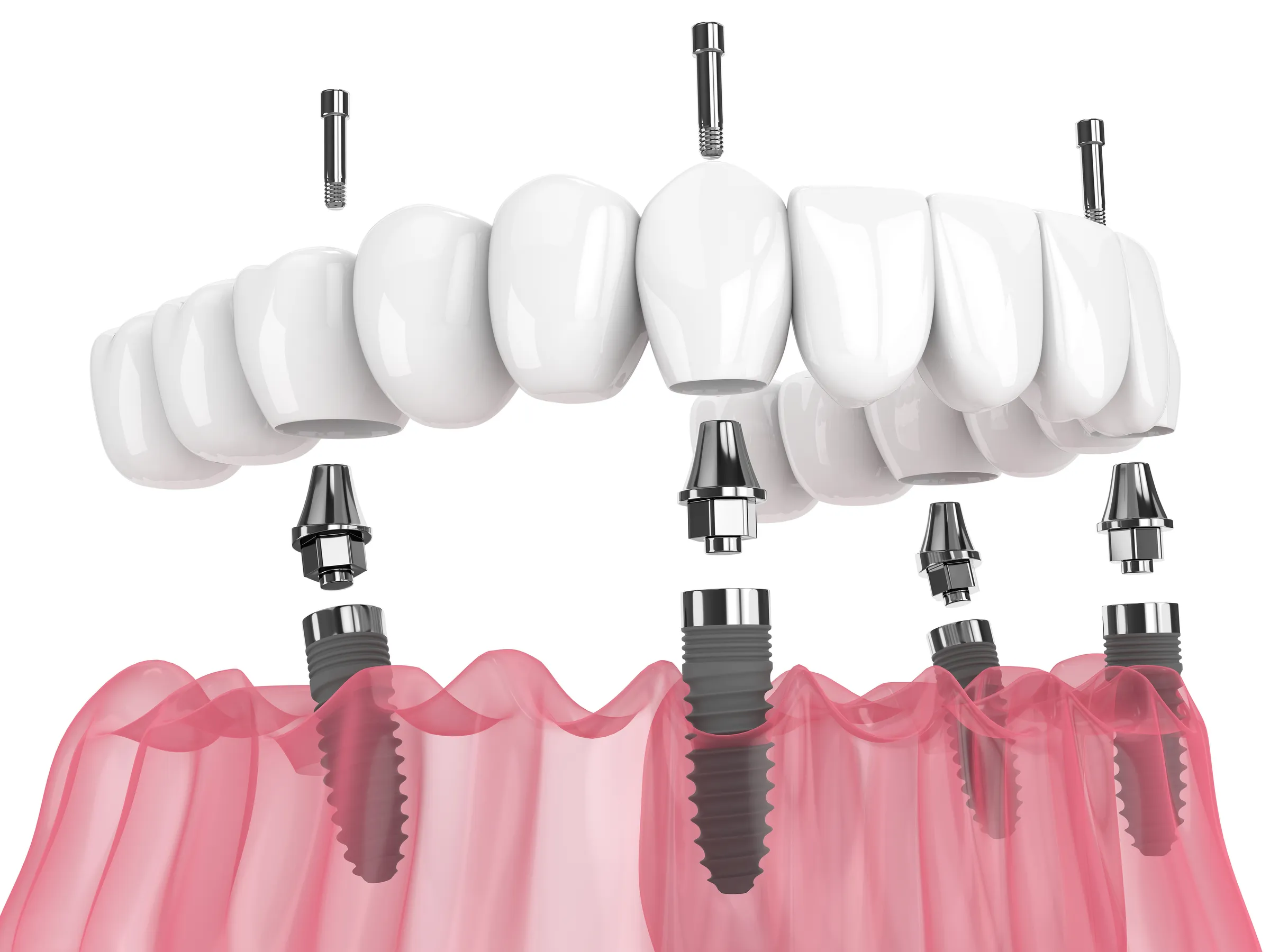
Mini dental implants do the same job as conventional implants at a smaller diameter. Because they need less bone to sit in, they are often the option where a standard implant would not be possible, and they are frequently used to hold a denture steady.
Exceptional care for a lifetime of healthy smiles
Mini implants at MVP Family Dental
The difference is size. Mini implants are roughly 2 to 3 mm across, where conventional implants are generally 4 to 6 mm. That smaller diameter is what lets them be placed in a narrower ridge.
It also makes placement less involved, which matters to patients who are anxious about dental surgery or who want a shorter appointment.
How they compare
Same principle, smaller diameter
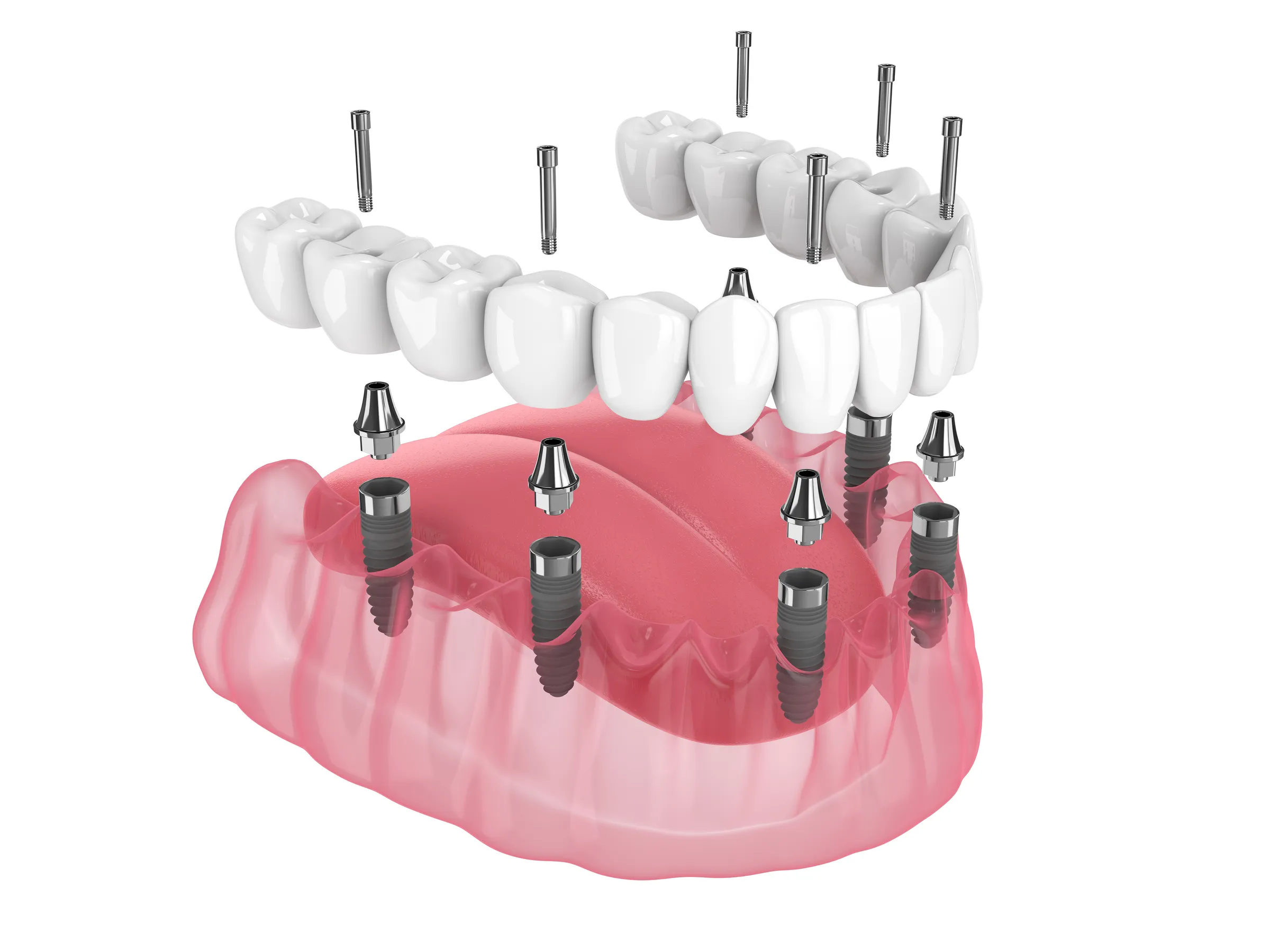
A mini implant is not a different kind of treatment. It is the same idea — a post in the bone carrying something on top — built to a narrower size.
- 2 to 3 mm acrossAgainst roughly 4 to 6 mm for a conventional implant.
- Less bone neededWhich is why they can suit a ridge that has thinned.
- Less invasive placementPlacement is generally quicker and less involved than for a standard implant.
- Often used for denturesA common use is anchoring a lower denture that will not stay put.
How treatment works
From consultation to a steadier bite
Mini implant treatment follows the same shape as conventional implant treatment, usually across fewer or shorter appointments.
- Consultation and imagingWe look at the ridge and the bone available, and at what the implants would be carrying.
- PlanningThe number and position of the implants is decided from your scans.
- PlacementThe implants are placed under local anesthetic during a single appointment.
- Connecting the restorationThe denture, crown or bridge is fitted to the implants and the bite checked.
Who they suit
When a mini implant is the better fit
Whether a mini or a conventional implant is appropriate is a clinical judgment based on the bone available and on what the implant has to carry.
- Limited bone volumeWhere there is not enough bone width for a conventional implant.
- Denture stabilityWhere an existing denture moves and needs anchoring.
- Anxious about surgeryThe less invasive placement is often what makes the difference for nervous patients.
Worth bringing to your consultation
- Your current denture, if you wear one.
- Any X-rays or records from a previous dentist.
- A current list of medications and medical conditions.
- What you want the implants to do — hold a denture, or replace a tooth.
Afterwards
Looked after like any implant
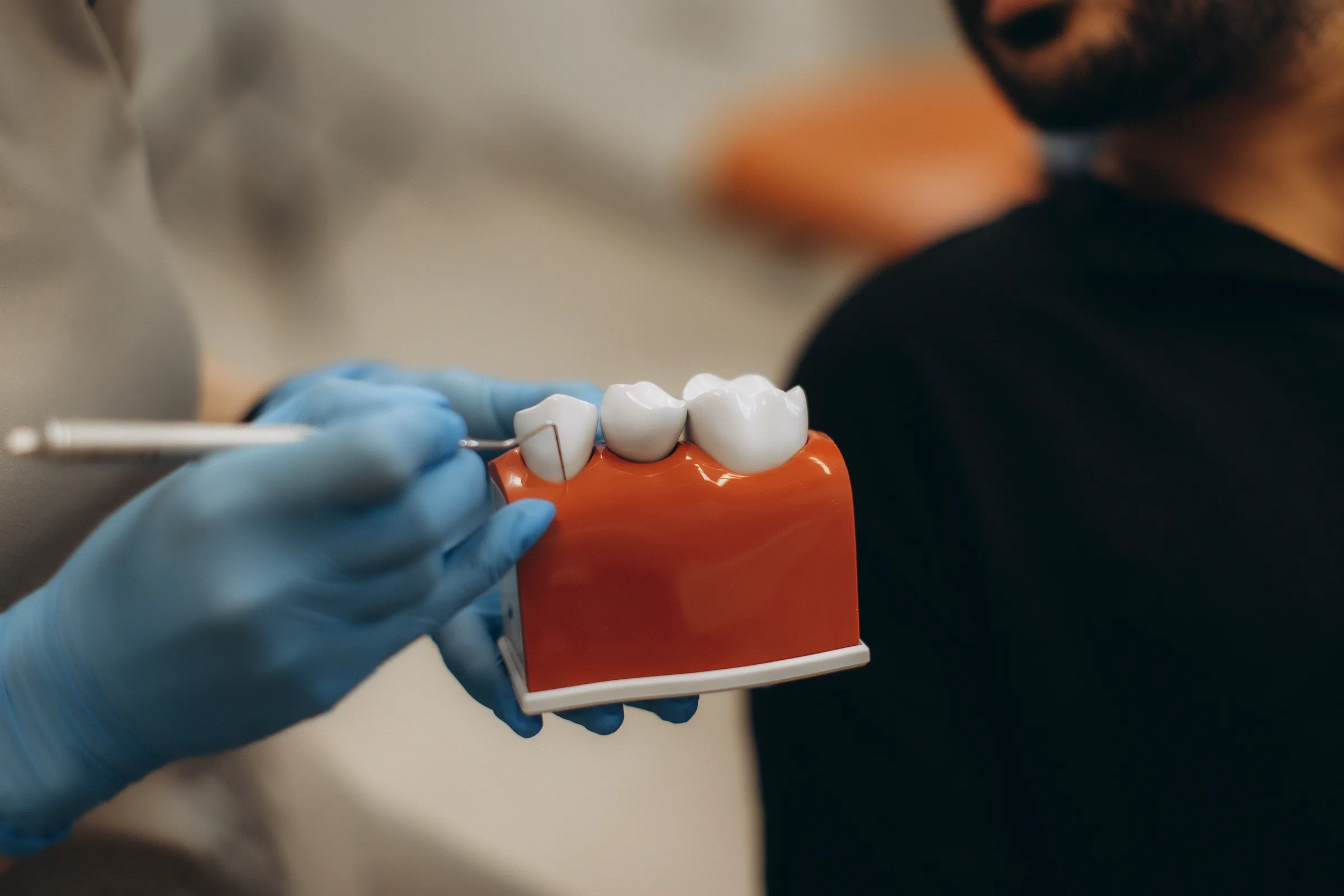
Being smaller does not change the aftercare. The gum and bone around each implant are what hold it, so cleaning around them and keeping to hygiene appointments is what protects the result.
At reviews we check the tissue around each implant and confirm that whatever they are carrying is still seating correctly.
Two generations of dentists, one shared commitment to helping Jenkintown families eat, speak and smile with confidence.
MVP Family Dental · Jenkintown, PA
The short answer
A mini dental implant is a smaller-diameter dental implant, roughly 2 to 3 mm across where conventional implants are generally 4 to 6 mm. That narrower diameter means it needs less bone volume, so it can be placed in a ridge that has thinned where a standard implant would not fit, and the placement is generally quicker and less involved. Mini implants are often used to stabilize a denture that will not stay put, and can also support a crown or a bridge.
Mini Implant Questions
- What is a mini dental implant?
- A mini dental implant is a dental implant of smaller diameter than a conventional one. It works on the same principle, a post placed in the bone that carries a denture, crown or bridge, but it is narrower. It is not a different kind of treatment, just the same idea built to a smaller size. That smaller diameter is what lets it be placed in a narrower ridge.
- How much smaller are they?
- Mini implants are typically around 2 to 3 mm in diameter. Conventional implants are generally between 4 and 6 mm. That difference is what decides whether one will fit a ridge that has thinned.
- Why would a mini implant be used instead?
- Usually because there is not enough bone width for a conventional implant. The less invasive placement can also suit a patient better, particularly anyone anxious about dental surgery or wanting a shorter appointment. Which of the two is appropriate is a clinical judgment based on the bone available and on what the implant has to carry.
- What are they most often used for?
- Stabilizing a denture is a common use, particularly a lower denture that will not stay in place. They can also support a crown or a bridge. What you want the implants to do is worth saying at the consultation, because it shapes the plan.
- Is placement different?
- It is generally less involved and quicker than placing a conventional implant, because less bone has to be prepared. It is still done under local anesthetic, and the number and position are still planned from your scans beforehand. The denture, crown or bridge is then connected and the bite checked.
- Do they need a bone graft?
- Often less bone is required, which is part of the appeal. Whether grafting is needed at all is decided from your imaging rather than assumed either way. That assessment is part of the consultation.
- How do I clean them?
- The same way as any implant. The gum and bone around each post are what hold it, so brushing, cleaning around the implants and keeping to hygiene appointments is what matters. Being smaller does not change the aftercare. At reviews we check the tissue around each implant and confirm that whatever they are carrying is still seating correctly.
- How do I find out which type suits me?
- Book a consultation. We look at the bone available and at what the implants would need to carry, and talk through mini and conventional options together. Bring your current denture if you wear one, any X-rays or records from a previous dentist, and a current list of medications and medical conditions.
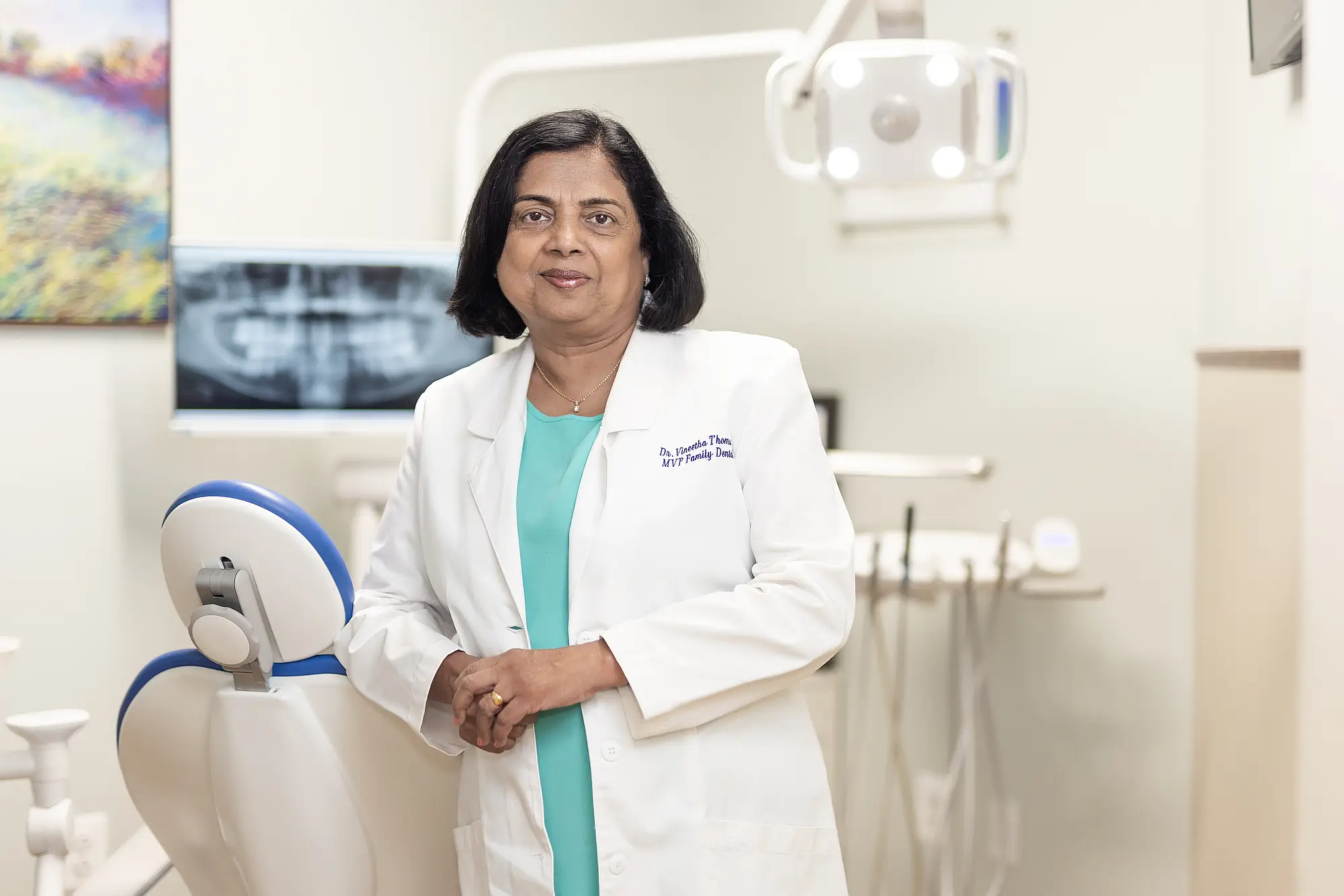
Dr. Vineetha Thomas, D.M.D.
LEARN MORE
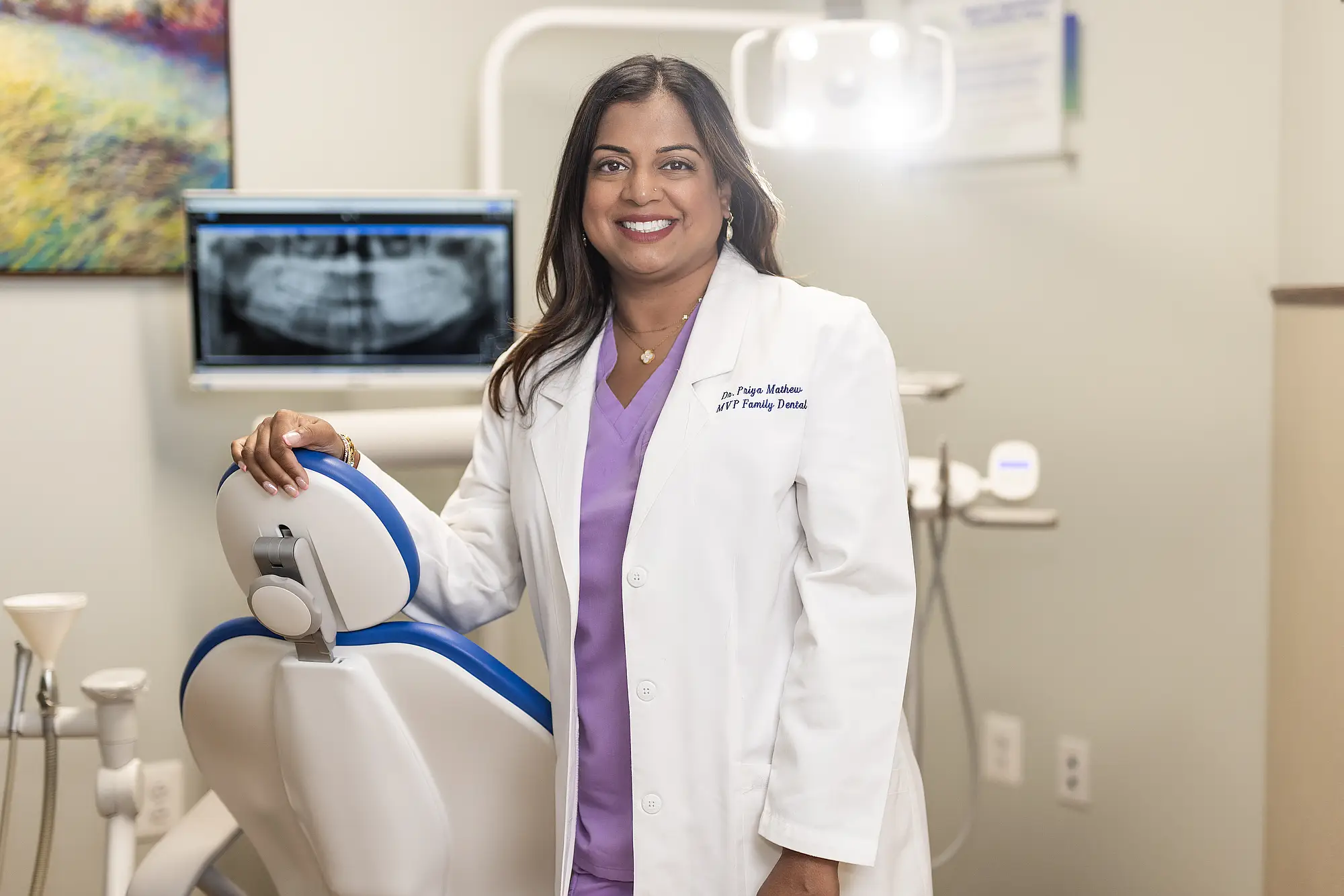
Dr. Priya Mathew, D.M.D.
LEARN MORE