
Emergency Care
Tooth Injury Treatment in Jenkintown, PA
What to do in the first few minutes, and what we do after that.
A knocked-out, loosened or broken tooth is one of the few situations in dentistry where the first few minutes genuinely change the outcome. What follows is what to do straight away, and what treatment involves once you reach us.
Exceptional care for a lifetime of healthy smiles

The short answer
Dental injuries at MVP Family Dental
Urgent care for cracked, chipped, knocked-out, or fractured teeth to restore function and relieve pain as quickly as possible.
Contact us as soon as you can after any injury to a tooth, even one that looks minor. A tooth that has taken a knock can lose its nerve supply weeks or months later, and a small chip can hide a crack running deeper.
If a permanent tooth has been knocked out completely, treat it as urgent. What happens in the first minutes has more bearing on whether that tooth can be saved than anything done afterwards.
First aid
Before you get here
General first-aid guidance for the common injuries. Contact us alongside doing any of this, not after.
- A knocked-out permanent toothHold it by the crown, never the root. If it is dirty, rinse briefly with milk or saline. Keep it in milk or in the person’s own saliva – not water – and contact us immediately.
- A knocked-out baby toothDo not attempt to put it back, as that can damage the adult tooth developing underneath. Contact us for advice.
- A broken or chipped toothSave any fragment in milk if you can find it. Rinse the mouth gently with warm water and contact us.
- A loosened or displaced toothDo not push or wiggle it. Avoid biting on it and contact us as soon as possible.
What happens when you arrive
Assess, stabilize, then plan
Injuries are handled in stages. The immediate priority is the tooth and the tissues around it; definitive restoration comes later.
- Examination and imagingWe check the tooth, the teeth around it, the bone and the soft tissues. Imaging shows root fractures and displacement.
- Immediate managementDepending on the injury, this may mean repositioning and splinting a tooth, covering exposed dentine, or managing a soft-tissue wound.
- Monitoring the nerveInjured teeth are reviewed over time, because a nerve can lose its blood supply well after the event.
- Definitive restorationOnce things are stable, the tooth is restored – bonding, a crown, or root canal treatment where the nerve has been lost.
Restoring the tooth
What repair can involve
Which of these applies depends on how much tooth was lost and whether the nerve survived – both of which take time to become clear.
-
Bonding
Composite resin rebuilds a chipped edge in a single visit. Often the answer for a small fracture.
-
A crown
Where a large piece has been lost, full coverage protects what remains – see Crowns & Bridges.
-
Root canal treatment
Where the nerve does not survive the injury, treatment keeps the tooth in place.
-
Replacement
Where a tooth cannot be saved, options include an implant or a bridge. Nothing is decided in the first appointment.
Do not wait it out
Injuries that look fine
The most commonly missed dental injury is the one that stopped hurting. A tooth that took a knock and settled down can still lose its nerve, darken, or develop infection at the root months later – and the person has usually forgotten the original incident by then.
Have it looked at and put on record. That way, if something changes later, there is a baseline to compare against rather than guesswork.
- ImmediatelyA knocked-out permanent tooth. Keep it in milk and contact us straight away.
- PromptlyA loosened, displaced or broken tooth, or any facial swelling.
- Still worth checkingA knock that has settled – nerve damage can show up long afterwards.
Tell us when you call
- What happened and when, as precisely as you can.
- Whether a tooth was knocked out, and whether you have it.
- Whether it is a baby tooth or an adult tooth, if you know.
- Any head injury, loss of consciousness or difficulty biting together.
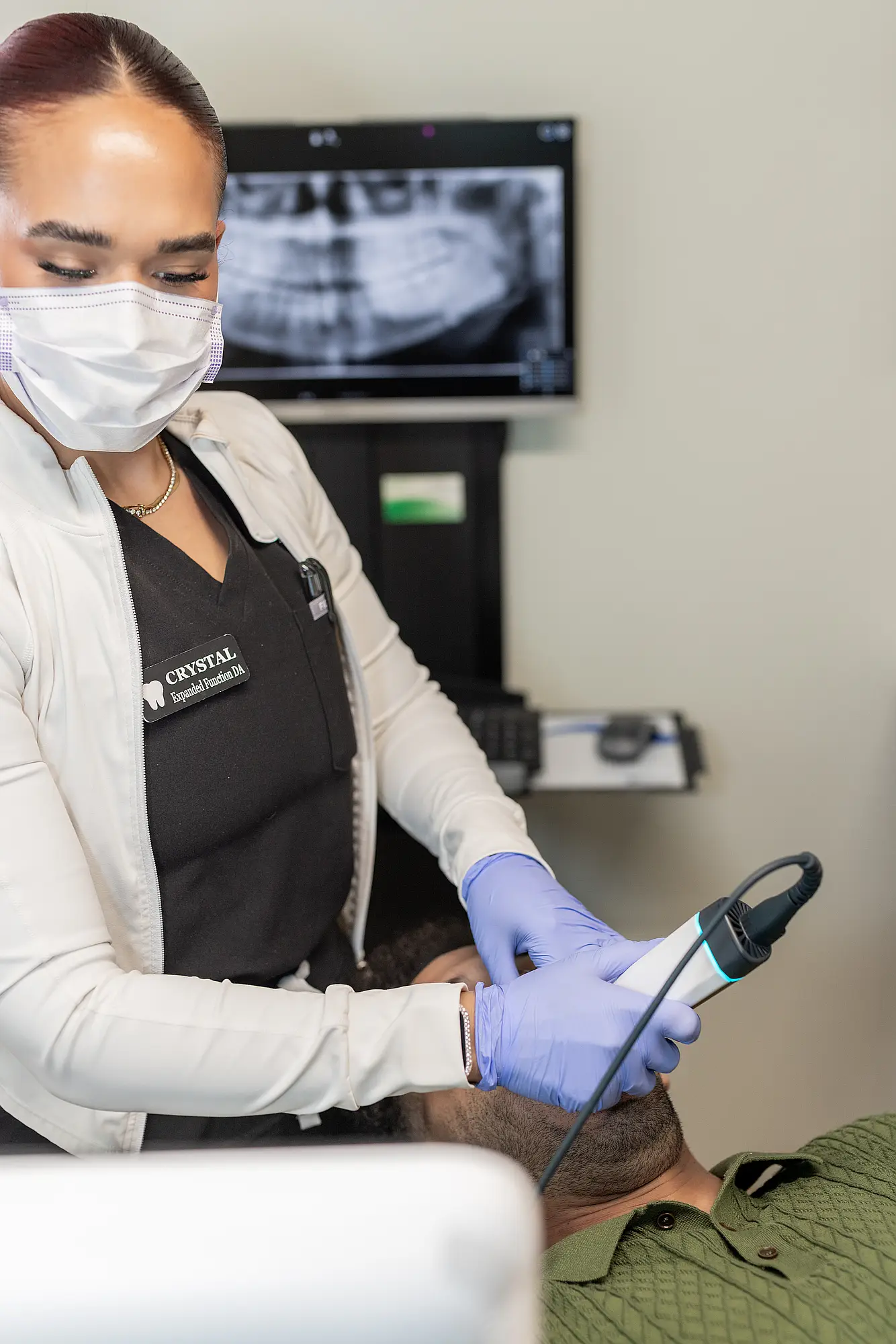
Afterwards
Reviewed over months, not days
Injured teeth are followed up over an extended period because the outcome is not known on the day. Nerve tests and imaging at review appointments are how a problem is caught while it is still straightforward to treat.
Where the injury happened during sport, a custom mouth guard is worth discussing before returning to play. See the Mouth Guards page.
Keep it in milk, hold it by the crown, and call us. The first ten minutes matter more than anything after.
MVP Family Dental · Jenkintown, PA
Tooth Injury Questions
- A tooth has been knocked out. What do I do?
- Hold it by the crown, never the root. If dirty, rinse briefly with milk or saline. Store it in milk or the person’s own saliva – not water – and contact us immediately. Time matters.
- Should I put a knocked-out tooth back in?
- For an adult tooth, replanting quickly can help, but do not attempt it with a baby tooth – it can damage the developing adult tooth underneath. Contact us for guidance for your situation.
- Why milk and not water?
- Water damages the cells on the root surface. Milk and saliva are much closer to the tooth’s own environment and help keep those cells viable.
- My child chipped a tooth but says it does not hurt. Do I still need to come in?
- Yes. A chip can hide a crack, and a tooth that took a knock can lose its nerve supply weeks or months later. Having it examined and recorded gives us a baseline.
- What if I found the broken piece?
- Bring it, stored in milk. Depending on the fracture it may be possible to bond it back on.
- A tooth feels loose after a knock. Should I wiggle it?
- No. Avoid biting on it and contact us as soon as you can. A loosened tooth may need repositioning and splinting.
- Will the tooth change color?
- It can, if the nerve does not survive the injury. That is one of the things review appointments are watching for, and it is treatable.
- How do I prevent this happening again?
- For sport, a custom-fitted mouth guard. See the Mouth Guards page – a guard made to your own teeth stays put in a way a shop-bought one does not.
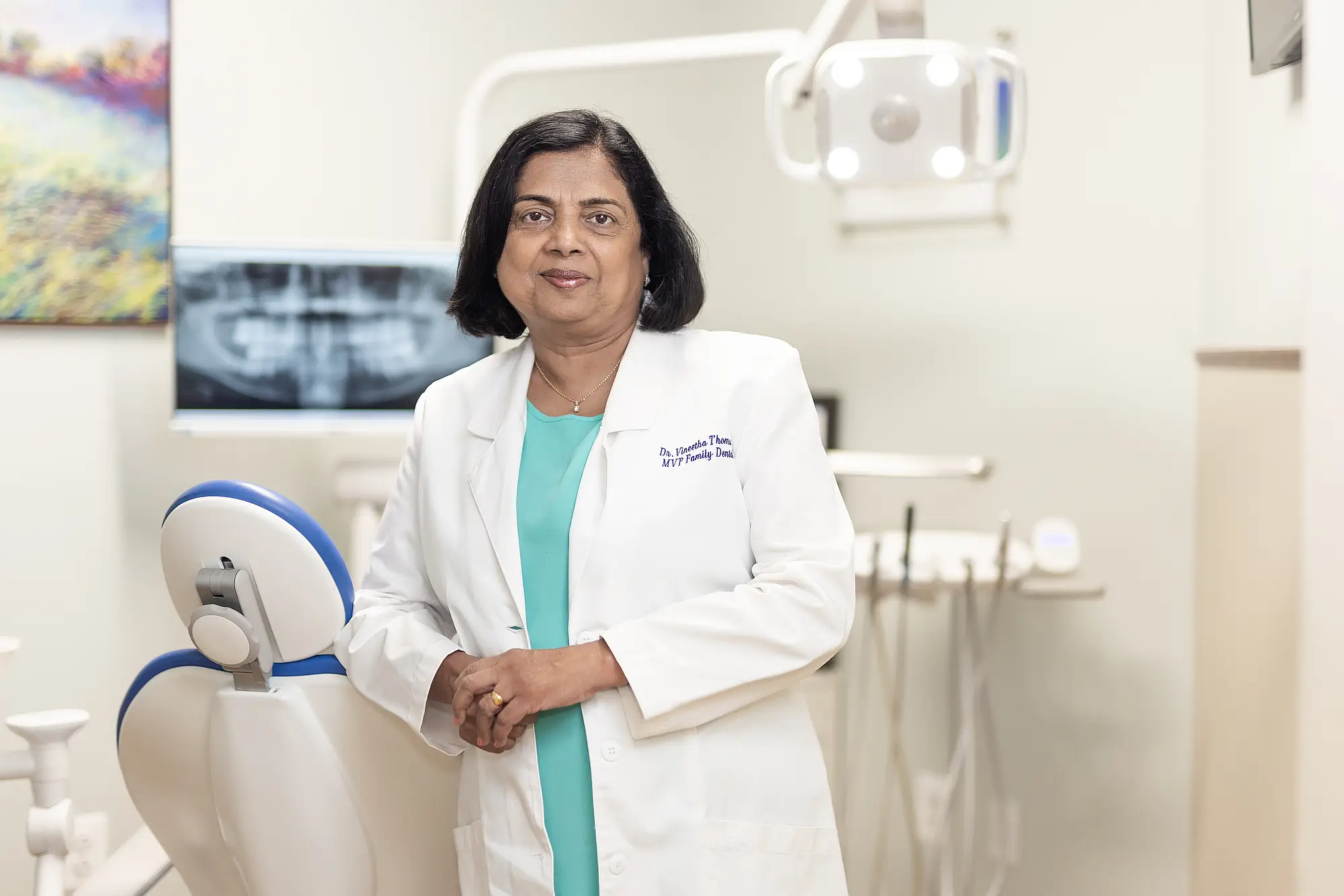
Dr. Vineetha Thomas, D.M.D.
LEARN MORE
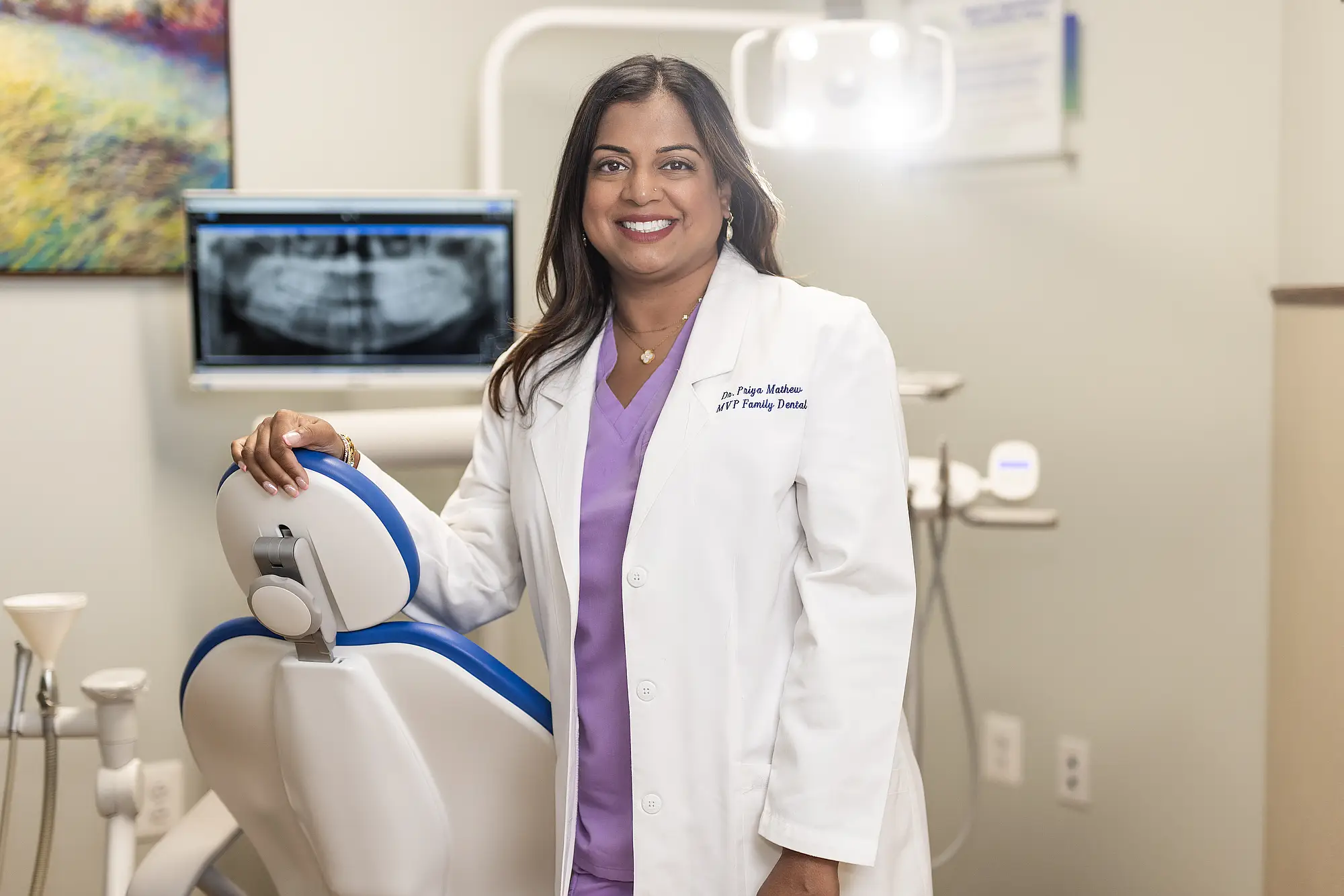
Dr. Priya Mathew, D.M.D.
LEARN MORE